
Achieving high-level success in one sport is an accomplishment. Doing it across multiple disciplines is even harder.
These four Northern Colorado women have earned championships, broken records and built careers around athletics. Now they’re using their experiences to challenge stereotypes and prove that success is about lifting up the people around you as much as winning a title.

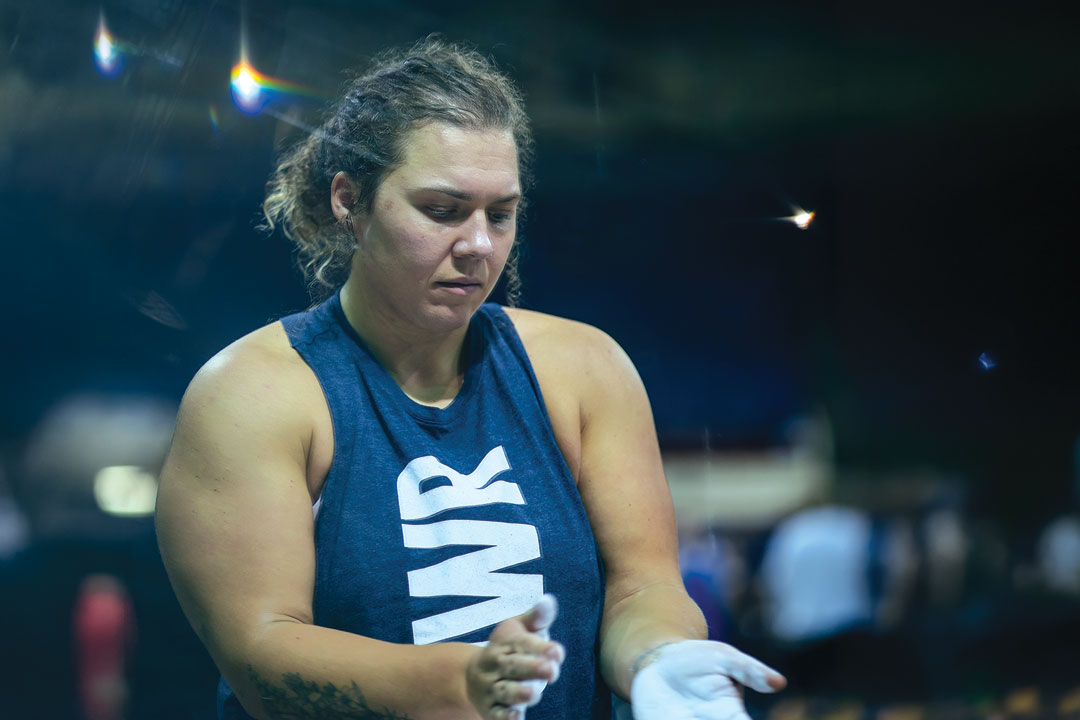
Loucks at the NPC Nationals Competition in Chattanooga, Tenn., in 2025. Photo by Gilco Productions.
Kiara Loucks
30, Longmont
A sledding accident during Kiara Loucks’ senior year of high school shattered her back and her dreams of playing college softball on an NCAA Division I scholarship. Looking for a fresh start, she enrolled at the University of Louisville in Kentucky and wandered into a rowing recruitment tent despite knowing nothing about the sport.
Within a year, Loucks became one of only two women to earn walk-on spots on Louisville’s Division I team, which would go on to win the 2017 Atlantic Coast Conference Championship. Competing at that level ignited an even bigger dream: the Olympics.
She began searching for a sport she could realistically pursue after college, and an internet search led her to bobsledding. After an unsuccessful first tryout in Park City, Utah, Loucks reached out to the coach on social media and begged for another chance. He agreed to let her train as a pilot, and she soon made the U.S. and Canadian Olympic feeder teams in both bobsled and skeleton.
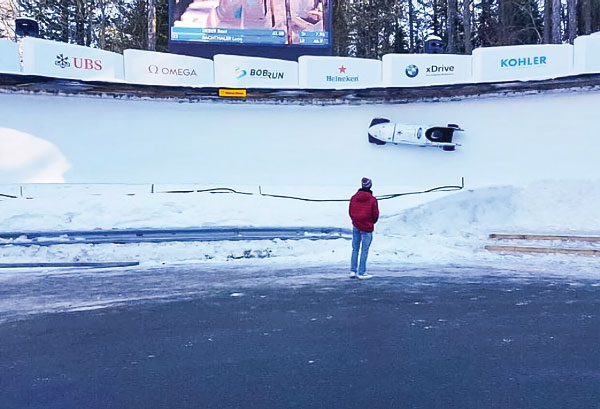
Loucks bobsledding.
While traveling 110 mph down the track, she crashed. Multiple broken bones and a serious head injury ended her Olympic pursuit.
Back in Colorado and healing from her injuries three months later, Loucks decided to focus solely on Olympic weightlifting—a sport that had been part of her training throughout her athletic career—and earned second- and third-place finishes at the USA Weightlifting Championships in 2022 and 2023.
Then she set her sights on something she’d been interested in for over a decade. Bodybuilding demanded extreme discipline: tracking every calorie consumed, every hour of sleep and every sip of water. But Loucks’ hard work paid off with multiple victories, including the Miss Nevada Figure 2025 title for her weight class.
Before long, she faced another devastating setback. An ectopic pregnancy required chemotherapy and surgery, leaving Loucks physically and emotionally drained and struggling to control her weight. She pushed forward, taking the stage months later to place third at nationals.
One of Loucks’ proudest moments at that competition had nothing to do with the results. Noticing another competitor panicking after forgetting her stage bracelet—a glitzy necessity in bodybuilding competitions—Loucks sprinted across the stage to her bag and handed over an extra one she carried. She says the gratitude she received for choosing kindness in a cutthroat competition meant as much as any trophy.
“In that moment it really hit me: Relationships, taking care of others and the impact we have on other people are the biggest wins,” she says.
These days, Loucks is taking a break from the stage to focus on marathon running and coaching first-time racers. She also works with Her Outdoor Journey, an organization that hosts wilderness retreats to teach women skills such as foraging, fishing and big-game processing while building confidence and community.
“My heart is really drawn to helping women,” Loucks says. “Women have a tendency to believe that no matter how hard they train, they’re never enough. My goal is to inspire women to support each other, care for each other and develop meaningful community.”

Kristen Dudley at the VIRUS Series 2 in Fort Worth, Texas, in 2025. Photo by 6/6 Media.
Kristen Dudley
32, Fort Collins
After playing everything from softball to golf competitively as a kid, Kristen Dudley left it all behind in college due to the belief that she wasn’t good enough for more than intramural sports.
“My weight had been a struggle for me my whole life,” she says. “I was good at sports, but being a bigger girl kept me from believing I could really go anywhere with them.”
A stint in Cambodia after college led Dudley to CrossFit and renewed her desire to compete. But it wasn’t until she watched an Olympic weightlifting competition in 2024 that she realized she could belong in the sport.
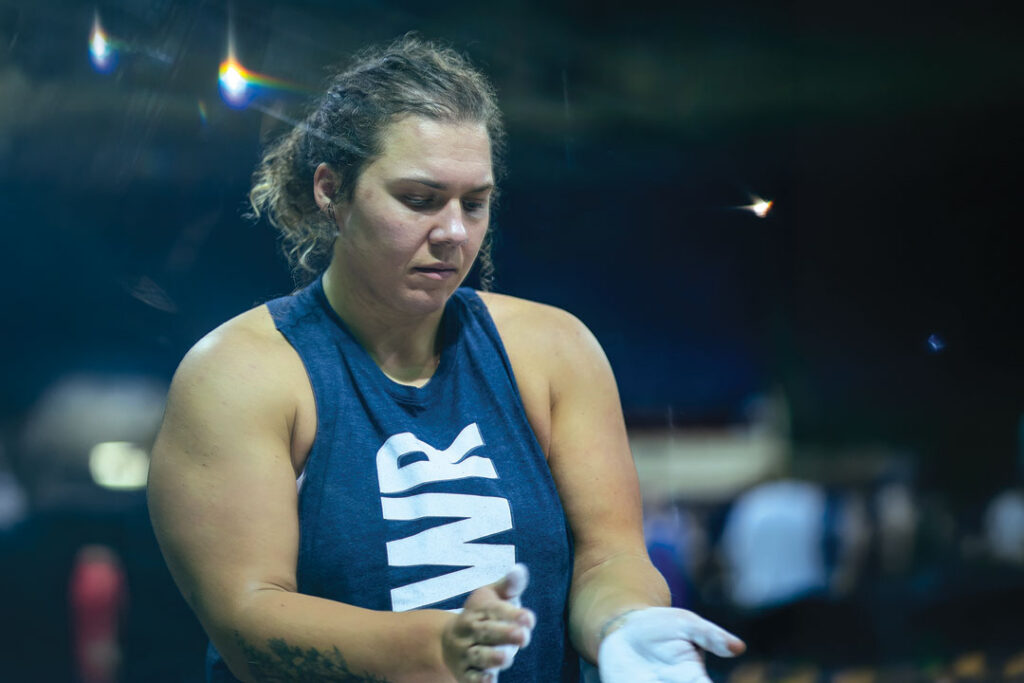
Kristen Dudley at the VIRUS Series 2 in Fort Worth, Texas, in 2025.
Photo by 6/6 Media.
“I couldn’t stop watching them,” she says. “I was pretty on par with the mid-level women. I realized maybe I could do this.”
Despite fears that leaving CrossFit would cause her to gain weight, Dudley committed to Olympic weightlifting and qualified for the North American Open Series in 2025 and USA Weightlifting National Championships in 2026.
At the Open Series in Florida, Dudley hit two personal records and her highest meet total despite hyperextending an elbow tendon. The injury sidelined her for two months and shook her confidence.
“My strength took a huge hit, but my confidence did more. It took a lot longer to get back to a place where I could trust my body again to know what to do under the bar,” she says.
Determined to recover, Dudley devoted herself to training, mobility work, nutrition and recovery.
“When you’re training at that level, you have to give up a lot of extracurriculars and say no to things that could get you injured,” she says. “It’s a grind every single day.”
At nationals in Colorado Springs on June 28, Dudley asked her coach to load 91 kilograms for her final snatch attempt—more than she’d ever lifted in training and enough to join the coveted 200-pound club. She made the lift, finishing 14th in the nation and first in the region.
“It was the best day of my life,” she says.
Today, Dudley says weightlifting has completely changed how she sees herself. She now views strength as beauty, regardless of size, and takes pride in inspiring other women, both through her body-positive social media posts and the example she sets at the gym.
“People I’ve never met come up to me and tell me I’m motivating them to get stronger,” she says. “Being able to encourage other women, especially women who look like me, inspires me to work harder too.”
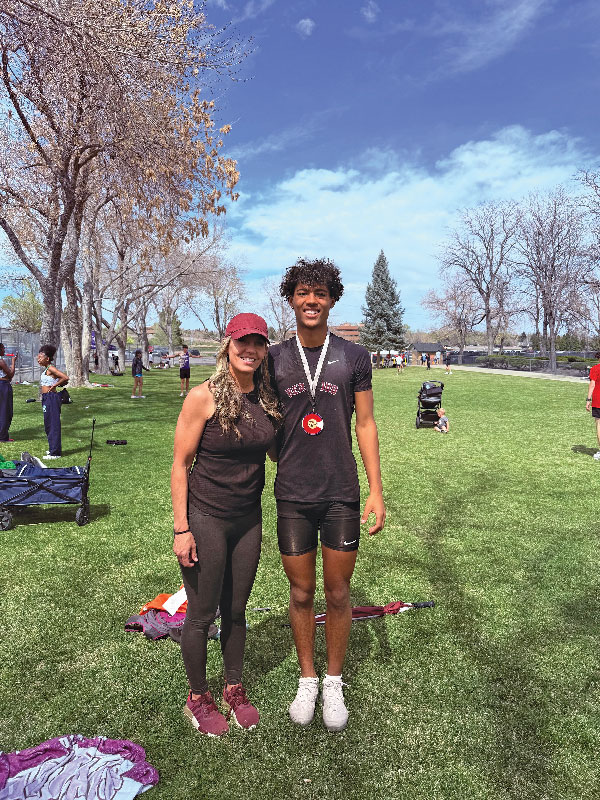
Neff and her son, Jayce.
Lori Neff
43, Berthoud
Already a five-sport athlete who had set multiple records at Windsor High School and won two state track and field titles, Lori Neff didn’t hesitate when one of her coaches invited her to join a heptathlon summer club team.
Consisting of seven sprinting, jumping and throwing events, the heptathlon demands exceptional versatility and stamina. Neff fell in love with the sport, so much so that she turned down multiple Division I offers, opting instead to attend Central Missouri University, where the coach was the oldest U.S. Olympian to compete in the men’s version of the sport: the decathlon.
 Neff earned six All-American honors in the heptathlon, high jump and 4×400-meter relay. After college, she began training for the Olympic trials, but life had other plans. She discovered she was pregnant with her son, Jayce.
“I didn’t think twice,” she says. “I switched gears, gave up training and settled into mom life.”
She began coaching other athletes and working as a personal trainer. Today she is vice president of 24 Hour Fitness, overseeing four states while continuing to coach athletes privately. She also serves as a track coach for Berthoud High School, where Jayce recently graduated with a track scholarship to attend Colorado State University.
As great an accomplishment as being named All-American was, Neff says the skill set she gained through sports—discipline, grit and the ability to multitask—is what’s taken her the furthest in her adult life.
Having witnessed firsthand the double standard placed upon women athletes, Neff pays particular attention to the mental health of the women and girls she works with, helping instill confidence and recognizing when they need encouragement.
“If we get emotional or cry, it’s seen as weakness,” she says, “but we’re not wired the same as men.”
Neff finds her biggest wins through helping others with their own athletic pursuits.
“Coaching others, pouring myself into them and supporting my son have given me that feeling more than competing ever did,” she says.
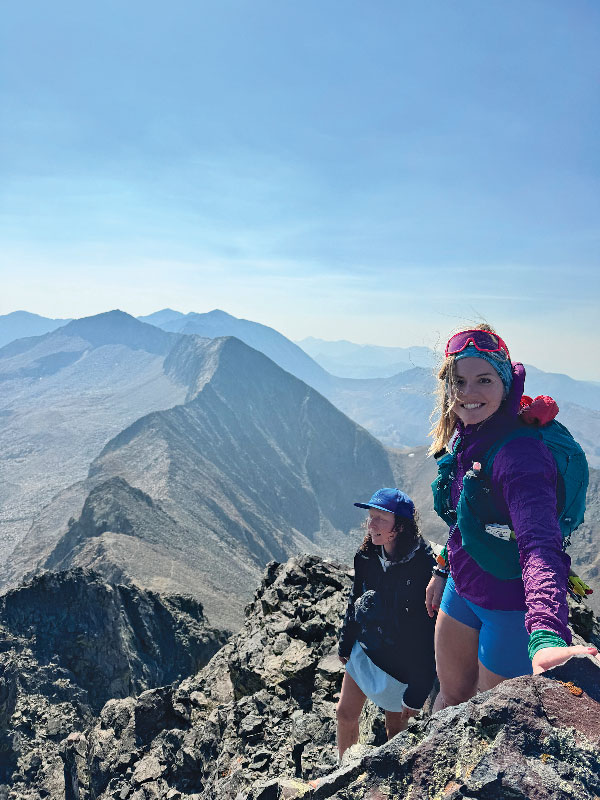
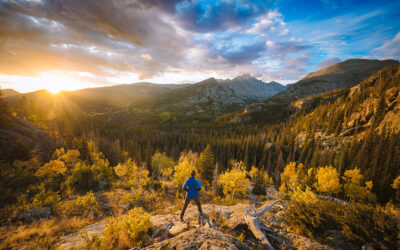
Veldman (right) and friend Laura Kaplan on Mount Richthofen.
Niki Veldman
40, Fort Collins
Growing up in a blue-collar home in rural Indiana, Niki Veldman knew her athletic ability was the only way she was getting to college. She found the scholarship she needed through goalkeeping in soccer.
At her small Christian college, Veldman walked on to the track team, competing in javelin and pole vault while also playing soccer, carrying a full-time course load and waiting tables.
“I wasn’t the best on either team, but I loved being part of them,” she recalls. “Being a multi-sport athlete brought a sense of community.”
After college, Veldman moved to Colorado and began working as a personal trainer. She craved the sense of belonging she had as a student athlete, which she found again with the Fort Collins Running Club and Gnar Runners trail racing groups.
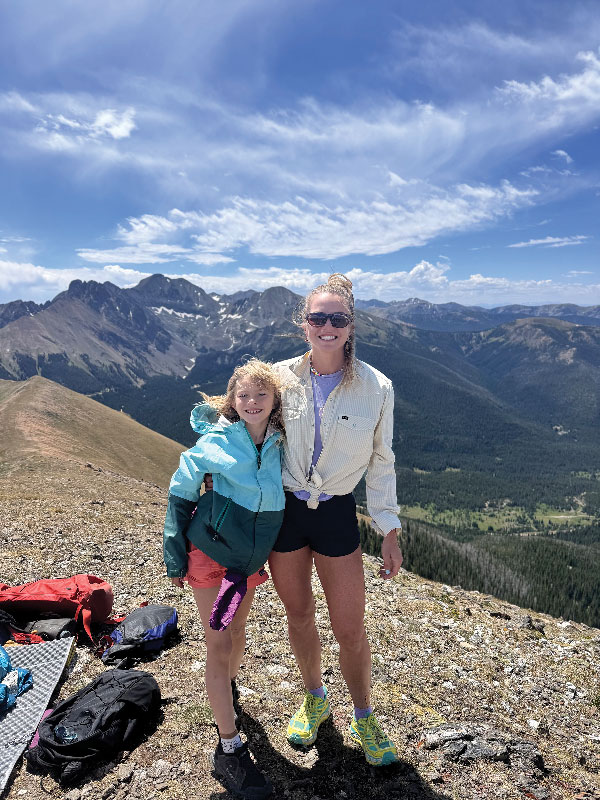
Niki Veldman with her daughter, Lillian, 9, on North Diamond Peak.
When she gave birth to her daughter nine years ago, she needed that outlet more than ever and immersed herself in the running community, competing in ultramarathons and backcountry running as a single mom.
“I started taking my daughter on races, first in a stroller and then on a bike riding alongside me,” she says. “The women in my race community became our aunties, helping and supporting us like family.”
Today, Veldman gives back to the community that’s long supported her by not only volunteering at races but helping her friends finish when they race—her daughter at her side—by hauling their food, equipment and extra clothing and shoes from checkpoint to checkpoint over dozens of miles.
Having experienced everything from distracted drivers putting her in danger to being followed on the trail, Veldman uses her social media pages to encourage other women to run safely while overcoming their fears.
After her friend, Kristen Kovatch, was killed by a mountain lion while running on a Northern Colorado trail earlier this year, Veldman took to social media to share positive trail running experiences, hoping the tragedy wouldn’t discourage others from doing what they both loved.
“Running solo, whether on the road or on the trail, can feel intimidating as a woman,” she says. “Sometimes the best first step is to join an organization or find a social media group where women can connect, run together and encourage each other.”
Veldman shares safety protocols with the women in her running groups, including packing appropriate gear, keeping their bodies strong and communicating where they’ll be and when they’ll be back. Her hope is to share how accessible running can be for the everyday athlete.
“Helping others create space for health and fitness in their lives while having fun is something I feel drawn to,” she says. “I’ve been led by others, and now I have the chance to see it come full circle.”