
Usually around this time of year, Chad Onthank will get texts from past clients showing him the elk they just bagged.
Onthank likely took them on their first elk hunt as the owner of Eastern Plains Outfitters out of Berthoud. Newbies, some of whom so inexperienced they’ve never taken a shot at an animal, remain some of his favorite clients. He often spends so much time teaching them about elk hunting that they don’t need him the next season. Those texts are to thank him for being a good teacher.
“I want to make money, of course, but at the end of the day, the true spirit of outdoorsmen is helping each other,” he says. “That’s an important part for me. We turn their hunt into a masterclass for them.”
Even if Onthank’s clients have hunted before, and many have, he says a third of his business comes from first-time elk hunters.
“Most [clients] come to Colorado specifically to hunt elk,” he says. “It’s the quintessential Western hunt.”
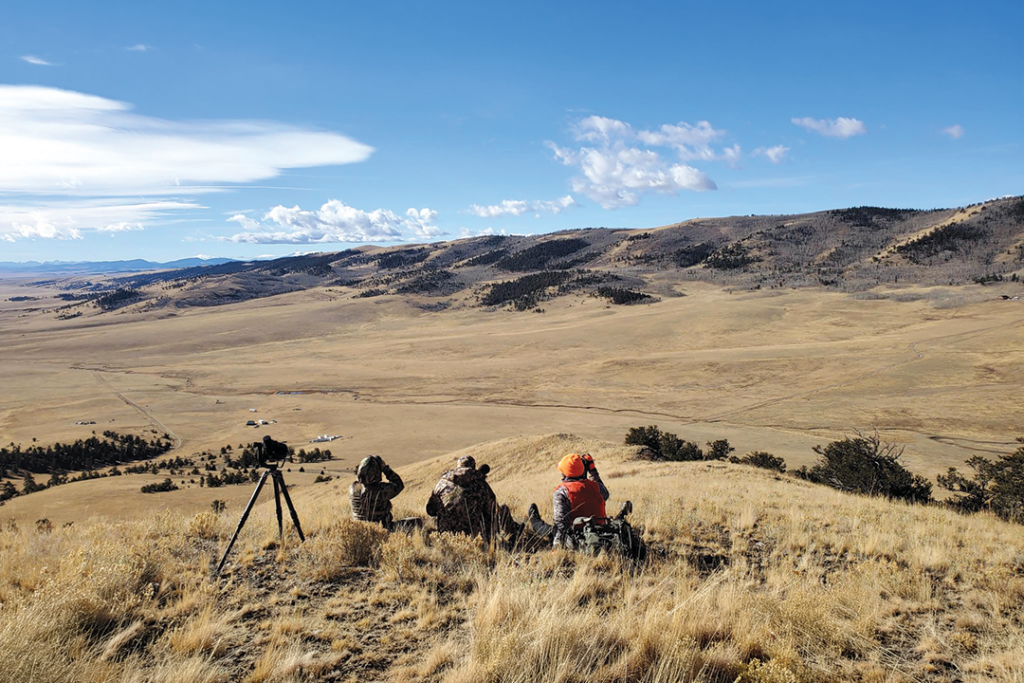
Elk hunters survey the land during a fall hunt.
Photo courtesy of Chad Onthank.
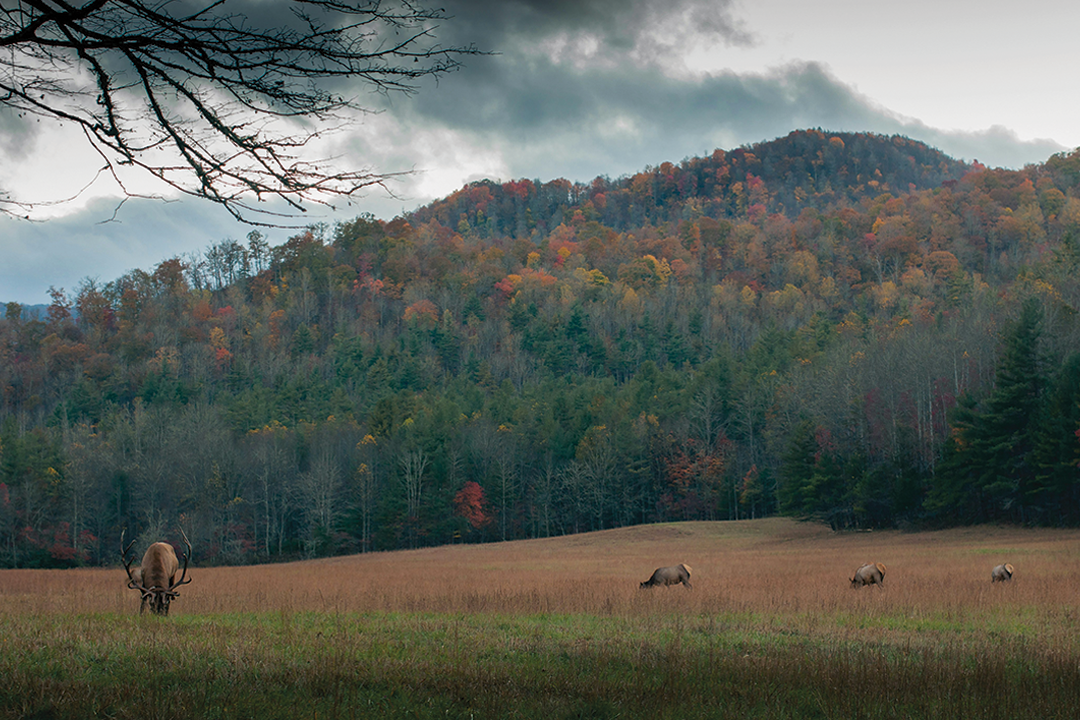
Colorado, after all, has the largest elk population in the world. Even those hunting for fudge or a Rocky Mountain National Park T-shirt in Estes Park will likely see a few elk during their visit.
At last count, there were 339,000 in Colorado, more than the states of Montana, Idaho and Wyoming combined, says Andy Holland, big game manager for Colorado Parks and Wildlife (CPW). They’re so popular, in fact, that elk hunting tags pay for just about all other wildlife management in the state. Hunting and fishing licenses make up nearly 60 percent of CPW’s budget, and elk tags alone account for a quarter of that revenue.
Most of that funding comes from out-of-state licenses that bring in about $55 million a year. A majority of elk licenses are purchased by Colorado residents. Non-residents pay up to $845 a tag, which is more than 10 times the cost residents pay.
Still, resident elk sales bring in $5 million a year. Hunters travel all over the state—many times to rural areas that depend on the elk rifle seasons, which kick off Oct. 14 and run through late November—in hopes of getting their money’s worth. Add the visitors who cross our state lines, and elk hunting adds more than $1 billion to Colorado’s economy annually.
Whether or not Colorado has the best elk hunting is open for debate. Hunters who prefer a more private experience might say no. But Colorado is the only state to offer unlimited bull elk rifle tags, Holland says.
“We have so many elk that we issue a lot of licenses, so there’s a lot more competition as a hunter,” he says. “What we do offer is we are the undisputed king of elk-hunting opportunity in the West.”
A hard hunt
Here’s the uncomfortable reality check for elk hunters: Going home empty-handed on an elk hunt is not only a possibility, but it’s also common. Anyone who has cast a hook into a river hoping for a bite or hiked partway up a 14er only to see clouds roll in can relate.
“Elk are the most difficult animal to bag,” Holland says. “They’re very intelligent.”
That’s why you’re likely to see elk in Estes Park. They’re adept at moving to places where hunters can’t shoot them. Some cows are 20 years old, Holland says, and they’ve learned the safe spots and taught all the other elk where to go.
“It’s not like Estes Park is the most amazing elk habitat,” Holland says. “They know they are safe there.”
Success rates can be downright discouraging as a result. Half of all hunters who buy a deer tag have a 50 percent chance of getting one. That probability sinks to 20 percent for the elk rifle seasons, and those numbers include private property, Holland says. Success rates can be as low as five percent on public land.
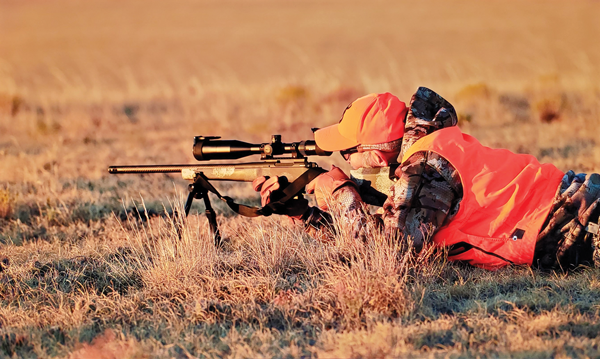
A hunter lines up his shot during elk rifle season. Photo courtesy of Chad Onthank.
This is part of the reason why hunters turn to outfitters such as Onthank or Doug Spencer, who owns Colorado Elk Outfitter out of Loveland. Outfitters have access to private land as well as public land that feels a lot more private, and they have the knowledge to find the elk that live on it.
Their services aren’t cheap. Even the least expensive outfitted elk hunts will cost a few thousand dollars. The price goes up depending on whether the hunt is on public or private land, whether hunters want meat from a cow or a trophy bull and how much help they need during the hunt.
However, the full-service hunts can make elk hunting possible for those who couldn’t do it on their own. Deer hunters from the Midwest are used to sitting in a stand all day and waiting for a shot, Onthank says, but elk hunts can mean hiking up to 10 miles a day through difficult, mountainous terrain at altitude. Even hunters who stalk mule deer in Western Colorado don’t need to put in that kind of effort.
Spencer says he’s found a niche in older hunters who are less fit and can’t cover that kind of terrain but still want to hunt elk. It’s not like they can take a shot from his truck—that’s illegal—but he can shorten their hike with advanced scouting. He can also handle all the details of a hunt, including providing a gun, although he prefers for them to bring their own.
“When you come to me, I have everything ready for you,” he says.
Because of that, he says it’s perfectly fine to get started as an elk hunter later in life. It may even make sense for people, as jobs, kids and other responsibilities can prevent them from devoting time or money to it. Even if hunters don’t use an outfitter, many can drop a couple thousand dollars to get all the equipment they need. Even a basic hunting rifle will cost a few hundred dollars.
“Many of my clients are at a time in their life when they have the resources to enjoy an elk hunt,” Spencer says.
The real goal
Spencer can’t guarantee that every one of his clients will bag an elk, though he says their odds are much higher with an outfitter. But he can pretty much guarantee that they will get to see and hear elk.
“The kill is the icing on top,” he says.
People hunt for different reasons. Some just want the rack and won’t bother with the meat (giving Spencer some extra grub), while others prize it so much that it’s the only meat they will eat all year. Spencer loves the taste of elk meat.
“It’s delicious,” he says. “It’s the best thing out there, period.”
Like Spencer, Onthank enjoys being outside and seeing elk in the wild as much as getting a good shot at them. He’s not bothered by other hunters, even if there are a lot of them on public land, as there usually are. When he hunts on his own, not for his job, he prefers to hunt on public land.
“I like talking to people, and it’s my experience that most public land hunters are good people,” he says. “They won’t give away secret spots, but they want others to be successful. At the end of the day, you can’t guarantee that you will get an animal, but what you can guarantee is how much you enjoy the land and seeing the animals. If you can do that, then every experience will be successful.”
Before You Go
Learn how to sight elk. Elk are mid-sized big-game animals. Moose are darker and generally bigger, and deer are usually smaller with white tails. It’s illegal to kill an animal, even accidentally, if you don’t have a tag for it.
Understand your license. Hunts are divided into areas called Game Management Units. There are limited elk licenses that you must apply for through a draw system, and there are over-the-counter licenses you can purchase without a draw. All cow elks are limited. Bucks are over the counter for residents who hunt in some units, but other units that face a high demand are limited.
Outfitters can help you navigate this, but you still need to buy a tag and have a license. CPW can also help you navigate the complex system of hunting units and tags if you visit their website or call their support line.
Pass a hunting course. You will need to complete a hunter education course to get a card that allows you to buy a license, unless you are 77 or older. These courses can be completed over a weekend. Live firing exercises cannot be taken online, and there is usually a live written test as well.
Get in shape. Elk hunting is generally an arduous task. Expect to hike for miles every day through varied, mountainous terrain in all kinds of weather. When you bag an animal, you’ll have to pack out the meat, which means carrying 80 pounds or more at a time. Fit hunters have a much higher success rate.
Give yourself plenty of time. An elk tag is generally good for a week, so don’t set aside, say, a Saturday and expect to be successful. Hunters who can move their campsites and spend days tracking are much more successful.
Don’t fire blindly. Make sure you have a good shot before you take it. Watch out for other hunters, and aim for a kill on the first shot. Tracking a wounded animal for hours is miserable and heartbreaking.
Take notes for next season. Elk are creatures of habit, so if you find a spot where they congregate, you can probably expect them back in the same area next year.