

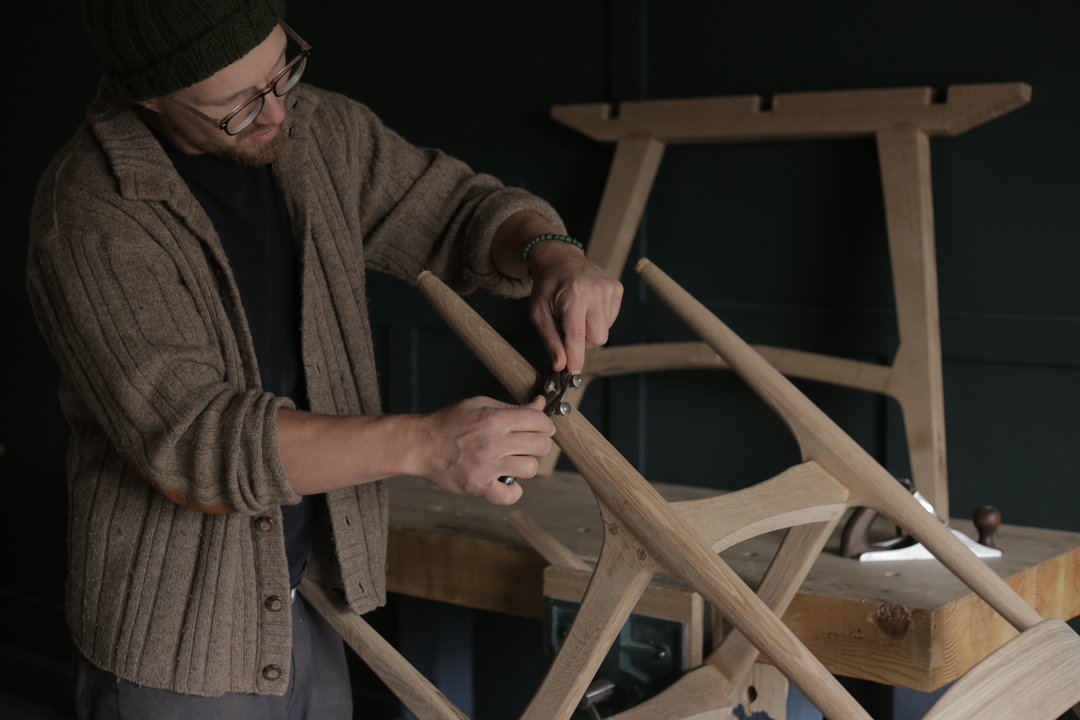
Rather than relying on the automated machinery common in mass production, artisan furniture makers use traditional woodworking techniques and quality materials to create pieces that reflect both their artistic vision and the needs of their clients. This month, three local furniture builders give us a closer look at the craftsmanship behind their work.
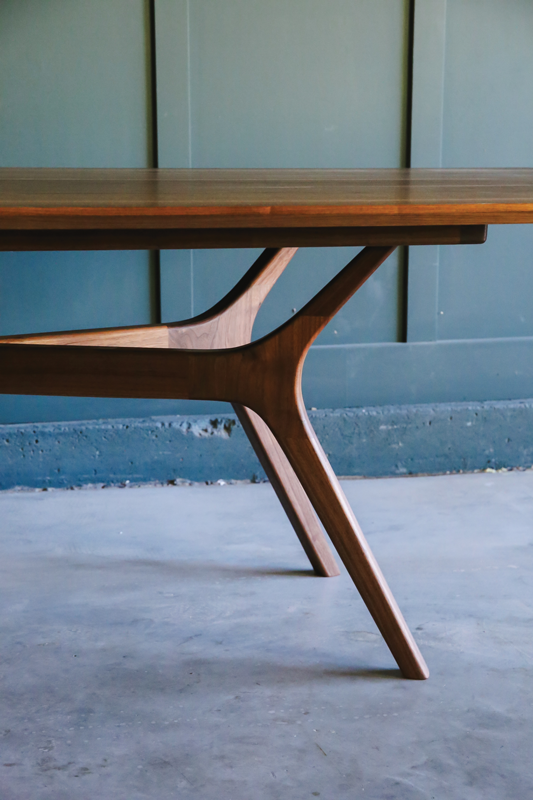
Woolly Furniture. Photo by Amber Canny.
Nate Lamb, Woolly Furniture
woollyfurniture.com
Nate Lamb spent more than a decade working in the tech industry before an unexpected gift changed the course of his life.
“My neighbor had a woodworking router that he didn’t want to take with him when he moved,” Lamb says. “He dropped it off with me, and I started experimenting with it, using it to make Christmas presents for family members.”
Before long, the tool—used to hollow out, shape and precisely cut pieces of wood—had him hooked. He designed and built what would become the first piece in his furniture line: the Arne coffee table. Inspired by Danish designer Arne Vodder and Lamb’s Scandinavian heritage, it features clean, straight lines, lightweight proportions and solid hardwood finished with oil to highlight the wood grain.
Over the next eight years, Lamb honed his craft by studying the work of other makers, learning traditional woodworking techniques and spending countless hours refining his skills. More interested in creating his own designs than following others’ plans, he focused his efforts on designing and building original pieces that would stand the test of time.
“A lot of where I put my effort is in making Scandinavian-style pieces that don’t contain a lot of bulky wood but are solid enough to last for hundreds of years,” Lamb says. “I’m trying to make something that is better and stronger in our throw-away culture.”
Two years ago, Lamb left his tech career to turn the hobby into a full-time business, which he calls Woolly Furniture, a nod to his last name. Customers can order from the furniture line on his website and customize the dimensions to fit their space. Lamb also accepts a handful of custom projects each year.
The Arne coffee table remains his most popular design to this day, but he also finds success in creating built-to-order dining tables, benches, plant stands, mirrors and trays in the same minimalist Scandinavian style. His favorite pieces to build are often the most difficult.
“Chairs are really fun because they have a lot of components,” he says.
Because Lamb relies heavily on hand tools and custom-built jigs—templates that guide cutting, drilling and shaping—chairs demand extreme precision. A single chair might require 50 or more jigs.
In addition to residential furniture, Lamb has created restaurant bar tops, benches, lighting features and wall art. He also leads workshops and teaches private lessons out of his home-based woodshop in Fort Collins, where he shares the skills and creativity behind the craft.
“We as people are a collection of unique experiences, and that should reflect in our art,” Lamb says. “With my furniture, I hope to create something that draws from my heritage, isn’t terribly busy and creates a calming presence.”
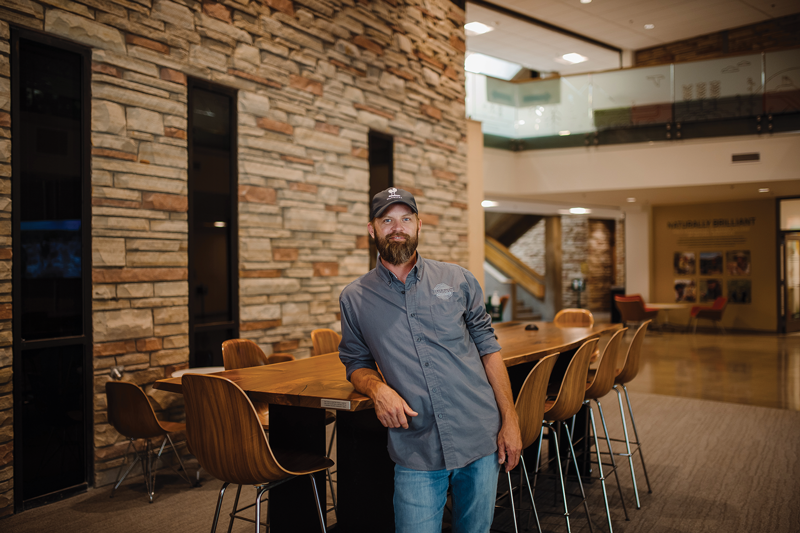
Ryan Baldwin, owner of Baldwin Hardwoods. Photo by Patrick Edmiston, PHOCO.
Ryan Baldwin, Baldwin Hardwoods
baldwinhardwoods.com
A high school shop class sparked Ryan Baldwin’s love of woodworking, but it wasn’t until years later, while working as an arborist, that he discovered a way to combine his craftsmanship with his appreciation for trees.
“We were cutting down walnuts, maples, ash and oak and either throwing them away or turning them into mulch,” he says. “Eventually I met a guy with a sawmill, and we started experimenting with cutting some of the wood on the weekends.”
The hobby led Baldwin to create a few furniture pieces for his home. Encouraged by compliments from friends, he left arboriculture and launched Baldwin Hardwoods in 2008.
From the beginning, his focus has centered on custom furniture designed in collaboration with both residential and commercial clients.
“People come to me who are struggling to find the right piece for their space or have an idea in mind but can’t find it anywhere,” he says.
After discussing wood species, grain patterns and design details, Baldwin and his team build each piece by hand using planers, jointers, sanders and hand tools to achieve the final shape and finish.
Customers might draw inspiration from Baldwin’s Fort Collins showroom or his website, but no two projects are identical. Some clients have even hauled in logs from trees that grew on their own properties to have them transformed into one-of-a-kind furniture. For example, Colorado State University commissioned Baldwin to repurpose a pine tree that once stood on campus into sliding barn doors for the equine facility, and they had him turn a hackberry tree into a community table.
Baldwin is especially known for his live-edge furniture, in which he preserves the natural contours of the tree rather than milling boards into straight lines. The slabs are used as tabletops, bar tops, shelves and decorative pieces that highlight the wood’s natural beauty.
For clients seeking a more artistic look, he incorporates clear or pigmented epoxy rivers—liquid resin poured into the gap between two wooden slabs and then cured—sometimes embedded with stones or gems.
He makes traditional furniture as well: Pieces with drawers, cabinets and intricate joinery, such as armoires and china hutches, are among his favorites because of the attention to detail they require. In addition to building these custom pieces, Baldwin supplies live-edge slabs and hardwood lumber to other furniture makers and DIYers.
His favorite part of the job comes at the end of the process.
“I love helping people make their vision come to life,” Baldwin says. “Delivering the finished piece and seeing it displayed in a prominent place in their home is the most rewarding part.”
Ryan Schlaefer, Ryan Schlaefer Fine Furniture
rtsfurnituredesign.com
Ryan Schlaefer has been building furniture in Loveland since 1998, combining influences from his graphic arts education, custom home building experience and years working at an exotic lumberyard.
“My experiences with art, wood and tools all came together with my desire to own my own business and need for a creative outlet,” he says.
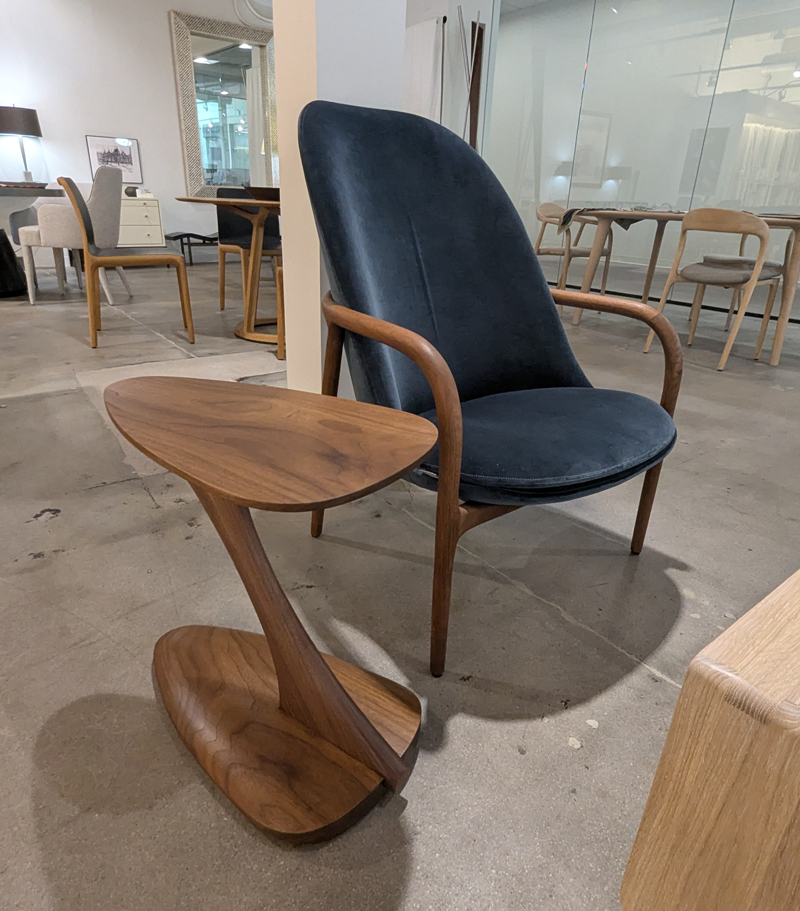
By 2004, he was building furniture full time out of his Loveland workshop, with a focus on contemporary designs featuring wood with metal accents. Unlike many modern-day furniture designers, Schlaefer still draws every design by hand.
“They introduced computer design the year I graduated, but I had already gotten used to hand-drawing,” he says. “Customers appreciate the shade and shadow that a soft-touch pencil can provide.”
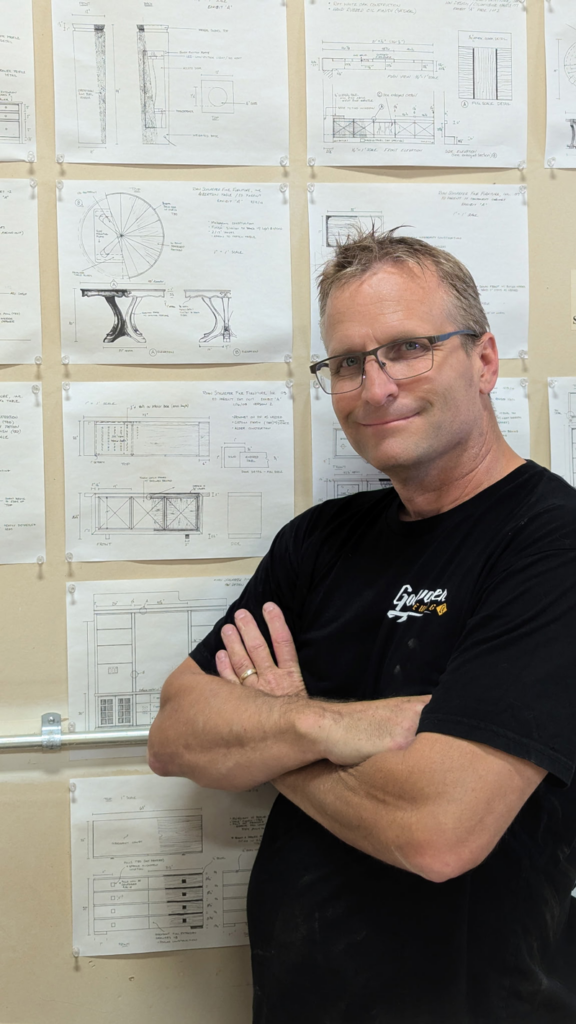
Ryan Schlaefer, owner of Ryan Schlaefer Fine Furniture.
Once a client’s design is finalized, Schlaefer builds the piece using traditional woodworking tools. Clients often begin with designs displayed on his website or in his showrooms in Denver and Scottsdale, Ariz., then they work with him to customize the dimensions, finishes, base style or storage features.
Schlaefer often incorporates distinctive artistic details into his work. His signature Thirty Three collection features textured, overlapping concentric circles inspired by record player tracks. Cabinets, consoles and tables in the collection showcase the pattern through painted lacquer finishes. His Argyle line uses raised, overlapping diamond patterns that add depth and visual interest to drawer fronts and cabinet faces.
In addition to building entertainment centers, benches and beds, Schlaefer enjoys designing game tables.
“I like them because they’re an engineering feat,” he says. “I’ve made some with recessed tops and some with pull-out drink holders. They’re always a challenge.”
For Schlaefer, it’s the added details that transform furniture into art without sacrificing function.
“My furniture is made to use,” he says, “but I still add a splash when the customer wants it to be a piece of art, [like] pink doors on a console or wall art to complement my Thirty Three line. You’re going to have something you can’t get anywhere else.”