

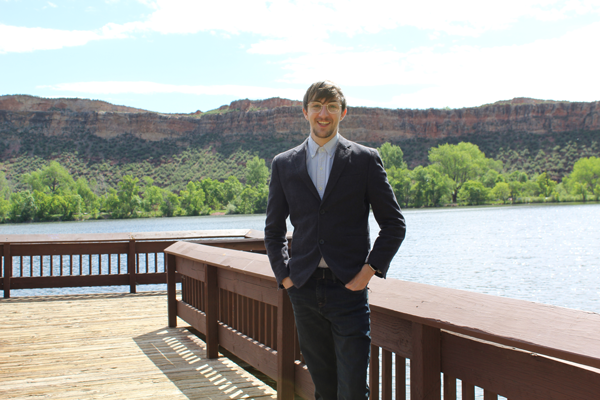

Chris Crenshaw
Publisher of Fort Collins Report, research administrator for The University of Texas at San Antonio
Age: 29
Location: Fort Collins
Tell us about yourself, your history and how you came to be where you are now.
I moved to Fort Collins two years ago, having previously lived in the Texas Hill Country and in west Texas. I earned both my bachelor’s degree and master’s degree from the University of Texas at San Antonio. After graduating, I was fortunate to be hired by my alma mater, where I served five years in academic advising and have worked for two years in grants management. My role allowed me to work remotely, so I took the chance to move. I consider myself incredibly lucky to live in Northern Colorado.
Explain your career, achievements and professional highlights.
I hold a bachelor’s degree in political science and a master’s in business administration. I’ve primarily worked in higher education, but two years ago I set down the path to build Fort Collins Report, a nonprofit news agency dedicated to delivering hyperlocal journalism. Fort Collins Report started as a passion project rooted in a simple belief that communities are stronger when people have access to trustworthy public service reporting about the place where they live.
In what ways do you give back to the community?
In the short time I have lived in Northern Colorado, I’ve found the best way I can give back to the community is by developing Fort Collins Report, with the aim to provide quality hyperlocal investigative journalism that is accountable, transparent and reliable. What started as a passion project is quickly becoming a real public service resource for the community, especially as we begin to partner with more local institutions. In the long term, Fort Collins Report will help our citizens become more connected to local civic life through free-to-access reporting on current issues and events.
What do you consider your biggest accomplishment or challenge you’ve overcome, either professionally or personally?
One of the biggest challenges I’ve taken on has been developing Fort Collins Report into something real and sustainable. It’s one thing to care deeply about local journalism, but it’s another thing entirely to build a news organization from scratch and ask people to believe in that vision. For me, the accomplishment is continuing to move that idea forward even though building something new comes with uncertainty.
Where do you see yourself in five years? In 10 years?
I know I’ll still be doing work that helps people understand where they live. Whether that is through reporting, collaborating or helping shape the future of local journalism, I want to keep contributing to work that feels rooted in service and connected to real community needs. For me, success is about building meaningful projects and durable relationships, and I want to keep building those projects and relationships here.
What piece(s) of advice would you give to your younger self?
I would tell my younger self and those of a similar age not to underestimate the value of patience and persistence. A lot of meaningful work takes longer than you expect, especially if you are trying to build something that lasts. I would also say to trust the instinct that public interest work matters, even when the path forward is not obvious. Not every worthwhile thing comes with a clear blueprint.
Tell us something unique about you.
One thing that feels unique about me is that my path to journalism, and to Colorado, was pretty roundabout. After high school, I was accepted to CU Boulder, but financial hardship forced me to withdraw. In the long run, that pushed me to be more resilient. What feels meaningful now is that I was eventually able to come back to Colorado and build a permanent life here.
How did you get into journalism?
Journalism was with me early, even before I realized it would become such an important part of my life. In high school, I spent years as a newspaper and yearbook editor and competed in newswriting competitions. Still, it took me about 10 years to come back to journalism. I eventually returned to it because I felt there was a real need for it in Fort Collins, particularly at this moment in our community and nation.
What is the goal of Fort Collins Report?
At its core, Fort Collins Report is meant to be a community-led project. I want it to be something people feel they can contribute to, whether that means sending a tip, writing a letter to the community, supporting the work through a donation or reaching out to collaborate. It is also important to me that the platform creates space for others doing public work in Fort Collins. My hope is that Fort Collins Report continues to grow as a trusted resource that not only reports on the community but grows alongside it.
How do you find success in what many consider a struggling industry?
Journalism is under real pressure, especially at the local level. Success in a struggling industry starts with being indispensable to your community. If a news organization consistently delivers the information a community needs, then it creates real value that people notice and support. You have to focus on serving your community, earning trust and building a sustainable model around that mission. To me, success in journalism today comes from recognizing that while the old business model is struggling, the public need for journalism is more obvious now than ever.