

College recruiters agree on one thing when it comes to students picking the right university, even if they’re not shy about hoping those students choose theirs: It’s never too early to start your search.
“If you’re in town, come visit,” says Heather Daniels, director of admissions at Colorado State University. “We have general tours and informational sessions, and then as you move along in high school, we can make them more personalized.”
Daniels knows that people like her usually only get one shot to convince students to enroll at their university. She wishes students started their search earlier, even in middle school, so they’d have more time to get to know the schools. General tours, even self-guided ones, help students decide if they want to learn more about a school. If they do, universities can offer deeper looks, not only in person but online.

A tour at Metropolitan State University of Denver. Photo by Joshua Geurink.
Here are some other tips to help students and parents make upcoming college visits worthwhile.
Communicate your interests. Universities love it when touring students are specific about what they may want to study. That helps schools tailor their tours to them and show how they can meet their interests. Prospective students may even have the chance to walk through specific departments or attend a class related to those areas of study.
“We can’t guarantee a special tour for a specific program,” says Jill Schmidt, director of undergraduate recruitment at Metro State University in Denver, “but a large portion of our campus can provide that. There are dozens of people from all our programs who specialize in recruitment.”
Ask yourself what’s important. Students and parents need to know their values and lifestyle before they visit so they can determine whether the university caters to them, says José Davíd Reynoza, associate director of recruitment at the University of Northern Colorado. Heads up, parents: Your values may not align with your kids’, so don’t try to force your expectations onto them. Differing opinions may arise when it comes to, say, the kind of clubs the school offers. Students may also require support services for mental health, disability accommodations or extra help with math (who doesn’t?).
“You want to feel like people are rooting for you and feel a sense of belonging,” Reynoza says. “That can mean a lot of different things to people.”
This is true even if the student’s friends are sold on a specific university. It’s good to realize that their experience may not align with others’ and is the only one that matters.
“We have a motto at UNC: ‘What will your story be?’” Reynoza says. “The point is your story is unique to you.”
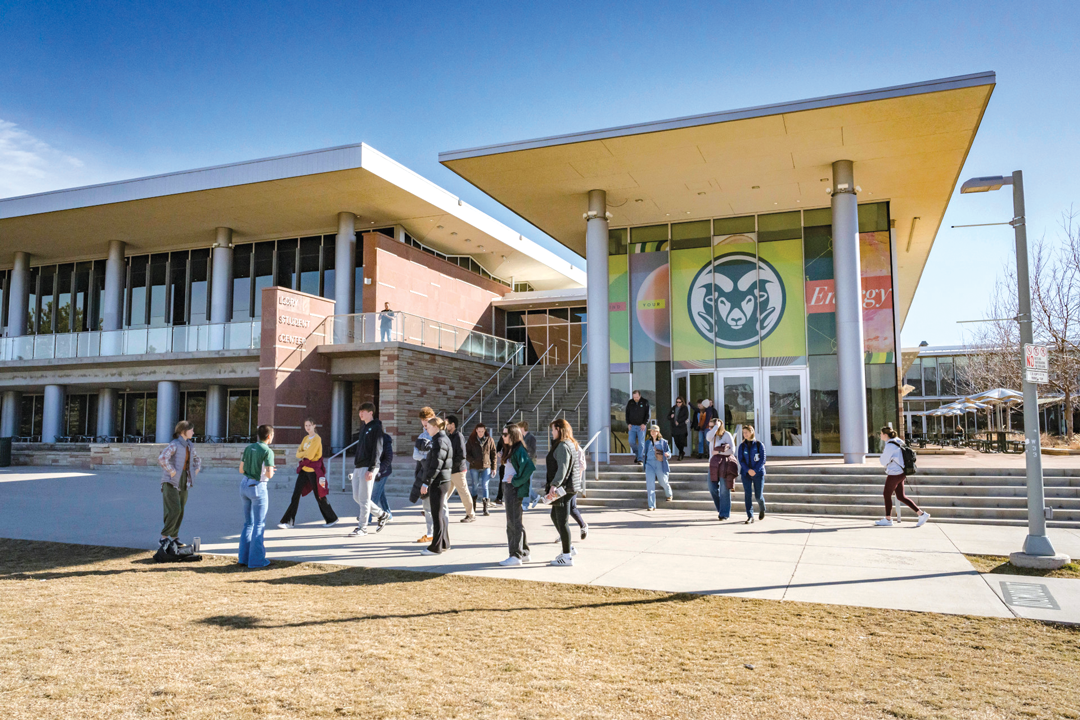
A tour at Colorado State University in Fort Collins. Photo courtesy of CSU.
Explore the whole campus. A drive-by is no way to see a university, Daniels says.
“It’s an open campus,” she says. “Get to know us.”
Many buildings are open, at least during the day. Residence halls are generally the only buildings that are locked, for obvious reasons, but you can ask for a tour of them.
Recruiters say other good places to visit are the university’s dining halls, student center, library, recreation center, residence halls, support services (like a wellness center), tutoring spots, performance halls and stadiums.
Be wary of the weather. Students’ perception of the universities they visit are “shockingly” impacted by the weather, Schmidt says. They tend to like the school better on a good weather day. If the weather isn’t ideal on the day of your tour, you might consider rescheduling it.
“There’s some merit to students being proactive about the weather,” Schmidt says. “We will offer the tour regardless, and I’d rather they come, but you should be mindful about the conditions and how they may affect your feelings.”
Pick a time when students are around. The most popular times for campus tours are when students aren’t around, such as spring break, the holidays and summer. But that doesn’t help a student see the culture.
“The best time to visit is when students are here,” Daniels says. “That’s when they can see themselves in those roles.”
Experience the city too. Many students forget to look beyond the universities and check out where they are located, Daniels says.
“It’s not just the campus where you’ll be spending time,” she says. “This will be your home for four years.”
See the nearby grocery stores, bike paths and trails, coffee shops, downtowns and places to grab a bite. The city’s transportation is important, too, since many college students don’t have a car, especially in their first year.
Students should be able to see themselves as a part of the overall community, not just the one on campus, Daniels says.
“We send out a postcard to incoming students, and it’s from the Fort Collins mayor and the university president,” she says. “That’s intentional. It says ‘Welcome home.’”
Types of College Tours
There are many ways to check out a university. Often introductory presentations are followed by in-person tours, group visits or one-on-one meetings with admissions counselors. Many schools also offer these in Spanish.
Oftentimes colleges host open houses. Some even offer specialized visits for transfers and older students.
These can all be scheduled on the university’s website, where you can sometimes also find a virtual tour of the campus, information on self-guided visits and maybe a deal on a parking pass.