

Our sense of smell holds immense power to trigger memories and activate emotions. A particular perfume may bring us back to a moment when we held someone special close. The smell of cookies baking in the oven might evoke the warm feeling of being back at Grandma’s house. That’s because smells directly connect to the cognitive, memory and emotional centers of our brains—something well studied by neuroscientists.
“The olfactory system (responsible for the sense of smell) is very much regulated by the brain, stimulating a feeling of happiness or sadness or creativity or focus—whatever it is that you’re wanting to bring in,” says Kecia Doll, owner of Kecia’s Blends in Greeley.
The science behind our sense of smell is also what drives the practice of aromatherapy: the use of concentrated plant extracts, or essential oils, to promote physical and mental wellbeing.
Through her business, Doll, an esthetician of 26 years, sources organic, therapeutic-grade essential oils to create custom blends aimed at unlocking the full potential of smell. With hundreds of essential oils to choose from, the ability to create desired effects comes down to research, creativity and a bit of trial and error.

Kecia Doll
Using essential oils
Using a diffuser to disperse essential oils into the air is one of the most common and potent ways to access aromatherapy. Diffusers circulate a fine mist of essential oils to promote a therapeutic atmosphere and even create an antibacterial effect, depending on the chosen oils.
Diffusion is how one of Doll’s customers, Brittney Murphy, owner of Brittney Murphy’s Skincare in Windsor, helps her clients relax during massage therapy appointments.
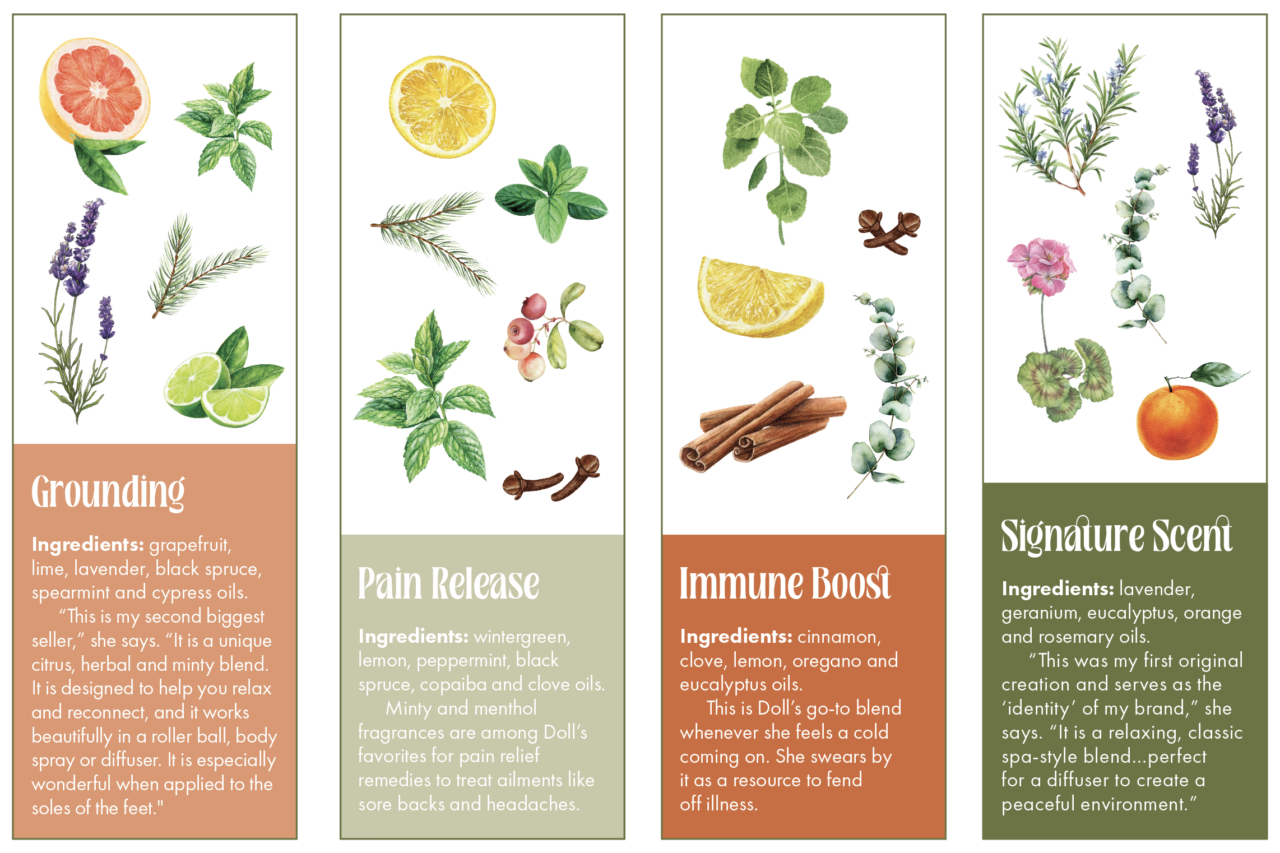
“Her grounding oil is what I start with,” Murphy says, referring to Doll’s custom blend of grapefruit, lime, lavender, black spruce, spearmint and cypress oils. “It takes you to a place of calm. It gives the thinking mind a break.”
Doll adds that aromatherapy can also be accessed by other means, like a water-based spray, which is perfect for freshening linens and bathrooms. Rollers utilizing essential oils mixed with a carrier oil, like jojoba or fractionated coconut oil, and lava bead bracelets infused with oils, can make aromatherapy easily accessible during the workday.

Brittney Murphy. Photo by E.T.C. Photography.
Choosing a scent
Aromatherapists attribute essential oils to a broad range of potential health benefits, from easier breathing and improved blood circulation to heightened focus. They can even serve as a tool to relieve depression.
“I have an oil for that,” is a motto Doll lives by. When clients come to her with a particular need, she takes the challenge seriously, researching and testing blends until she achieves the desired effect.
“You just learn what pairs well with certain things. It’s like wine. You know what pairs with your dinner,” she says. “I feel that way about essential oils.”
Her immune boost blend, for example, mixes cinnamon, clove, lemon, oregano and eucalyptus. For focus, she combines rosemary, peppermint, eucalyptus and orange.
“I do research on what oils are best for certain conditions, and then I just start tweaking it and playing with it,” she says.
Some of her favorite scents include peppermint, eucalyptus and wintergreen. Minty and menthol fragrances, she says, are good for decongestion and can provide relief from headaches, back pain and knee pain.
Safety considerations
Though they are derived from plants, essential oils may pose health risks when used improperly. They should not be ingested and can cause irritation when directly applied to the skin.
Gina Michelle, a licensed massage therapist with Malama Massage & Bodywork in Fort Collins, says essential oils should be introduced cautiously with young people. They should also be diluted.
“Children need a shorter protocol or lighter dose,” she says. “For babies, stick with how you might want to introduce food: slowly, lightly and watchful for any reactions.”
Michelle also encourages caution with pets.
“Remember, their systems metabolize differently, and they lick their bodies. It can be a very unpleasant outcome for your furry loved ones,” she says.
Doll points out cinnamon and clove as two essential oils that can be toxic to pets. Wintergreen, Australian tea tree and birch oils should also be avoided.
Options generally considered safe for use around cats and dogs include chamomile, cedarwood, frankincense and helichrysum, according to the American College of Healthcare Sciences. When in doubt, consult a veterinarian.
Exploring blends
For first-timers eager to explore essential oils, Michelle recommends turning to the experts first.
“We live in an age that gives so much information,” she says. “For a personalized approach, start with your locally sourced professionals, health food consultants and apothecary folks.”
She also suggests consulting published books from experts rather than relying on online information. Simple recipes and informative guidebooks abound for those eager to dive into the vast world of essential oils.
“Consult a professional, take a class or have a recommended book or manual to go by,” she says.
__________________________________________________________________________________________________________________
Create Your Own Blend
Doll has spent countless hours testing and developing blends to achieve specific effects, all while maintaining balanced scent profiles. Here are some of her favorite combinations available through Kecia’s Blends.