
After the disruption of COVID-19 shifted the worlds of home and work, architect Chris Aronson, CEO of VFLA Architecture + Interiors, began to notice a parallel shift in homeowners’ priorities.
More people were seeking out their own personal “third space”—something separate from their home or office—out in their backyards.
“We are definitely seeing a trend, especially post COVID, of homeowners wanting to connect with nature and almost detach from technology. So, we’re creating home designs that allow for that to happen, and it’s more built into their day to day,” he says.
That can mean carving out intimate areas outside to enjoy a morning coffee or decompress. It can also mean rethinking how the home itself connects with the outdoors to create a natural transition between the indoors and a personal outdoor refuge.
Aronson is finding that clients want a combination of outdoor options—larger gathering areas as well as smaller, private spaces—and smooth transitions between them. Here are some ideas to bring the beauty of the outdoors closer to home.
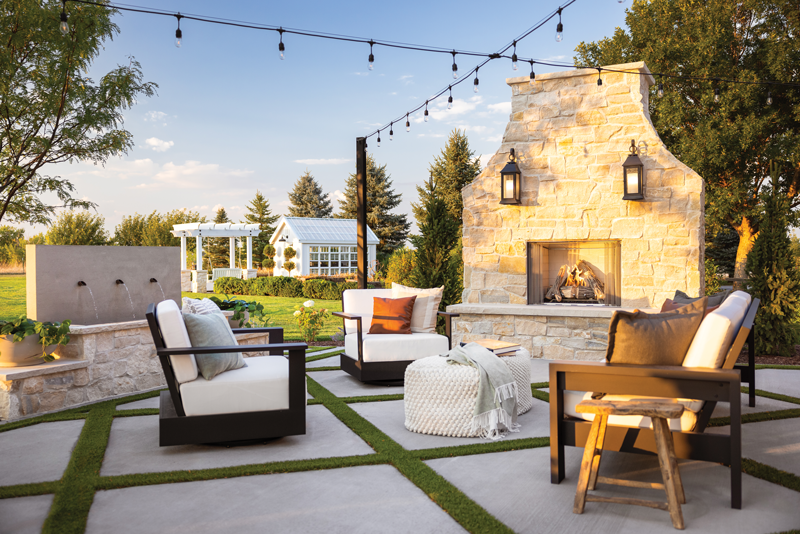
Lindgren Landscape. Photos by Nic Rentfrow.
Courtyards
One of Aronson’s recent projects coupled indoor spaces with outdoor amenities by integrating a U-shaped floor plan with a central courtyard, including a private meditation space just off the primary suite. The ease of access to this outdoor retreat, enveloped by the home on three sides, has allowed it to become a peaceful part of each morning.
“They don’t really even have to leave their primary suite,” he says, since the courtyard is accessible by simply opening the exterior bedroom door.
This type of space can also be an ideal location for a small garden, seating area or even a sauna.
“It might feel like a little ‘found’ garden space…these kinds of intimate spaces to, say, have a morning coffee, decompress, do a meditation or read a book,” Aronson says.
In new builds, Morgan Wiese, landscape designer at Lindgren Landscape, says he has noticed a trend of integrating courtyards into the front of the home, allowing homeowners greater use of their outdoor amenities. He suggests putting thought into window placements to maximize visibility and enjoyment of these spaces even from inside the home.
Another way to do this, he says, is to integrate a water element, like a fountain, into the courtyard to engage the senses, attract songbirds and create a stronger connection with nature. Well-placed windows can welcome these calming elements, like the sound of gently moving water, into the home, he adds.

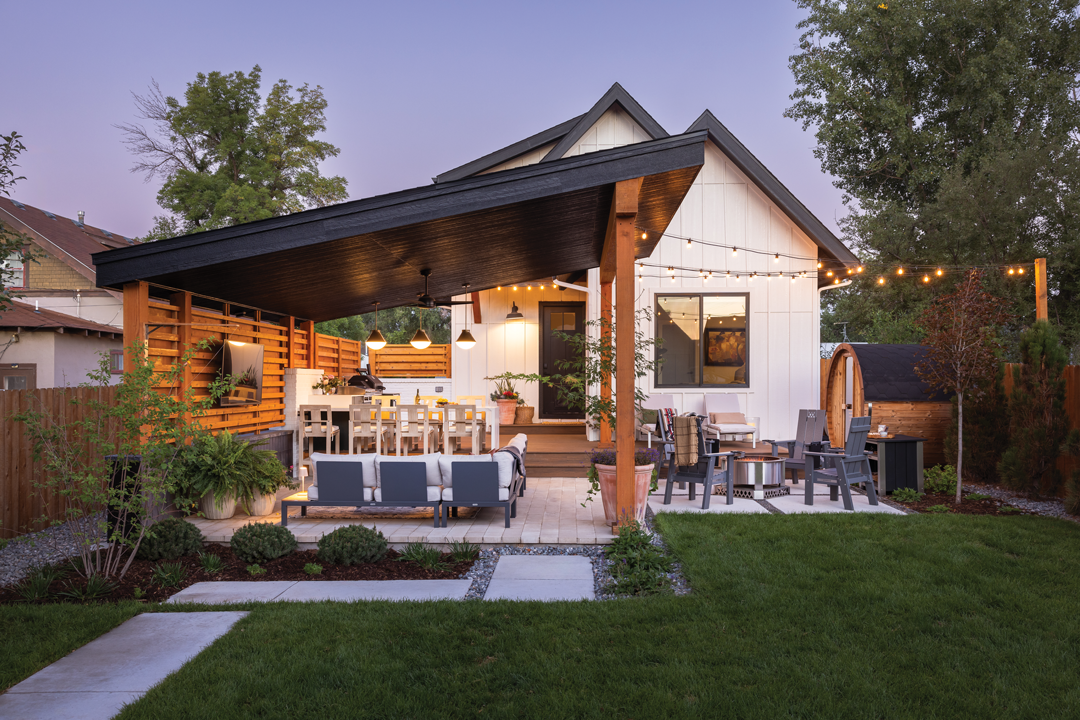
A VFLA Architecture + Interiors project in Fort Collins. Photo by James Maynard, Vantage Architectural Imagery.
Outdoor living rooms and kitchens
Whether you’re designing a covered patio or a full outdoor kitchen, Wiese emphasizes the importance of leveraging the natural assets Colorado has to offer.
“I like bringing nature into those spaces so that you don’t just have another kitchen that’s now outside and it’s nothing but the same type of kitchen you have inside,” he says. “Embracing the nature of it is always something that I really enjoy doing.”
Small touches, like hyssop flowers, can help attract hummingbirds and create a natural charm that can’t be found inside the home, he says.
A simple addition such as an overhead structure can also offer additional comforts beyond the obvious benefits of protection from the elements. Overhead coverage creates the opportunity to install lighting and appliances, like heaters and fans, in an outdoor living space to enable safe temperature control throughout the year, Wiese says.
Building a three-season porch that’s enclosed with screens creates an extension of the living space, he says, allowing more access to fresh air than a typical atrium structure, for example. Since these porches are somewhat protected from the elements, they can be enjoyed most days of the year.
To create connected outdoor spaces, Aronson says many clients aren’t afraid to go big and tear down walls to position their kitchens and living rooms with the open air in mind.
“From a space planning standpoint, we are moving kitchens closer to exterior walls so that they have easier connectivity to what we’re calling ‘outdoor living rooms,’” he says. “Instead of just a patio with furniture, it’s a deep covered patio. The furniture is more soft seating. There are outdoor fireplaces, and they’re being crafted like an indoor room, but outdoors.”
These large renovation projects, he says, are part of a desire to host social gatherings at home with the feeling of a natural oasis.

A project in Fort Collins by Greg D. Fisher. Photo by SierraAnn Photography.
A seamless flow
Walkout basements are another way to optimize the flow between indoor living and the outdoors. Many homeowners enjoy being able to throw open the back door and immediately step into the peace of a personal garden or a patio with an outdoor fireplace that’s perfect for a cozy summer evening.
Beyond creating an attractive connection to the outdoors, Fort Collins-based architect Greg D. Fisher says that walkout basements “can also maximize space, turning the backyard into a conventional design feature.”
When planning these spaces, Fisher always looks for balance, creating a “kind of yin and yang” within the home’s design.
“I’m trying to make these spaces feel appropriately scaled and have nice connections to the inside space and the outside space,” he says.
Aronson encourages the use of interior design elements to smooth the transition between indoor and outdoor spaces. Homeowners should consider the color palette, lighting and other design features, he says, to create a cohesive look that improves the flow.
“We’re seeing a lot of people trying to minimize the transition, or the threshold, at the door to the outside, whether it’s big sliders or bifold or French doors,” he says. “Lighting plays a big part, especially for evening events or get-togethers. It’s very important that the color temperature of the lights on the inside and the outside are matched.”
These finishing touches come down to personal preference, Wiese says. He encourages homeowners to envision how they plan to use their outdoor amenities. From there, they can start dreaming, planning and enjoying a life closer to nature.