


If you reach for a sweater every time you walk into your living room, or your energy bills keep climbing even though your thermostat settings haven’t changed, it may be time to upgrade your home.
Improving your energy efficiency requires an upfront investment, but it pays off in the long term through lower bills, greater comfort and a reduced carbon footprint. The challenge is knowing which projects will deliver the most value.
According to Parker Lahti, owner of Fort Collins-based ARUS Consulting, a home energy assessment is one of the best places to start. ARUS and other energy assessment companies can perform blower door and infrared tests to find air leaks as well as combustion safety tests to evaluate gas appliances. Then they can recommend the best home improvements for comfort and efficiency. Here are the top upgrades Lahti and other experts suggest to make your home more energy efficient.

Sean Ankrom, ARUS Consulting
Air sealing and insulation
Before upgrading your HVAC system or windows, Lahti says most homes need sealing and insulation since new equipment won’t help if the house is constantly leaking air. He estimates that sealing and insulation can reduce energy bills by 50 percent or more.
Justin Schuh, owner of Koala Insulation in Loveland, discovered this firsthand while renovating his 1960s home. After replacing the windows, he still couldn’t keep the cold air out. It wasn’t until he replaced the home’s insulation that he felt a major difference.
“Finally, we didn’t have to wear sweaters and slippers when our thermostat said 72,” he says.
Air sealing and insulation are also among the least invasive efficiency upgrades. Most work happens in the attic, where many leaks originate.
“Eighty percent of a home’s comfort comes from attic sealing and insulation,” Schuh says. “Every bit of air that escapes allows room for new air containing dust and pollutants to seep in while making your HVAC system work harder.”
Schuh recommends sealing at the time of insulation. His crews use spray foam and foam board to seal top plates, recessed lights and plumbing and electrical penetrations.
Next comes fiberglass or cellulose insulation, the most common products used in Colorado. Both typically cost $2,000 to $5,000 installed and carry 20-year warranties. Fiberglass lasts longer, while cellulose dampens sound and contains boric acid that helps deter insects and rodents.
Spray foam insulation is less commonly used, according to Schuh, because it costs eight to 10 times more while improving efficiency by only an additional 10 to 15 percent.
“The ultimate efficient house would be totally coated in spray foam, but the cost is often prohibitive,” he says.
Rebates up to $1,600 are available for sealing and insulation through the Colorado Home Energy Rebate Program as well as local energy providers like Xcel Energy and Poudre Valley REA.
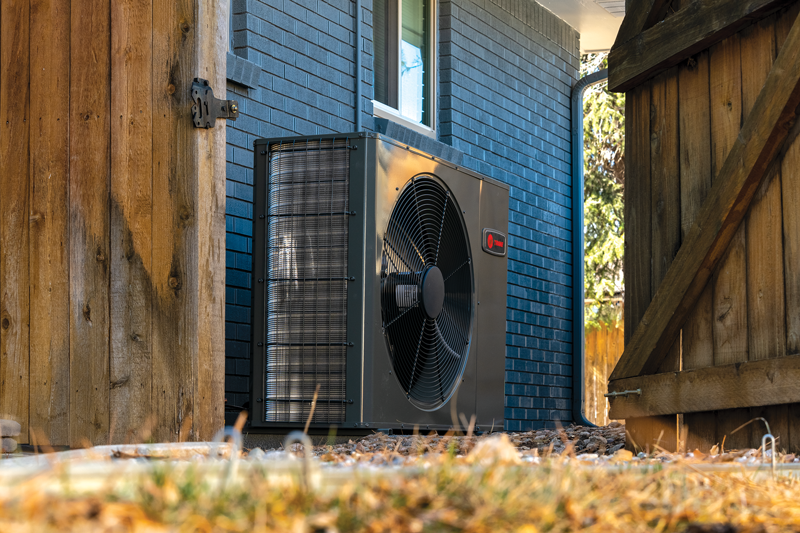
Heat pump installed by Sandbox Solar.
Heat pumps
Heat pumps are the next best efficiency upgrade, says Cesar Kokoletzi, energy resources specialist at Poudre Valley REA. Though the technology has existed for decades, it has surged in popularity recently as homeowners attempt to reduce their gas dependence and greenhouse gas emissions.
Ashley Forgacs, HVAC program director at Sandbox Solar in Fort Collins, explains that while traditional HVAC systems burn fuel to create heat, heat pumps move the heat already in the air or ground, pulling warmth inside in winter and removing it in summer. As a result, they deliver two to four times more energy than they use.
According to Kokoletzi, this makes heat pumps up to twice as efficient as propane or natural gas furnaces.
Upfront costs run from $10,000 to $20,000 or more installed, but Forgacs says homeowners can expect to see 20 to 50 percent lower energy bills, adding up to potentially thousands of dollars annually. State rebates from $3,000 to $8,000 are available to offset the cost, and most energy providers offer additional rebates.
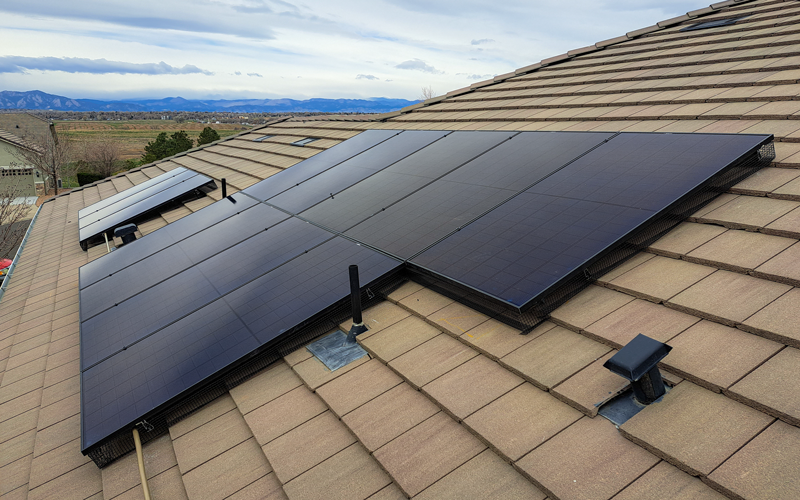
Sandbox Solar
Solar panels
Solar panels can further improve efficiency by generating electricity onsite and reducing dependence on utilities and fossil fuels, Lahti says. They also provide power outage protection when paired with solar batteries.
Justin Wojtarowicz, solar and battery consultant at Sandbox Solar, says many customers are drawn in by the promise of self-sufficiency.
“Customers want to get away from being at the mercy of utility rate increases and outages and take control of their own power,” he says.
Homeowners with all-electric or mostly electric homes typically see the fastest payoff, as solar panels can directly offset electric consumption. However, solar isn’t ideal for every home. Roof orientation and shade can affect productivity, and customers with comparatively low energy rates will see longer waits for their return on investment.
Wojtarowicz says the average solar panel array costs around $20,000, with batteries running around $16,000. Many homeowners finance the project, effectively swapping their average monthly energy bill for a loan payment. The Colorado Residential Energy Upgrade Loan, or RENU, offers no-money-down, low-interest loans through partnering credit unions for solar panel installation as well as loans for heat pumps, insulation and window upgrades.
Customers typically see their solar investment pay itself off after 10 to 12 years, Wojtarowicz says, and they can reap the financial benefits for at least the rest of their 25-year warranty.
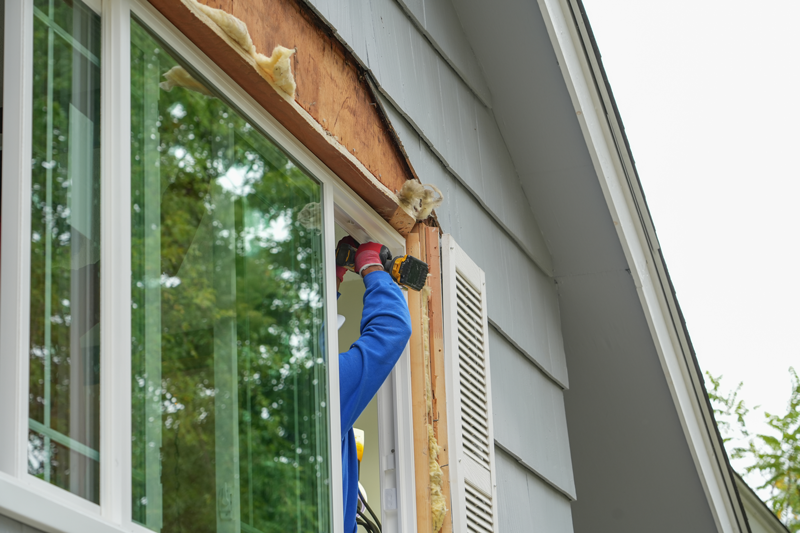
New windows and doors
Once larger projects are complete, Lahti says homeowners can address remaining leaks with upgraded windows and doors.
Brandon Zokosky, owner of Loveland-based Colorado Window Experts, says that when it comes to windows, cold-to-the-touch glass, stained sills and anything installed before 2005 signal it’s time to upgrade.
Modern building codes have replaced the clear glass of the early 2000s with low-emissivity (Low-E) glass, which reflects heat away in summer and back inside in winter. Double-pane windows remain standard, and some manufacturers offer gas-filled double panes for improved insulation. However, Zokosky says Colorado’s altitude makes gas-filled windows difficult to transport without shattering, and finding them can be a challenge.
Window frame materials have improved as well, with high-quality vinyl replacing older aluminum, steel and wood. Exterior door composition has moved away from solid wood, with steel-clad doors offering durability and fire rating and fiberglass providing dent-resistant aesthetics. For sliding doors, premium vinyl is the top choice for value, and wood-clad serves as a premium alternative.
With so many options available, Zokosky says homeowners should decide what works for their home’s aesthetic and their budget, keeping in mind that builder-grade windows and doors allow more air infiltration than premium materials.
Windows cost $1,000 to $3,000 per opening on average, he says, while sliding doors range from $2,500 to $8,000, and hinge doors are typically $1,000 to $1,500.
Baby steps to saving
Sometimes the simplest fixes are the best place to start. Adjusting thermostat settings by even a degree or two, changing air filters regularly and reducing utilization by “energy vampires” (devices like toasters, coffee makers and hair dryers, which drain energy even when not in use) can add up to savings over time.
“A zero-investment thing you can do right now is walk through your house and see what’s plugged in,” Kokoletzi says. “That space heater that cost you $40, when run constantly, can add up to $100 per month on your energy bill.”
______________________________________________________________________________________
More Upgrades to Help You Save
Replace your water heater
Heat pump water heaters use ambient air to heat water. At around $3,500 to $6,000 with installation, Forgacs says these highly efficient systems save you money in the long run, though actual amounts vary based on household size, water use and the heater you’re replacing. Rebates are available through the state and local energy providers.
Install a smart thermostat
These Wi-Fi-enabled devices automatically adjust your home’s temperature to save you money. Some contain sensors to detect when you’re home and adjust settings accordingly, while many allow you to set and change your schedule via a phone app. Costs generally range from $100 to $250, and rebates are typically available through your energy provider.
Opt for ENERGY STAR appliances
Stacy Manweiler, manager at Manweiler Appliance in Windsor, recommends upgrading to ENERGY STAR certified appliances. She likes newer washing machines, which typically start at $500 and average around $16 per year in energy costs compared to the $50 to $100 range for the non-certified machines of the early 2000s. New refrigerators are another great option, starting at around $800 and averaging $50 in annual energy costs compared to the $100 to $150 range two decades ago. Rebates are available through most energy providers.