
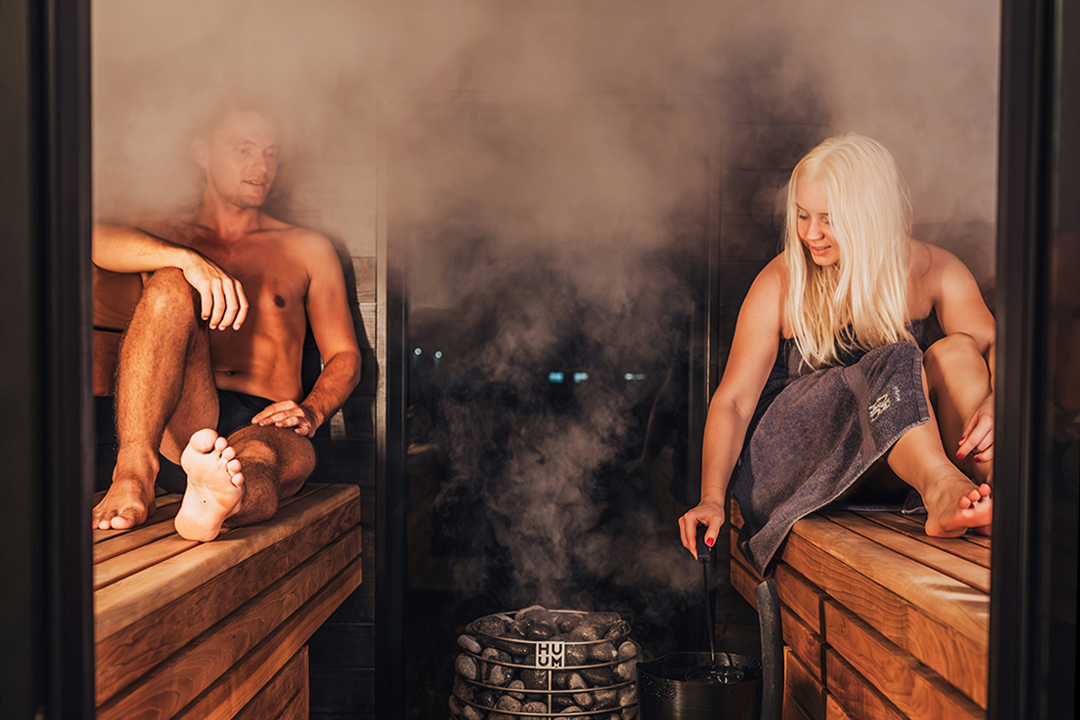
Brock Riutta remembers a time growing up in upper Michigan when his large family would gather nearly every night. Instead of getting together over a beer or around a fire pit, they would all pile into a sauna together.
“My grandpa, uncles and cousins would all come over, and we would all take a sauna and hang out,” he recalls.
That particular area in Michigan has a large Finnish population (Riutta is of Finnish descent as well), where nightly sauna sessions are the norm. They come by the habit naturally: It’s estimated that 90 percent of the Finnish population sits in a sauna weekly. And while saunas are popular in many countries, the Finnish are said to partake more than any other group.
Naturally, when Riutta moved to west Greeley five years ago, the first thing he did was build a sauna in his basement. Sauna sessions are how he unwinds, and they help with the aches and pains that come from working in construction.
It appears that many others are now making saunas a part of their routine too.
Foundry Sauna installed by Grey Rock Landscape and Construction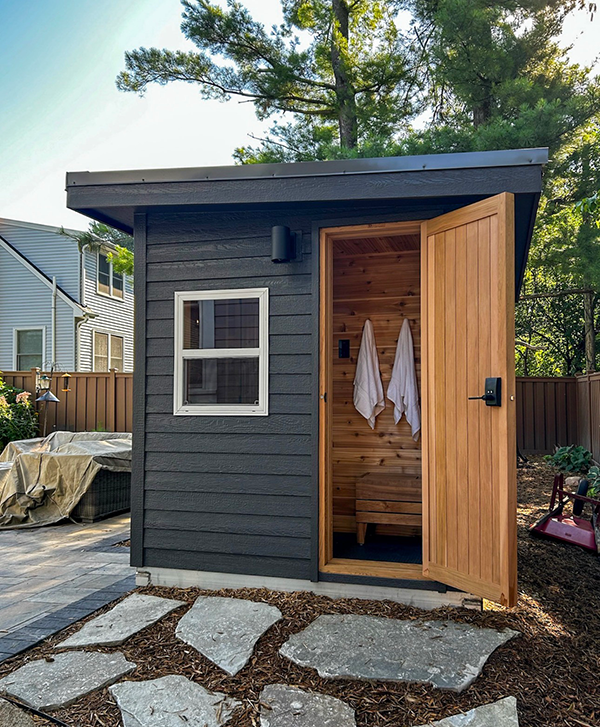
Saunas are hot, hot, hot
Saunas have been a staple in many gyms for decades, but more standalone sauna businesses have popped up all over Northern Colorado in recent years. Some businesses build them in homes, drive mobile saunas to events or host wellness gatherings where customers can use them for a fee.
Perspire Sauna Studio is a sauna center, one of six such franchises in Colorado with more on the way. Gerald Chen’s Johnstown studio opened in mid-December, offering eight sauna suites where singles or couples can sit in an infrared sauna for 40 minutes. The suites come outfitted with TVs, fresh towels and showers equipped with a feature that provides 45 seconds of 40° F water.
The lack of exertion is part of what has made saunas so appealing, Chen says.
“You don’t have to ‘work for it’ when it comes to benefiting from saunas,” he says. “All you need to do is enter the sauna, relax and even watch TV. It’s a passive approach to achieve health benefits.”
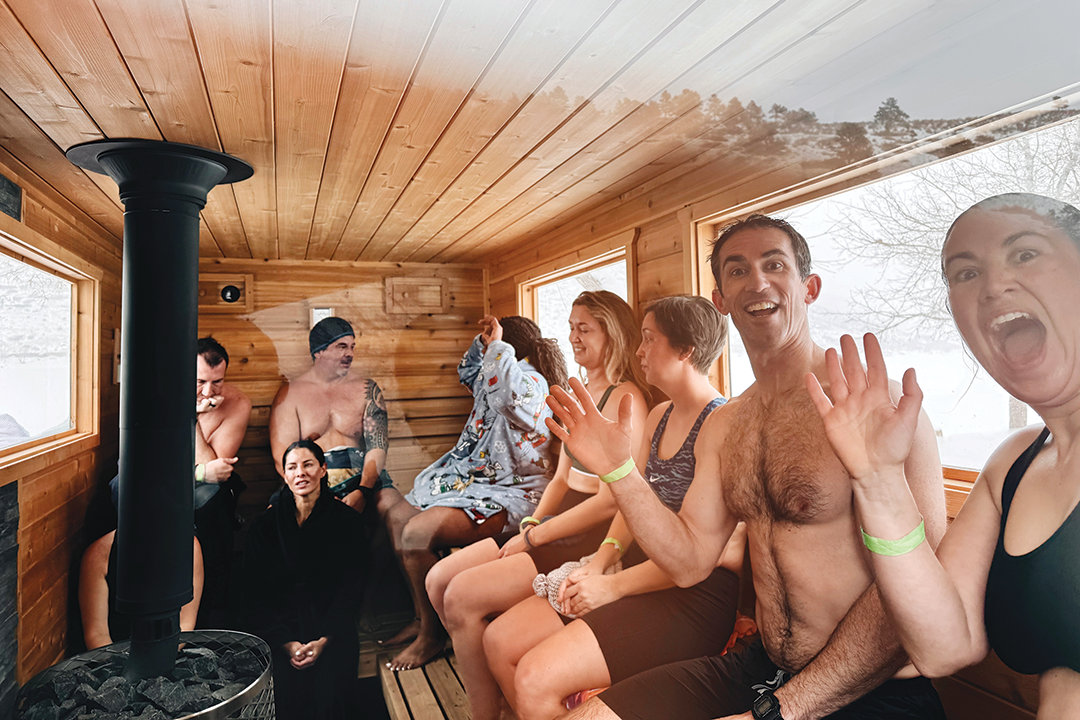
Mike Soderholm sells custom and mobile saunas as part of his business, Foundry Saunas. He also has a mobile sauna set up at Horsetooth Reservoir’s Sunrise Swim Beach every Sunday October through April for those who want to sit in a traditional steam sauna and then take a cold plunge in the reservoir.
The 10-person sauna sells out most days and is generally booked two to three weeks in advance, often by repeat users. Soderholm offers 70-minute sauna sessions, allowing time to alternate between steam heat and cold plunges.
He also sells mobile saunas to those who want to create their own business. For example, Lakeside Sauna Club at Stagecoach Reservoir outside of Steamboat Springs offers a similar experience to Soderholm’s mobile sauna at Horsetooth.
However, Soderholm’s sauna experiences aren’t limited to reservoirs. He also offers them for rent, with or without changing rooms, and they have made appearances at breweries, weddings, music festivals and even corporate events.
••Sauna Vernacular••
Löyly
(pronounced “loy-loo”) is a Finnish term for the steam and intense heat that rises when water is thrown onto hot sauna stones,” Soderholm says.
He believes it represents rejuvenation, connection and the harmonious blend of heat and water for a deeply relaxing, almost spiritual cleansing.
“It’s more than just steam: It’s the enveloping, soothing wave that transforms a hot room into a true Finnish sauna, releasing stress and promoting well-being,” he says.
Sauna sessions at home
While there are plenty of opportunities to sauna around town, many opt to have one installed on their property so they can use it whenever they want. Soderholm sells outdoor Voyager Custom Saunas with a starting price of $25,000 and can customize them to the owners’ preferences, from the roof pitch and bench placement to the size of the lava rocks. Customers just need a concrete pad and access to a power outlet.
Though Soderholm sells the occasional basement sauna, he recommends outdoor saunas because of the experience they provide.
“There is something magical about stepping outside for the sauna,” he says.
Grey Rock Landscape and Construction, a Laporte-based landscaping business, can do the prep work for your outdoor sauna or sell you an entire sauna package, says Mohamed Trabelsi, director of sales and design. Depending on the type of sauna and any bells and whistles you may want to add—like additional cold plunge or water features—their at-home saunas can range from $5,000-30,000.
Sauna kits without landscaping prep work range from $3,000-4,000, though Soderholm warns that some entry-level saunas are not “built for something that goes from 0-200° F.”
Trabelsi has seen a rise in interest in home saunas and recently ordered one himself. He says saunas can help you take advantage of your backyard throughout the colder months.
“It is a great way to connect with nature,” he says.
Infrared or traditional?
There are two types of saunas: traditional (with or without steam) and infrared. A traditional sauna uses intense heat, from 150-200° F, and often incorporates water poured over lava rocks to create steam.
The steam, for some sauna aficionados, is an essential part of the experience and is crucial for opening pores, soothing muscles and promoting blood flow. Most scientific studies on the benefits of saunas were performed on subjects using traditional steam saunas.
Riutta’s basement sauna is a traditional style. It’s heated by an electric stove (though a wood-burning stove can also be used), and he throws water on the rocks to create steam. He usually soaks for 30-45 minutes.
Infrared saunas use light to heat the body. This allows for lower temperatures, ranging from 110-140° F, which can be more comfortable to some users.
The main benefit of infrared saunas, according to Chen, is that the light can “heat from within,” penetrating two-to-three inches into the body. This type of sauna has no moisture added to the treatment.
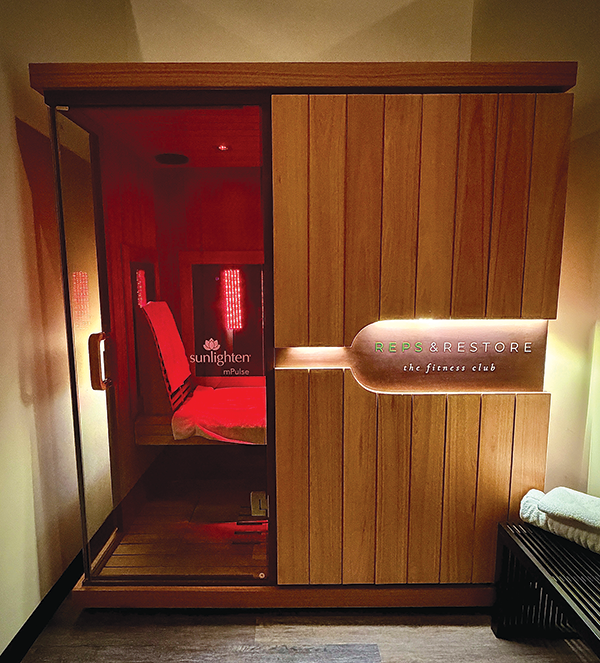
Infrared sauna at Reps & Restore
What are the benefits?
Saunas have been found to improve blood circulation, detoxify the body, promote healthy skin and ease aches and pains. Athletes have long used saunas after their workouts to help with recovery.
“I really feel like the sauna cleanses you,” Riutta says. “You get to sweat it all out.”
More recent studies promise even greater benefits. A large-scale study from the University of Eastern Finland of Finnish men who sit in a sauna four or more times a week found that the sauna significantly reduced cardiovascular disease and mortality. Sitting in a sauna increases your heart rate, the same effect as moderate exercise, the study found, and it can lower your blood pressure over time. Immune support is another touted benefit. The Cleveland Clinic also cites a lowered risk of dementia, improved lung function and managing psoriasis.
Many have discovered what Riutta and Soderholm, a Minnesota transplant raised in a Norwegian, sauna-loving community, have long known: There’s a social connection made in saunas as well. When strangers sit in his mobile sauna, Soderholm has noticed they have meaningful conversations.
“It becomes a place to socialize,”
he says.
Soderholm points to the Othership saunas in New York, which have added parties with music to their sauna sessions. But he and others also recognize that saunas offer an opportunity to rest.
“It is a cost-effective option to recharge and relax,” Chen says. “We have people who come in who just need some personal space. It is like a private escape.”
How to Sauna
It’s recommended that you hydrate adequately before, during and after a sauna session to counterbalance the intense sweating and restore electrolytes. Removing makeup before a session allows your skin to receive the full benefits of the infrared heat—and, often, the benefits of added red light therapy—in an infrared sauna. A swimsuit or going au naturel is recommended during a sauna session, but if you prefer to remain clothed, loose-fitting clothing is best.
Those who should exercise caution before entering a sauna include pregnant women, anyone with cardiovascular health issues or a pacemaker and those under age 10. It’s recommended that those groups consult with their doctor prior to using a sauna. Some sauna businesses require guests under 18 to be accompanied by an adult.
Contrast therapy (alternating between heat and cold) is touted by many as a way to improve circulation and reduce inflammation. Anyone can try it at Reps & Restore, a workout- and recovery-focused fitness club in Fort Collins. Owners Dom Campana and David Sorensen offer group cycling and strength training classes along with infrared sauna and cold plunge tubs.
Campana recommends those who sauna sit at around 150° F, then jump into the cold plunge for maximum benefits.
“The shock to your body is like a dopamine hit,” he says.

Foundry Saunas