
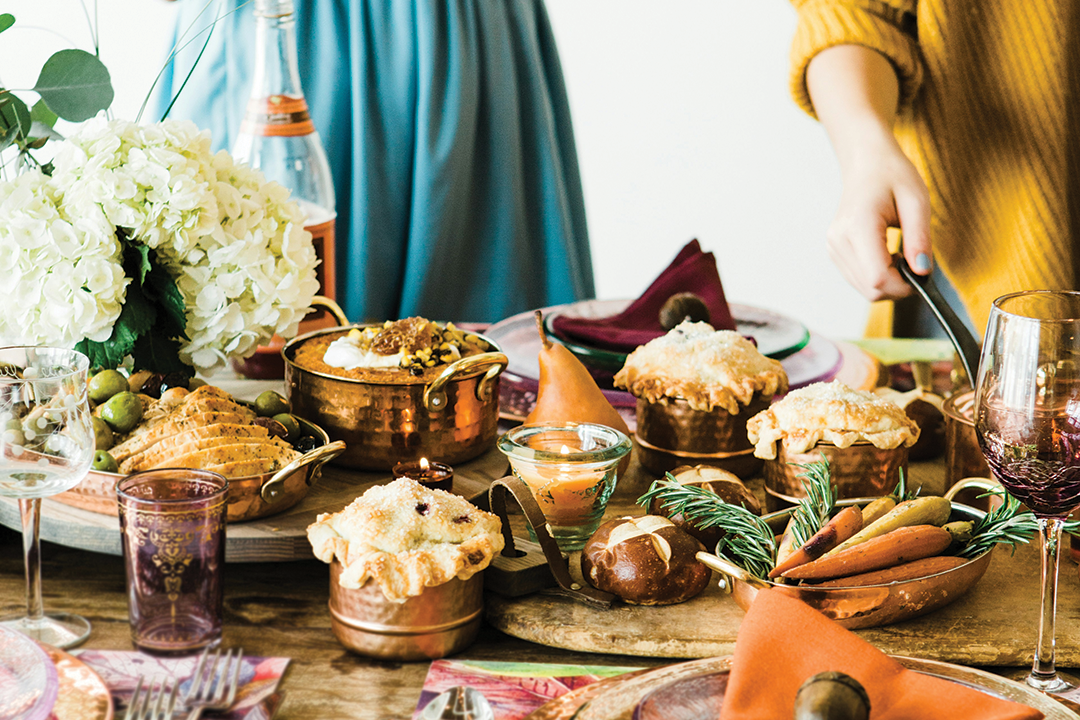
Dane Bellamy doesn’t really celebrate Thanksgiving, but he makes a mean feast.
Bellamy, the private chef and caterer behind Fort Collins-based Dinners with Dane, roasts about 20 turkeys for his clients each Thanksgiving.
“By that point, I’m pretty turkey-ed out,” he says.
Instead, Bellamy opts for Friendsgiving, an unofficial holiday that often accompanies or replaces Thanksgiving celebrations around the same time of year. Hosts bring friends and “chosen family” together to share food, drinks and good times.
History of the holiday
While the term “Friendsgiving” is relatively new, the idea of celebrating Thanksgiving among friends has existed in popular culture for decades. Early concepts appeared in movies like “A Charlie Brown Thanksgiving” in 1973 and “The Big Chill” in 1983, and it more recently served as the topic of episodes in sitcoms such as “Friends” and “New Girl.”
Today, the term is an official entry in the Merriam-Webster dictionary. In 2023, nearly a fifth of Americans said in a survey that they planned to celebrate Friendsgiving, with participation led heavily by Gen Zers and millennials, according to consumer analytics platform CivicScience.
Even as the holiday grows in popularity, Northern Colorado residents who celebrate say it can look a lot different among various groups. Many people are experimenting with how they want to celebrate it since there aren’t any real guidelines.
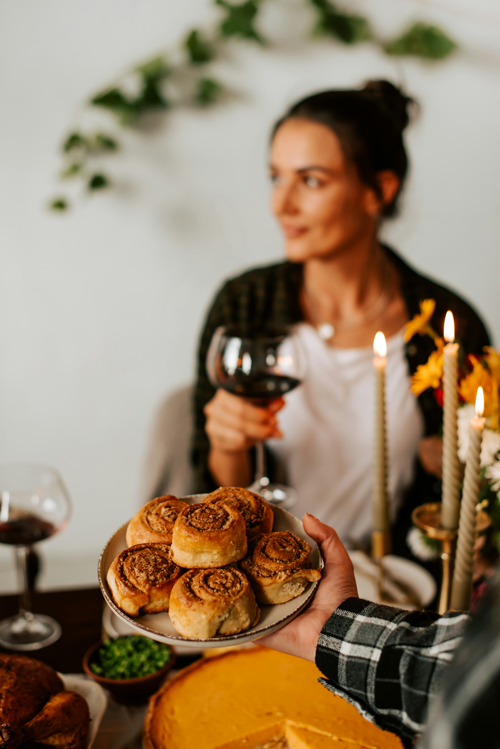
Photo by Kateryna Hliznitsova.
No “right” way to do it
Friendsgiving can range from a casual gathering at home to a fully catered event, says Amie Ingram, owner of Windsor-based event planning company Eventfully Unique. Questions like when to hold the event, what to eat and whether it will replace the traditional Thanksgiving gathering all depend on the people you’d like to invite and the group’s preferences, she says.
For example, friends who live in different areas of the country but travel home to see family might choose a day close to Thanksgiving when everyone is in town. Others who don’t travel for the holiday and don’t have family nearby might replace their Thanksgiving meal with Friendsgiving.
“It doesn’t necessarily have to be with your close friends or your girlfriends,” Ingram says. “This could just be associates who you work with.”
Ingram is following her own advice this year. She and two other event planners are putting together a Friendsgiving for colleagues in the hospitality and wedding planning industries. While the event is work-related, they’re aiming for a communal feel. Guests are encouraged to bring their families.
The group, NoCoSEN, will host their Friendsgiving on Nov. 18 at The Grainhouse in Windsor. The venue will cook a special meal that includes turkey, and attendees are invited to bring a dessert to share.
“We’re going kind of traditional,” Ingram says.
But not all Friendsgivings require a turkey.
The food and festivities
If he is hosting, Bellamy usually chooses to cook a ham instead of a turkey simply because he prefers it. At past gatherings, he has also helped prepare all-vegan and sushi-themed Friendsgivings. At one Friendsgiving in Montana, he found different ways to use mushrooms the group foraged.
Those who are planning to host Friendsgiving but don’t want a mess in the kitchen can rely on the more typical potluck. They might also want to consider an event with just drinks and a dessert bar, Ingram says. Competitive groups could even turn it into a bake-off, she says.
The key to Bellamy’s and Ingram’s Friendsgivings is a willingness to build each event around those in attendance. Not sure who to invite? Start with five close friends, then have each of those friends invite one person, Ingram says.
Ingram plans to begin her event with a gratitude practice, using either a slideshow or a jar containing notes about what attendees are grateful for. If she chooses the jar, she might pull out the notes during dessert, after everyone has had a chance to converse and enjoy their meal. Her Friendsgiving will also include a timed puzzle competition for groups to see who can finish the quickest.
If a friend group doesn’t seem inclined to do a planned activity, there is no pressure to have one. For Bellamy, who often travels to see friends, any Friendsgiving activity is a spontaneous part of the visit. At the vegan Friendsgiving, which was held in Asheville, N.C., the group decided to go for a hike.
Bellamy attributes his many Friendsgiving trips to his wife, who has a large group of friends scattered across the country. He suspects Friendsgiving has become so popular because Americans grow independent from their family units at a young age.
“We leave, generally, around the age of 18,” he says. “We make a whole new life with our friends, and they mean just as much to us as our family does.”