
In January, Superintendent Brian Kingsley wrote a letter to parents, teachers and staff in Poudre School District about Larimer County’s declining birth rates and weak migration. Kingsley thought the letter may raise hackles—just two years ago, the district abandoned plans to close schools after an outcry by parents, and those bruised feelings were still a little fresh—so he tried to be reassuring.
“Let me be clear,” he wrote. “This message is not announcing school closures.”
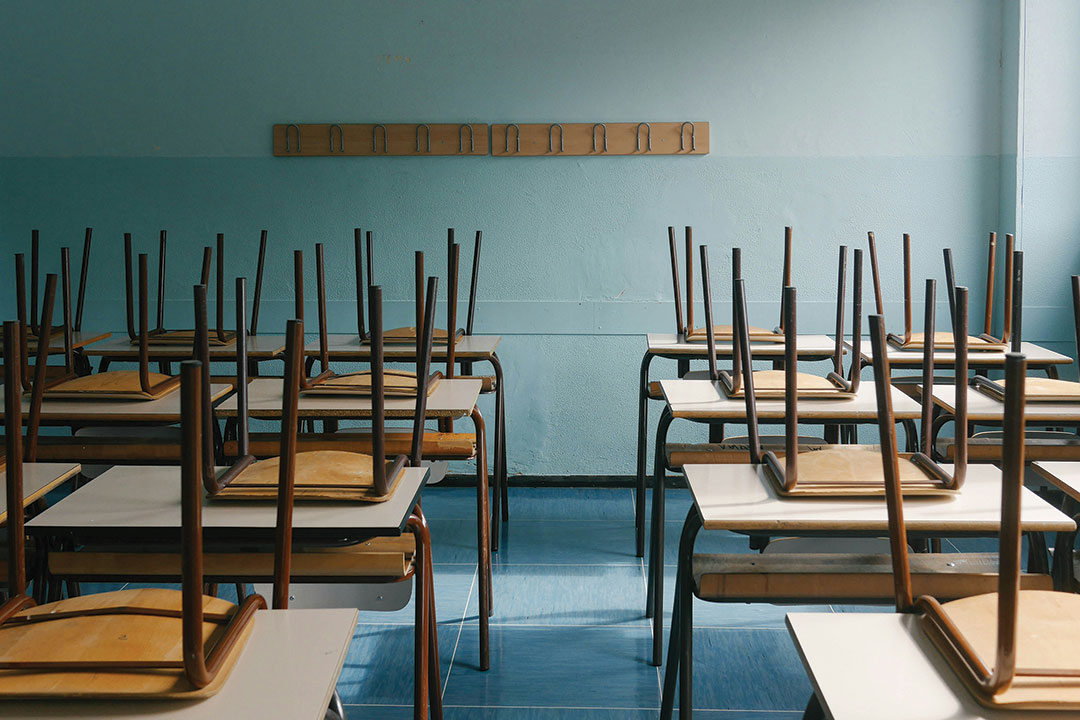
But it was foreshadowing. On Oct. 20, district officials plan to release a list of schools they believe should be closed following this school year. The board will vote on the recommendation Nov. 3.
No one wants to close schools, but the district says the demographics demand it. Fort Collins is simply getting older. Just 23 percent of all households in Fort Collins have school-aged children.
Colorado is also getting older, and so is the U.S. and even the world. Kate Watkins, who was the state demographer for two years before leaving in July, showed the Poudre School District Board of Education a map during a presentation in January. Countries that didn’t have a birth rate of 2.1 children, considered replacement level, were shaded pink. It must have been Wednesday: The whole world, except for Africa, wore pink.
PSD lost 500 students in the 2025-26 school year alone. This matters because the number of students is how the state determines how much money a district receives. Fewer students means less money.
“For PSD,” Kingsley wrote, “this creates real financial pressure.”
Districts in Colorado and across the nation are facing that same financial pressure, save for outliers such as the Greeley-Evans School District 6, says Dr. Traci Gile, assistant superintendent of schools for PSD, because nearly all school districts are funded the same way.
“It’s actually more common to have closings than not have closings,” Gile says. “It’s probably the largest issue school districts are facing right now.”
A collaborative process
Gile anticipates some tough meetings with the public this fall regarding the recommendation to close Fort Collins schools. But she was optimistic that the conversation might be more civil this time.
“I think families are much more aware of what the problem is,” she says. “They’re seeing the local impacts of reduced staff and services, and it feels like there’s much more acceptance and realization that you can’t continue like this.”
Soon after the school board voted 7-0 to keep schools open in 2024, the district began working to determine their future. On April 7, 2025, a planning committee for facilities had its first meeting. The committee includes school administrators, staff and teachers, but it also includes parents. The district asked parent groups at each school for input as well.
This time, the community helped develop the criteria to determine which schools should be closed, which was approved by the school board in late May, Gile says. Parents also serve on four action teams that will apply the criteria. That means parents will help decide which schools need to be closed using criteria they helped develop.
This is a more collaborative and comprehensive process than what the district brought before the board in 2024, Gile says, and it resulted in clear and consistent criteria that parents not only asked for but should be able to understand.
The criteria divides the decision to close a school into two steps. The first step determines what schools should be shuttered by examining a building’s condition, use and enrollment. The second step determines what effect a school’s closing would have on the students and their parents. This includes examining transportation, walkability, commute times, program offerings and continuity of services for students with individualized education plans (these are plans designed for public school students with disabilities).
It’s possible under this system that the action teams could decide a school should be considered for closure and then determine that it would hurt the student population too much to close it.
Last time, some parents believed that their schools were unfairly targeted. The district was so caught up in whether a school should be closed, using criteria that wasn’t as clear, that officials weren’t able to consider what might happen to students as a result, Gile says. Parents may still feel that way, but the district will be able to explain much better why that school needs to go.
“People love their schools, so I expect people will come out and advocate for their school,” Gile says. “What I hope will be different is that people feel like they experienced a fair and transparent process.”
This process also means it’s likely that PSD’s school board won’t shelve the issue because of angry parents at the meeting. Jessica Zamora, president of the school board, says she’s appreciated the more complete and elaborate process this time around. She was on the board when the district recommended school closures a couple of years ago.
“I appreciate the Comprehensive Planning Committee’s thorough and intentional engagement with the community and staff,” she says. “The process and policy creation has been methodical to ensure…the proposal coming in the fall will meet the needs of our students and families as effectively as possible.”
A good problem, but a problem nonetheless
In January, the website Livability named Fort Collins the fourth best place to live in the West. Being a desirable place is a good problem to have.
And yet, it’s still a problem, especially for PSD. Fort Collins is a great place to retire, Gile says. Retirees usually don’t raise children, and many families who are done raising their children aren’t leaving to go to, say, Nebraska. Fort Collins’ median home price reflects this: According to Zillow, it was nearly $560,000 as of May.
“When we think about access to affordable housing, it’s more of an issue here,” Gile says.
Young families are how school districts stay open, and they generally need affordable housing. Look at Weld County: Zillow lists Greeley’s median home price at nearly $425,000. Sure enough, Greeley-Evans School District 6’s enrollment is up five percent over the last five years, says Drew Palmer, director of student information services. The district did lose about 350 students from the 2024-25 academic year, he says, but that isn’t a concern. The district is up more than 1,000 students since 2020.
“A lot could change,” Palmer says, “but right now, we believe last year’s decline was a blip for us.”
Fort Collins, of course, isn’t the only city in Colorado with expensive housing. Loveland is considered more affordable, and yet Thompson School District closed two schools in 2023, with a facilities committee much like PSD’s likely to make a recommendation in January to close more. Jefferson County, Denver and Aurora public school districts all had to close schools because of declining enrollment in recent years.
Some parents have suggested in Facebook groups or on Reddit that Fort Collins is closing schools because more kids are attending private schools or being homeschooled. Eight out of 10 school-aged children in PSD’s boundaries attend a public school, and an additional 10 percent go to a PSD charter school, Gile says. Even if that last 10 percent decided to attend a PSD school, it wouldn’t be enough to keep schools from closing, Gile says.
Closing schools does mean teachers and staff will lose their jobs, but that would likely happen anyway due to budget shortfalls. As an example, PSD has 110 fewer teaching positions and 72 fewer staff positions this school year due to a lack of funding. The 110 teaching positions were probationary, meaning they weren’t renewed. So, for non-probationary teachers (those in their fourth year and beyond), even if their school is closed, they will have an opportunity to teach somewhere else, Gile says.
It’s not a fun process, but it could have some benefits. At the remaining schools, the district will be much more likely to keep all of its programming intact—including art, music, sports and other extracurricular activities—which it may have had to cut if all schools remained open, Gile says.
“Very few people want this to be a solution,” she says, “but they’re recognizing that something has to change.”