
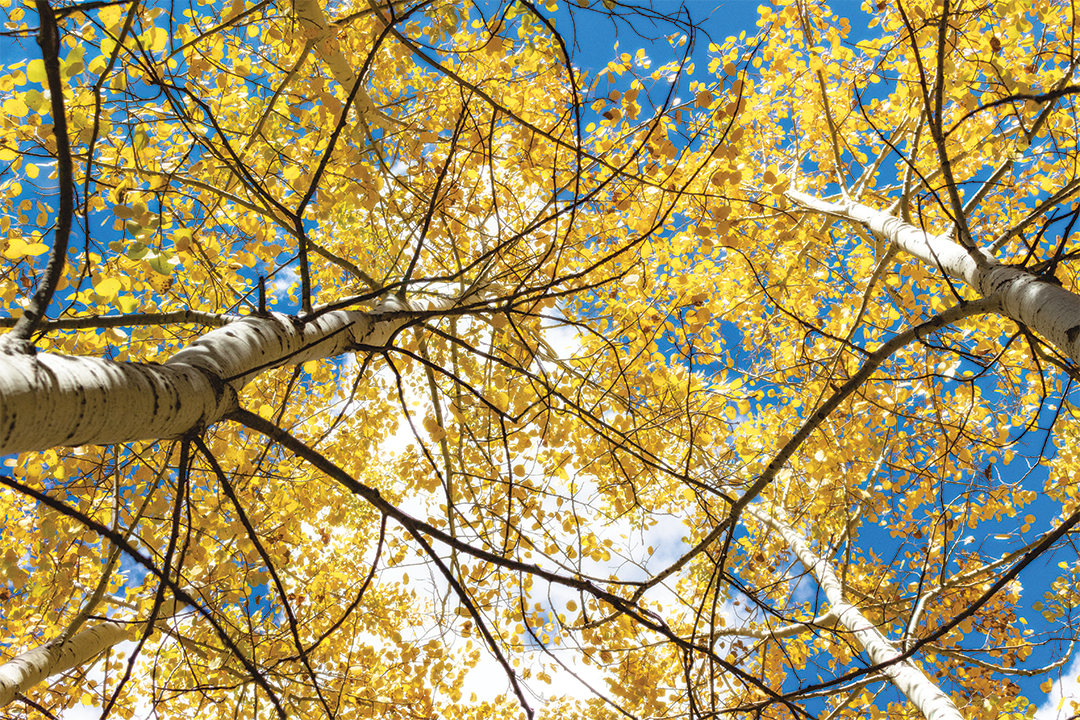
Whether you’re eagerly awaiting fall for its colors or temperatures that won’t melt your face when you walk outside, we’ve got you covered. Here you’ll find several ways to admire the foliage from your car and up close by hiking trails a couple-hour drive (or less) from home.
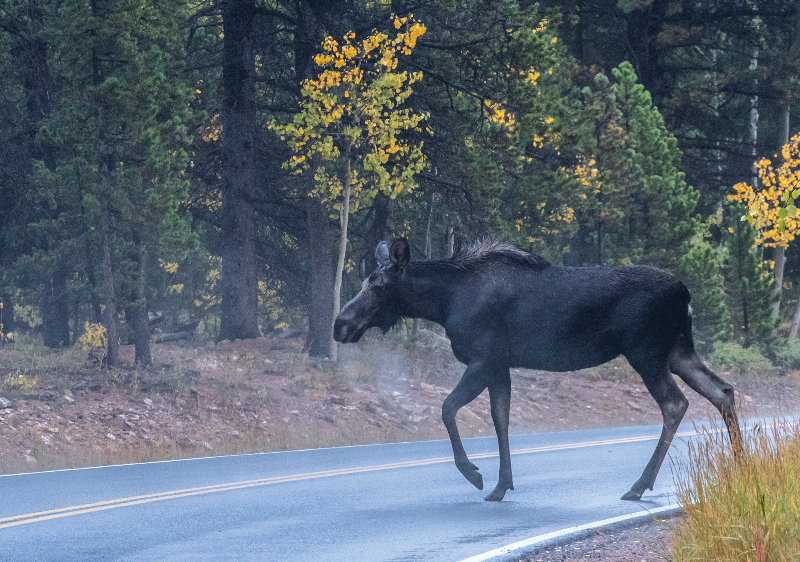
Poudre Canyon
The drive: Head up Colo. 14 west of Fort Collins. This trip should showcase some changing aspens starting in Bellvue and heading all the way to Walden. Other popular stops in the canyon for color include State Forest State Park, Red Feather Lakes, Rustic, Cameron Pass and Pingree Park Road.
A hike: Emmaline Lake in the Comanche Peak Wilderness Area, as suggested by Reghan Cloudman, spokeswoman for the U.S. Forest Service.
“Emmaline is less crowded, so it might be a bit of a surprise to folks,” Cloudman says. “Last season some of our staff was up there and said the colors were nice, which is harder to find since the 2020 fires.”
This hike starts at the Emmaline Lake/Mummy Pass trailhead. Take Colo. 14 to County Road 63E. Turn left and drive 16 miles to Forest Road 145, then turn right. The rough, half-mile road that leads to the trailhead is past Tom Bennett Campground. Parking at the campground may be a good idea if you have a passenger car, as the trailhead itself accommodates just four cars. This hefty hike is just shy of 12 miles and gains 2,000 feet.

Bear Lake Road Courtesy of Rocky Mountain National Park.
Rocky Mountain National Park
The drive: Jean Rissmiller, an Estes Park resident, says the whole park is a terrific place to drive through for fall color. But you’ll need a timed entry pass for that. Bear Lake Road, one of the best places in the park to see fall colors, is especially popular and requires its own timed entry pass from 5 a.m. to 6 p.m. through Oct. 18. The passes give a vehicle the option to enter in a two-hour window.
Bear Lake Road includes access to Sprague Lake and the Glacier Gorge Trailhead as well as Moraine Park, which is one of the best places to see elk. Leaf peeping and elk sightings are a package deal because the elk are in rut and will bugle, especially at dawn and dusk. This also makes them more dangerous, so keep your distance.
Other portions of the park to drive are Trail Ridge Road, which offers sweeping vistas of the park (as long as there aren’t early snowstorms closing the road) and Wild Basin Road. Those who crave a little more adventure can try Old Fall River Road, but that typically closes in early to mid-October.
A hike: Rissmiller’s favorite fall hike, “hands down,” is Bierstadt Lake.
“The fall colors are spectacular,” she says.
The Bierstadt Lake parking area has a dozen spots and fills up fast, but it is also a stop along the Bear Lake Shuttle Route, and the Park & Ride has more parking spaces. There are several ways to do this hike, as the shuttle gives you many options.
If you aren’t hopping on the shuttle at the Park & Ride, you can start directly at the Bierstadt Lake parking area, which has a steep beginning but is only about three miles round trip. You can also start from the Bear Lake Trailhead, which is a jumping off point for many other hikes in the park. Starting anywhere besides the Bierstadt Lake parking area adds a couple of miles to the journey.
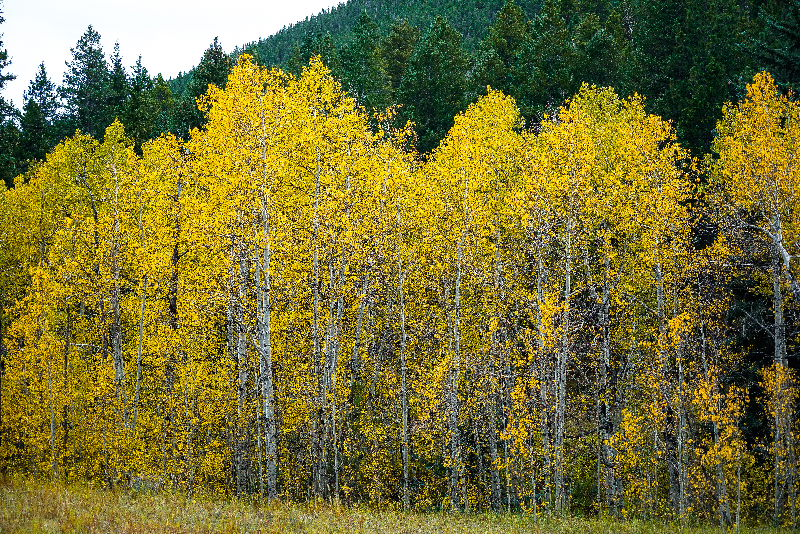
Golden Gate Canyon State Park
The drive: You can drive through this state park, which is about 30 miles northwest of Denver, but if you want to stop and walk around, you’d better take a spot when you see one, warns park manager Todd Farrow. The park has 400 parking spots to accommodate 300,000 visitors during the leaf-peeping season, a number that still astounds him.
“That’s more than a lot of state parks get all year,” he says.
There’s a reason it’s popular: Golden Gate is a fun place to spend a fall day, and there are lots of ways to see some astounding color. Visitors take Mountain Base Road around the park, but if you want to take a hike—and you really should—read on.
A hike: Farrow’s recommendation for a hike is simple: Take the first parking space you see, then walk a nearby trail. The park opens at 5 a.m., and most of the parking lots are full by 7 a.m., he says.
Make sure to park in a designated spot, not on the grass. If you don’t arrive by 7 a.m., you might still find a spot in the Aspen Meadows Campground, which is open for day-use parking. One other trick: The park empties once all the early birds fly away, meaning you could find some room after 3 p.m. Just remember you won’t have a lot of daylight after 6 p.m.
Many of the hikes are great when the fall colors are showing off, Farrow says, but the Raccoon Trail may be best because the loop leads to the Panorama Point Scenic Overlook, which offers views of more than 100 miles of the Continental Divide. It’s also two-and-a-half miles and a little hilly, but not too difficult. If you want a harder hike, take the Mule Deer and Coyote Trail Loop, a nearly six-mile effort with 1,000 feet of elevation gain, or the Mountain Lion Trail to Windy Peak, which is the same length as the Coyote Loop but climbs nearly twice as high.
All of the hikes help you see the fall colors up close and offer an adventure.
“It’s an awesome park,” Farrow says. “It’s within striking distance of Denver, but you get a real backcountry experience.”
_____________________________________________________________________________________________________________________________
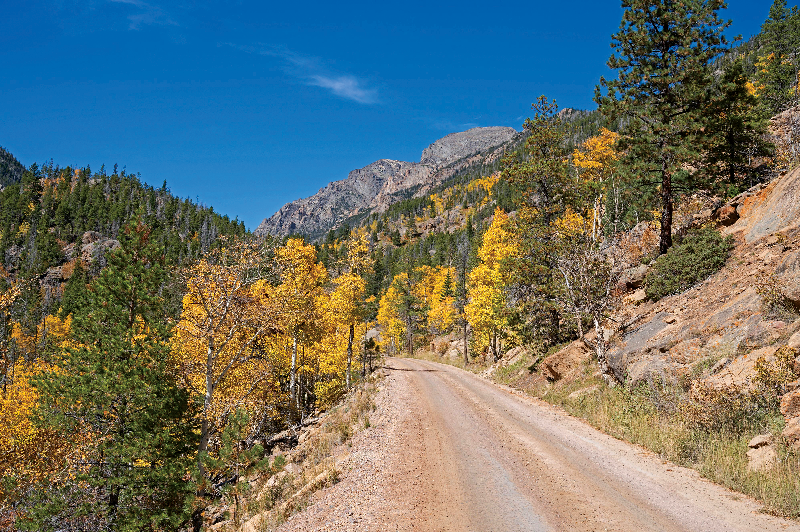
Old Fall River Road
Courtesy of Rocky Mountain National Park.
When Will the Fall Colors Peak?
Our sources laughed at us when we asked them this in mid-July. Instead, here are some general guidelines to help you figure out a good time to go.
There are general peak seasons.
Historically, late August to mid-September are good times to go leaf-peeping in Estes Park and Rocky Mountain National Park. The last week of September to mid-October are typically good times to see the leaves change in the Poudre Canyon and Golden Gate State Park.
A drought means the leaves change early.
We’re in one of the worst droughts in state history, and that probably won’t change even with some serious showers, so the leaves will likely change earlier than what you’d normally see in your favorite area. They may also not be as vibrant this year, so hitting the peak may be even more important.
Elevation matters.
Expect the leaves to change earlier the higher you go.