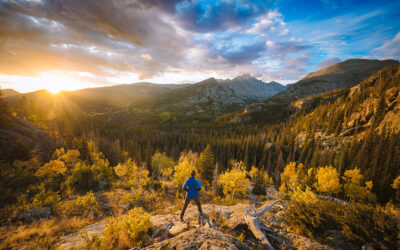

Longs Peak looks so tempting to climb, doesn’t it? I mean it’s right there.
Rocky Mountain National Park’s crown jewel—and its only 14er—feels like our 14er, too. Northern Coloradans get the best views of it, even more than Denver. It dominates our landscape, possibly inspiring more trips to the tops of mountains than anything except the promise of some fresh pow.
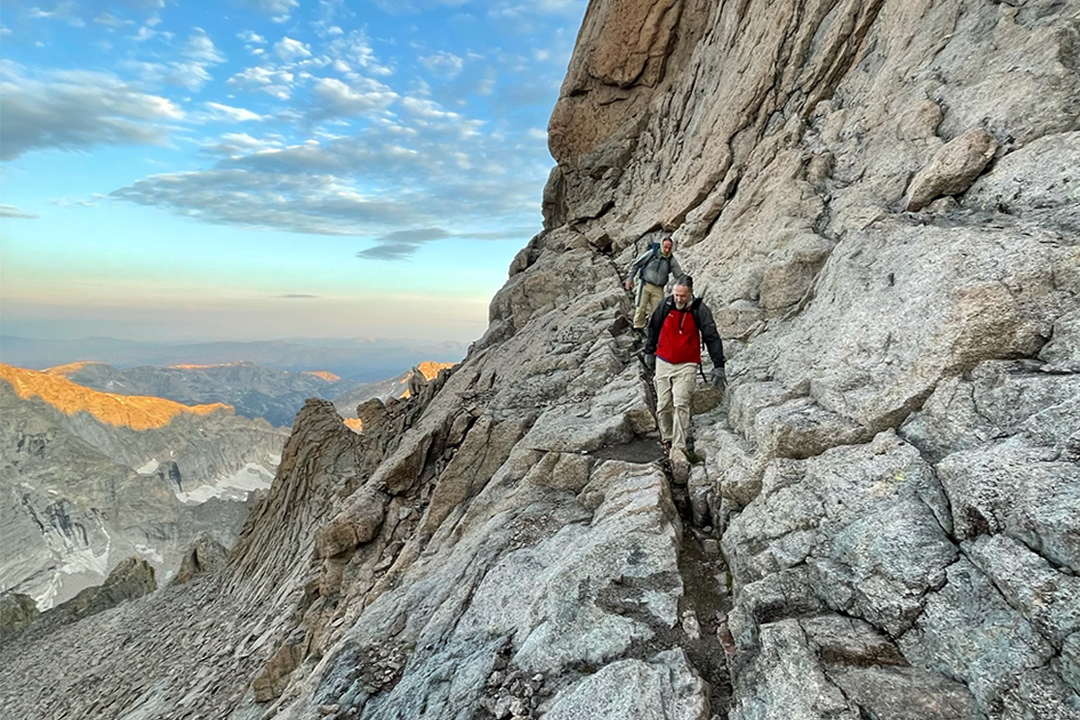
But it shouldn’t be the first 14er you do, or probably even the fifth. A trip up Longs is every bit as epic as our views of it. Even by its most popular route, it’s long, steep and dangerous, even deadly, as more than 70 hikers have died on it.
So I’d advise you to work up to Longs, and here are my credentials. I have climbed all of the 14ers, many of them at least twice, and tallied more than 100 successful summits of them. I’ve also climbed Longs 25 times through four different routes. I have led people up 14ers, coached others to their own successful summits and given talks about them. If you want to join the ranks of the nearly 200,000 hikers who climb at least one every year, this guide will help you do it safely.
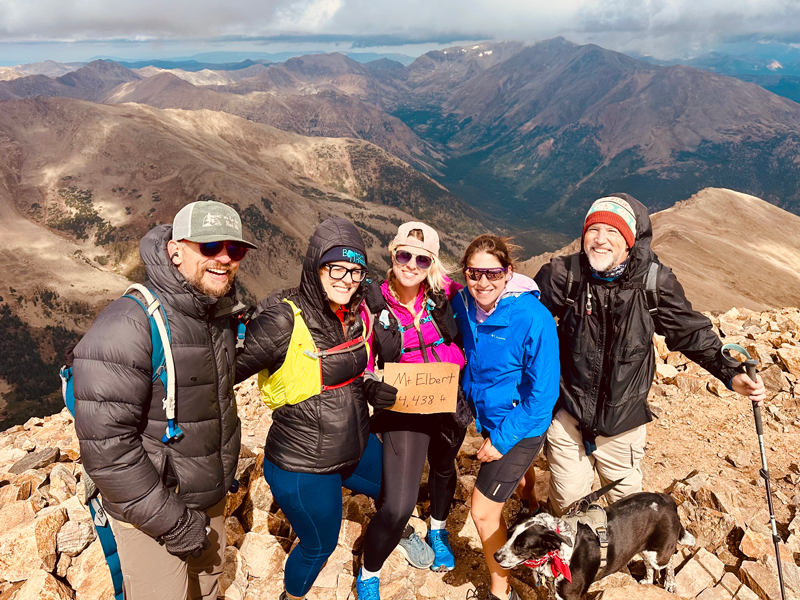
England (far right) and friends at the top of Mount Elbert.
Getting to the top
+ Start early. I mean “early bird gets the worm” early. You need to be on the summit by 10 a.m., which will give you enough time to be below tree line by the time afternoon thunderstorms roll in (lightning strikes the tallest thing, and guess what’s the tallest thing when there are no trees?). Starting early also increases your chances of making it to the summit because you should turn around at the first rumble of thunder. The weather is the biggest factor in making the summit.
+ Get in shape. Your cardio should be good enough to finish a 5K, take a class at your gym without suffering too much or get away from a pack of zombies. You don’t have to be able to run a marathon or even a half, but you shouldn’t be averse to physical activity either. Take the stairs, walk your dog and try to win your corporate step challenge.
+ Eat, drink and be merry. Getting enough to eat and drink gives you the energy to keep going. Shoot for eating something every hour, at least 100 calories, and drinking two liters of water by the time you’re less than an hour from the end of your hike. Try to be fully hydrated before you start and eat a good breakfast.
+ Dress in layers. Wear a sweat-wicking base layer, a medium layer (a hoodie, for example) and a shell, aka a waterproof jacket that can also block the wind. Shorts are fine, but waterproof pants are better (no jeans). Wear wool socks and sturdy shoes or boots. A warm hat and gloves are also vital. Be prepared for the temperatures of late fall and early summer in the same day.
+ Buddy up. You’re never really alone on a 14er, but it’s a good idea to go with a friend. At the very least, let someone know where you’re going, what route you’re taking and when you think you’ll be back.
+ Get equipped. Bring a first aid kit complete with ways to treat blisters, and be sure to pack sunglasses, your smartphone, a detailed description of the route (you can find one on 14ers.com), sunscreen and a hat to block the sun. Pack all your trash out, especially if you bring one of those cardboard signs with the name of the mountain on it for a summit photo. Trekking poles are recommended.
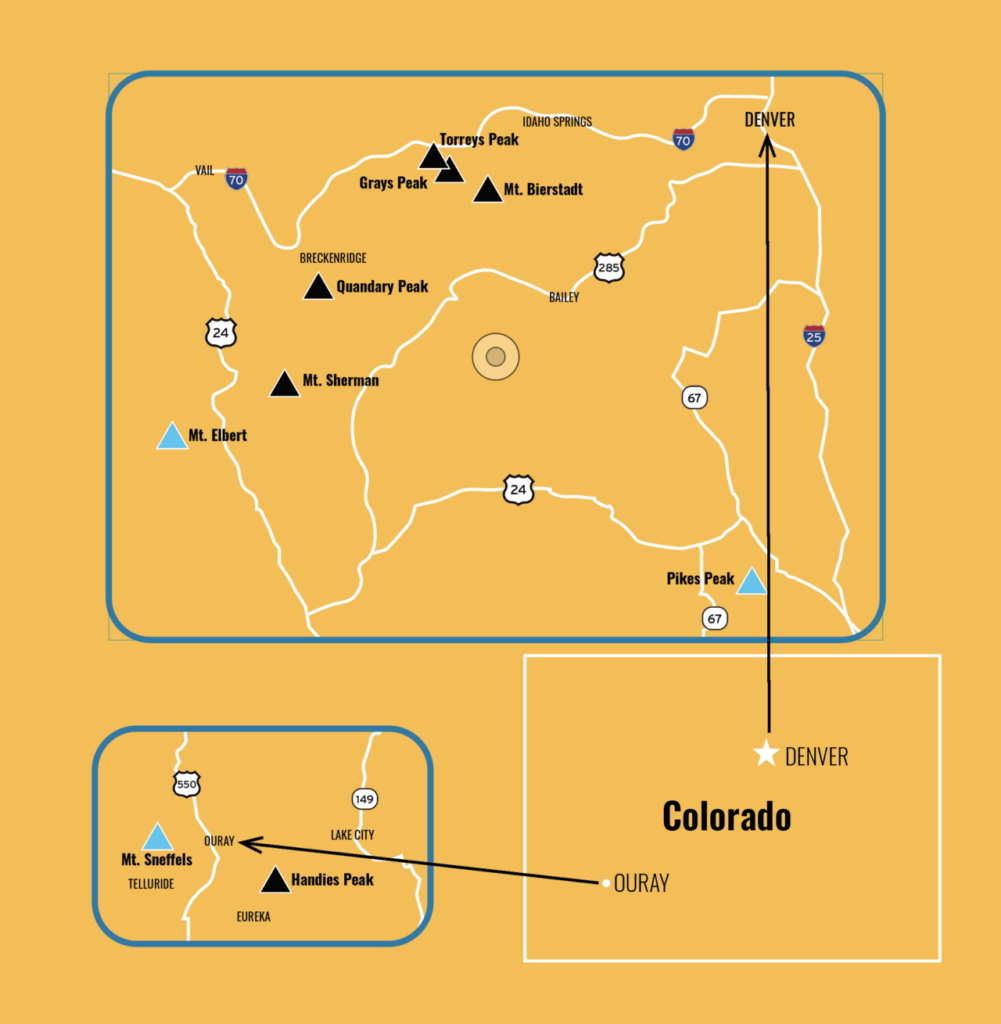
Five 14ers for beginners
∆ Mount Bierstadt
It’s just outside of Idaho Springs, with lots of parking spots and a paved road leading to them. This is a relatively short round trip (six miles) and a mostly gradual hike on a trail all the way to the top. I think this peak is the best introduction to the 14ers.
∆ Mount Sherman
If your car can make it all the way to the gate, you’ll only have 2,000 feet to climb on a gentle trail to get to the top.
∆ Quandary Peak
Short but really steep with a nice trail all the way.
∆ Handies Peak
This is the easiest 14er in the San Juans—a gorgeous mountain range in southern Colorado—but you’ll need a 4WD car to get to the trailhead.
∆ Grays and Torreys Peak
A tough road that can be traveled by hardy passenger cars leads to a lot with limited parking, so you should arrive at least an hour before sunrise. Many people climb these beautiful mountains for their first trip up 14ers, and I don’t blame them, given they’re just a few hundred feet apart, and a trail leads you to both. But getting them both is a long day and a lot of time above treeline.
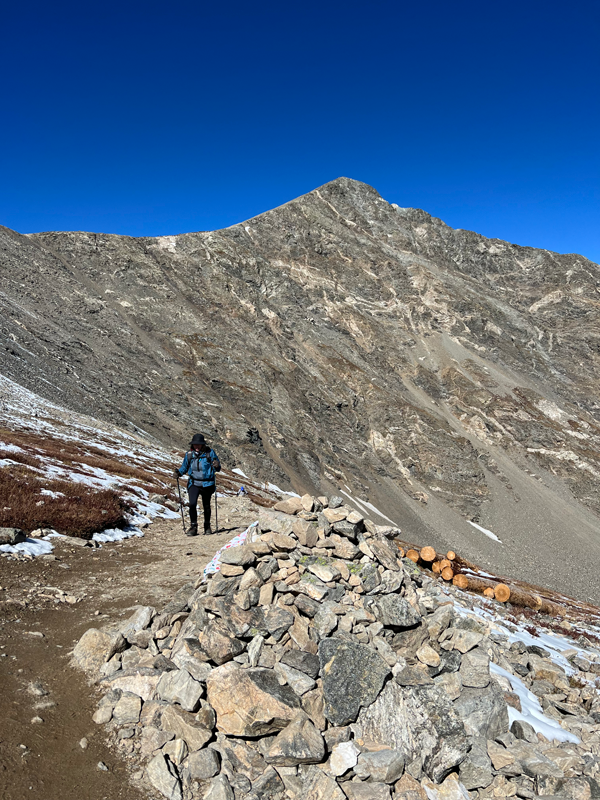
England’s wife, Valerie Vampola, traverses the trail after a successful climb of Torreys Peak. Photo by Dan England.
Three Good tests before Longs Peak
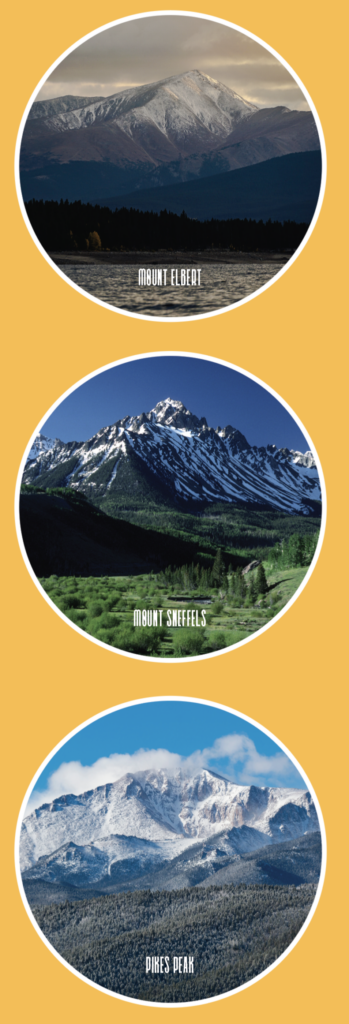
∆ Mount Elbert
Colorado’s tallest peak is just a trail to the top, but the elevation gain is the same as Longs’, and it’ll test your lungs, as you’re above 14,000 feet for a long time.
∆ Mount Sneffels
The standard route snakes up a challenging but doable gully before you reach the summit. This San Juan classic not only looks awesome, but the route is also beautiful and fun.
∆ Pikes Peak
Pikes Peak features a gentle trail all the way to the end and a large visitor’s center with bathrooms, souvenirs and a cafeteria, plus a camp halfway through that offers a nice respite. You can even take the Pikes Peak Cog Railway down or hire a driver, saving you the trouble of walking all the way down to your car. But you’ll pay for all this luxury, as just getting to the top is a half-marathon and a whopping 8,000 feet of climbing, which is twice the average amount of a typical 14er. This is a good test of your endurance even if you choose to ride down once you’ve climbed it.

Things you need to know
Nearly all 14ers are open to the public and easy to access with a 4WD vehicle or a sturdy passenger car. But here are a few things to keep in mind.
+ Most of the so-called DeCaLiBron Loop, which allows you to climb Mount Democrat, Mount Cameron and Mount Lincoln in one day, is now open to the public. The summit to Mount Bross remains closed, so skirt the summit as you follow the loop and descend to head back to your car.
+ You need a reservation to park at the Quandary Peak trailhead from now until Sept. 13. It costs $30 to $55 to park there. A better option is to take the Quandary shuttle service, which starts at 5 a.m. in Breckenridge and is $7. Go to hikequandary.com for more details.
+ Mount Lindsey requires you to fill out a waiver. Find it at mountlindseywaiver.com.
+ The trailhead to Grays and Torreys fills up by 4 a.m. on weekends and holds only 40 cars. Park at the bottom of the road and carpool up. Parking along the road is illegal and strictly enforced.
+ All 14ers should be clear of snow by now, although the main route up Longs may not be open yet. You can see the latest conditions at 14ers.com. It will also help you determine if you have enough skill to tackle a specific 14er.