

In mid-April, Josh and Erica Ciardullo’s cattle found a weakness in the fence that kept them contained on a pasture in rural Fort Collins. By the time the couple discovered they had escaped, they were miles away.
Erica even wondered if they’d been rustled. But the couple set aside those fears and turned to Hitch for help. Right away, he knew what to do.
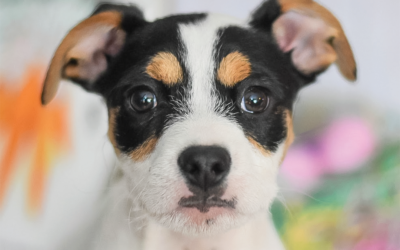
He’d known what to do since he was a puppy. When Josh and Erica brought him to Ciardullo Ranch, he immediately began bossing around their cattle, earning their grudging respect even though he was the size of a box turtle. Hitch is now almost 5 and has always loved to work, so much so that when he developed epilepsy at just six months old, he brushed it off like a horsefly, with the help of some medication.
The Ciardullos consider Hitch their pet, not just an employee, but despite their best efforts to limit his hours because of the disorder, he insists on doing the work. He can only spend so much time in the house before a gnawing need to be outside among the cattle possesses him.
“He loves being out with the animals and on the land,” Erica says. “He’s truly living his best life.”
They needed him the day the cattle escaped, epilepsy or not. It’s just Josh and Erica and sometimes their son, Henry, raising and selling their grass-fed cattle on land leased at Sylvan Dale Guest Ranch. They live on a 33-acre homestead in Wellington, and transporting their horses is difficult, so they need Hitch to help them round up their cattle when they are on foot, which can be as many as 40 head a season.
“He’s really important to us,” Erica says. “He really does help us move them, and if one animal doesn’t want to go, he gets on their heels.”
Hitch went to work, sniffing the ground and, eventually, leading the Ciardullos to their cattle, which had wandered six miles away. He then moved them to a good holding spot so Erica and Josh could repair the fence.
It was a job well done.
“Working dogs take their job very seriously,” says PJ Wilderman, who started New Hope Cattle Dogs Rescue & Rehoming with her husband, Chris Spanos, out of their Parker home in 2005.

Hitch. Photo by Elise Taylor.
Particular personalities
Working dogs can be a handful. Wilderman knows this because her rescue finds homes for as many as 300 of them a year. But the first one she owned, a cattle dog and border collie mix they named Jack, was so perfect that she called him “her little ambassador” for the breed.
“He was just so stinkin’ friendly to everyone,” she says. “I didn’t know anything about them. Jack was just a Godsend.”
Wilderman typically rescues herding dogs. The American Kennel Club created a separate category for these dogs, the herding group, in 1983, to separate them from the working group. The herding group includes cattle dogs, heelers, Australian shepherds, border collies and others that move sheep and cattle just like Hitch, an Idaho shag. The working group includes breeds that perform rescues, pull sleds or guard, such as huskies, mastiffs and Great Pyrenees. Most people group these dogs together and call them “working dogs” because they perform jobs, mainly on farms, ranches and pastures. We will too.
The Ciardullos also own four livestock guardian dogs who stay outside, as they get anxious if they are let in the house. They are bonded with Josh and Erica but want to sleep in the barn. They also share a special bond with the animals they protect: They adopted an orphaned goat whose twin sister died, making him a part of their pack (the goat now thinks he’s a dog). They are fierce and will fight coyotes and other wild animals if they try to attack the Ciardullos’ chickens, goats or other animals. Erica calls them heroes.
Working dogs like Jack show their loyalty, but there are other sides to them too. Most, if not nearly all, can’t live on a ranch like the one owned by the Ciardullos but still need intellectual and physical stimulation, and they will find it regardless of whether their owners provide it. Another dog PJ and Chris owned, Pinto, was so obsessed with playing fetch that she would drop a tennis ball in the shower while one of them was in it.
Herding dogs can nip, as they communicate with their mouths, Wilderman says, and they are protective and not always great with children.
“But they make awesome pets for hikers and campers and runners,” she says. “If you’re active, that’s great, and even if you’re not, that’s OK. Some dogs don’t need to run around.”
All of them do need to use their brain, and the best way to help them, Wilderman says, is to give them a job. That can be fetch, a run in a park or leaving them a box to destroy when you leave the house, as Wilderman did for Buddy, a border collie mix who was one of her husband’s dogs before they got married. She knew a woman who had a working dog who would wake the kids every morning for school. Some people train working dogs to do tasks for people in wheelchairs, such as closing doors or bringing them their shoes.
“These dogs are so diverse,” Wilderman says. “They can do anything.”

Hitch watching over the Ciardullos’ cattle.
Learning how to communicate
When dogs don’t have a job to do, they will find one. This is especially true of working dogs, which is why training them is important, says Holly Larson, owner of a Bark Busters franchise in Windsor.
“These are really smart dogs. People get them because they think they will make a good house pet, and they don’t stimulate their minds,” Larson says. “They’re not bad dogs. They’re instinctual creatures doing what they think needs to be done for the household.”
The key to correcting behaviors, Larson says, is looking at them from the dog’s perspective. When an owner yells at a dog to stop barking at someone outside, the dog typically thinks the owner is yelling with them to make the problem go away, she says. This is how owners can unintentionally encourage bad behavior.
“The dogs are much calmer and happier and more confident when they think they have a leader,” Larson says. “If you don’t establish yourself as the leader, they will think they are the leader.”
Larson teaches owners how to communicate with their dog. She believes miscommunication is usually the root of any problem.
“If they can’t figure out what you’re asking, you have to break it down into something easier,” she says. “All they really want to do is please you and work and stimulate their brains.”
Agility training, when dogs run through and over a timed obstacle course, can be a great way to engage working dogs such as border collies, which tend to dominate these events. In fact, they are consistent winners, according to the Westminster Kennel Club, with scores under a blazing 30 seconds. In 2025, a border collie won the championship with a run of 27.57 seconds, and another, Kelso, won the inaugural title in 2014.
Anna Parrish, an agility coach who works with Larimer County 4-H students, says working dogs do well with this activity because it combines their instinctual ability to move well between obstacles (aka sheep and cattle) with their love for hard work, running and barking.
“Any herding breed usually loves agility,” Parrish says. “They are the best.”