

April Neuhaus believes homes listed for sale may need a little razzle-dazzle to get attention in this buyer’s market.
“Homes with no wow factor…they are just sitting,” says the managing broker for Better Homes and Gardens Real Estate – Neuhaus, based in Berthoud.
But she also cautions homeowners about how much money they pump into their remodeling projects. Not all garner the same return, and some might not be worth it at all, she says.
“It is much more important how you spend your money in a buyer’s market,” she says. “People are extra picky.”
Of course, home remodels aren’t just about resale. Comfort, lifestyle and simply enjoying your home all matter. But if you aren’t planning to stay in your home for at least another five years, you may want to evaluate big-ticket remodel projects with an expert first.
Adding value for a quick sale
Neuhaus recommends looking for projects that update the look of your home without spending too much money. Upgrading the front of your home with new door hardware, exterior lighting or a fresh coat of paint on the front door adds instant curb appeal, as do fresh plantings. Often those projects can be done for well under $1,000 and a little bit of elbow grease.
“These improvements can change the whole feeling of the value of your home right at the beginning,” Neuhaus says.
Other easy and effective upgrades are those that make it stand out in neighborhoods with similar-looking houses, like wainscoting, nicer trim, accent colors on the walls and new light fixtures.
“Especially in dining rooms and bedrooms,” Neuhaus says, “[those upgrades] can immediately distance your home from others that might be for sale in your neighborhood.”
Remodeling projects that edge up over the $2,000 mark that make a good investment are upgrades in flooring, switching out cheap, hollow-core doors for solid doors and upgrading casings and baseboard trim. These changes are often easy for homeowners to make themselves, plus they add some gloss to any home and increase the value if you decide to list the property.
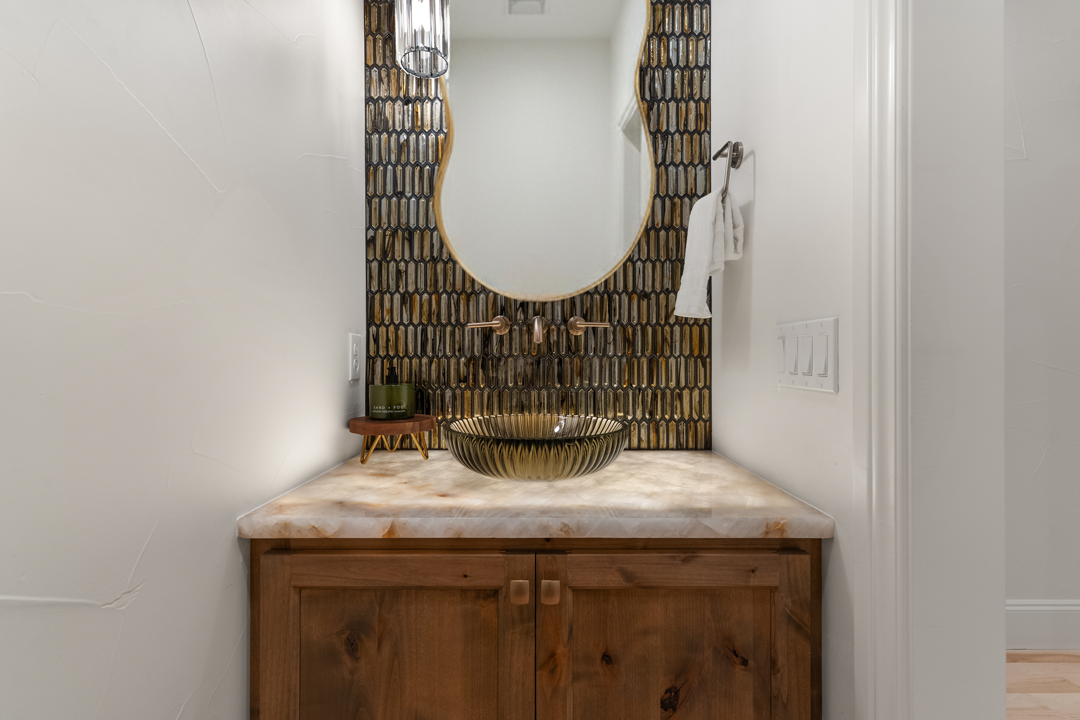
Other projects that pay off include creating an inviting outdoor space by adding a pergola, outdoor kitchen or firepit. Sellers might also want to add a speakeasy in their basement or an ultra-unique powder room, Neuhaus says.
“Any space that the buyer can visualize making memories in tends to have the biggest impact,” she says.
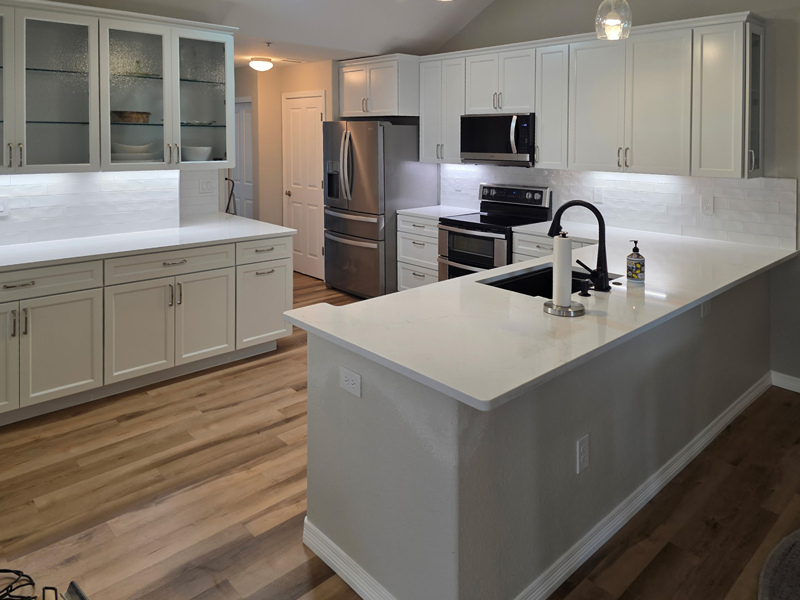
Kitchen remodel by Rocky’s Restoration and Home Services.
Remodel flops
It’s entirely possible to overdo it on a remodeling project. That’s fine if you have the budget and plan to stay in your home, but if you’re looking to sell, you might as well burn your money in the firepit out back.
Money spent on new kitchens and bathrooms tends not to add to the resale value, especially if you completely redo them, Neuhaus says, and be careful about replacing windows.
“Windows are expensive,” she says, “and you won’t get your money out of them.”
The cost of finishing a basement may also be too expensive for any real ROI.
“Basements have gotten much more expensive lately,” Neuhaus says, jumping from $65 per square foot a couple years ago to $80 to $90 a square foot today.
Times when it can be an asset to add bedrooms and bathrooms or square footage are when it puts you into a much bigger pool of buyers, she says. The most popular home search is for three bedrooms and two baths. If you have two bedrooms, for instance, then the money to add one is well spent.
On the flipside, if you are going from a three bedroom to a five bedroom by finishing the basement, “that is more for your own enjoyment,” Neuhaus says. “You might get some out of it, but you are not going to get dollar for dollar.”
Contract out or DIY?
Mark Kiefer, owner of Kiefer Built Contracting in Windsor, recommends finding a contractor for any project that requires pulling a building permit. Do your research on what projects require a permit where you live, or contact a contractor you can trust, he advises.
Don’t even think about doing the work without a permit, Keifer adds. When a home is purchased, the number of beds and baths is recorded. Often you cannot sell a home listing bathrooms and bedrooms that have not been properly permitted. Banks may refuse a loan on those homes, and insurance claims can be denied if the work is not permitted, Kiefer says.
Beyond the permit rule, he recommends homeowners take an honest assessment of their skills before diving into remodeling projects. Even simpler projects, like weathering a deck, can be far more involved than homeowners expect.
“A lot of homeowners start a project and get in over their heads,” Keifer says.
The remediation to fix mistakes often adds cost and time to the project.
Homeowners can act as their own general contractor by pulling a building permit and hiring skilled labor as needed. However, this can add quite a bit more time to the project, and if a homeowner doesn’t have the right gameplan, unexpected expenses can rack up.
Chez Salazar, of C.S. Home Services, and Oscar Gonzalez, of Rocky’s Restoration and Home Services, often work together on home remodeling projects. The two are subcontractors, not general contractors, but they are willing to work closely with homeowners on remodeling projects and help them find the right subcontractors for the job.
Salazar specializes in tile, flooring installs, deck refinishing and bathroom and kitchen remodels. Gonzalez specializes in drywall, bathroom remodels and more.
When they work on a project, they walk the homeowner through how to get it done. With this approach, the homeowner assumes a much more active role: They’ll choose the features they want, source and purchase their own materials and schedule and pay each subcontractor individually.
“You buy the materials,” Salazar says, “we provide the labor.”
The duo say that remodeling is a process that takes time to do right.
“We consider it part of our job to educate the homeowner on the process,” Gonzalez says.
Best (and Worst) Projects for the DIYer
Neuhaus recommends homeowners tackle manageable projects, such as new hardware, trim, lighting and other cosmetic upgrades. Painting is also a great DIY project and can be impactful.
However, there are some caveats. Painting dark cabinets a lighter color can update a home but may require a little more skill and a lot more labor (such as sanding) to be done correctly.
Another area where DIYers can save money is the demo, such as tearing out walls, cabinets and other items to ready the space for subcontractors. Just be wary of electrical wires, plumbing and structural systems.
“Almost anyone can swing a hammer,” says Chez Salazar, of C.S. Home Services, and it can save on paid man hours if done carefully and correctly.
Removing popcorn ceiling can be another DIY project, but Oscar Gonzalez, of Rocky’s Restoration and Home Services, recommends calculating the cost of hiring someone against the intense labor output for those not used to the work. He also recommends homeowners stay away from drywalling. The same can be applied to tiling and flooring: Those projects generally need a higher skill level.
What Does it Cost?
Here Kiefer breaks down some typical projects and how much they cost.
Basement finish: $85 to $100 per square foot. A basement finish is a good idea if it adds necessary living space, but it may not be worth it if you already have at least three bedrooms and two bathrooms.
Additions and attached dwelling units: $200 to $350 per square foot, depending on the engineering involved. These can be great for multigenerational living or bringing in additional income.
New bathroom (not a primary bath): $15,000 to $25,000. Updating bathrooms is a good idea as long as you don’t overdo it with high-end fixtures and tile that is more custom than what is typical in your neighborhood. A new primary bathroom with a shower, bathtub or both typically costs $25,000 to $50,000.
Kitchen remodel: $40,000 to north of $200,000. Similar to bathrooms, kitchen upgrades add value, but if you go on the high end, you may not recoup as much at the sale of the home.