
Paired with sunset views of the Rockies, Northern Colorado’s farm dinners offer scenery as remarkable as the menus. Pull up a chair or throw down a blanket and take a bite out of these homegrown summer nights.
Break bread at a shared table
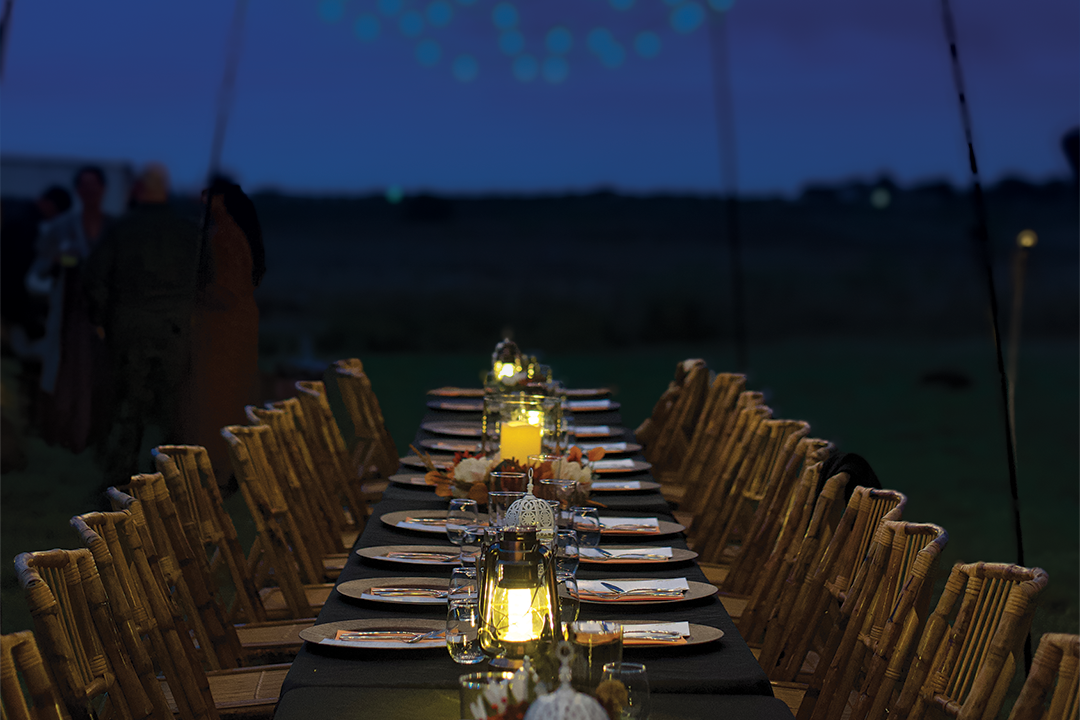
Billy Woods and his team at Canyons and Chefs have launched a social experiment rooted in Colorado’s pioneer and indigenous heritage. Rather than retreating to individual corners, guests sit together at one long table on a farm, breaking down social barriers to enjoy a locally sourced, multi-course meal. The idea, Woods says, is to bring people together.
“We’re constantly just rushing by each other to get to the next thing,” he says. “These events really create an opportunity for all of us—myself and my staff included—to just kind of breathe in and then breathe out.”
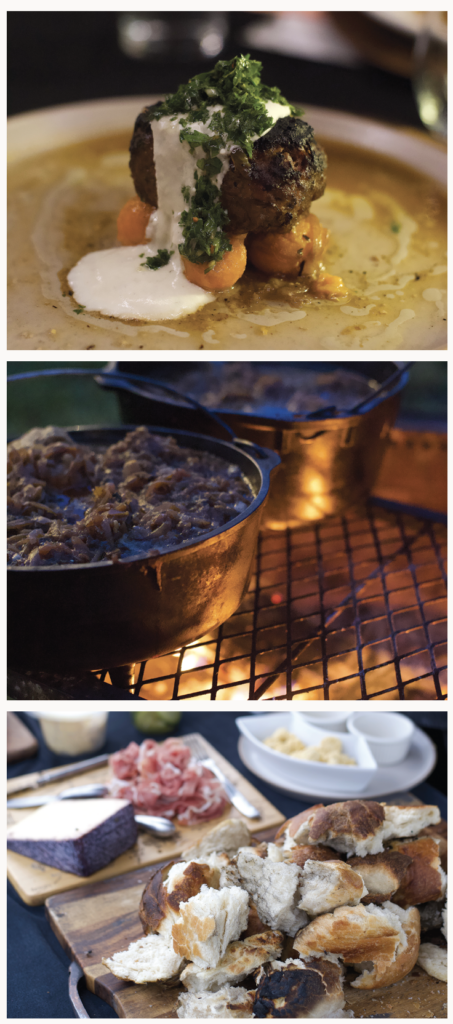
Canyons and Chefs. Photos by Shealan Burke.
With a menu inspired by authentic Colorado ingredients—from bison and elk to ancient grains and sourdough—the experience also serves as a connection to the state’s culinary history. To create a unique and memorable menu, Woods sources ingredients from local farms and draws from the traditions of the Arapaho, Ute and Cheyenne as well as the pioneers who settled in the Cache la Poudre Valley.
“It’s an opportunity to not only taste something new, but really to understand,” Woods says.
“Here we are in this setting, at the base of these mountains, next to this fire, and you can really place yourself into that world, deeply appreciating the sustenance that our Earth provides.”
Canyons and Chefs’ community dinners are expected to run every other weekend from mid-June to mid-October at a location that has yet to be announced. While these events are relatively new, they are anticipated to be popular, so interested guests should keep an eye on their website to reserve a seat early. Tickets are $150 per person.
Woods says there will also be a supper club option for guests interested in repeating the experience. As for attire, he suggests wearing something Colorado inspired.
“A Western tuxedo is always good,” he says.

Black Cat Farmstead. Photos by Douglas Brown.
A true farm-to-fork experience
There’s a magical feeling that comes with consuming a meal grown from the same ground you’re standing on. At Black Cat Farmstead, located between Lyons and Longmont on 500 certified organic acres, guests are treated to exactly that.
Chef Eric Skokan and his wife, Jill, raise around 250 varieties of crops alongside flocks of sheep and hogs, all destined for the plates they serve on their farm.
“It’s not a farm that sells some food or a restaurant that has a couple garden beds,” Skokan says. “It is very much a full-scale working farm where the vast majority—80 to 90 percent of everything that you see on all the plates—comes from the fields that you’re surrounded by.”
Before heading to their cabanas, which are designed for 360-degree views of the farm, guests are invited to take in the beauty of the gardens. The vast bounty found on Black Cat Farmstead creates a kitchen that Skokan compares to a laboratory.
“We change the menu once a week,” he says. “We have 52 completely different menus per year as we track through the seasons.”
Things change so quickly at the farm that there are no recipes in the kitchen. Skokan’s team learns as they go.
“Farming operations, especially in Colorado, are very dynamic,” he says. “If you want to shoot toward what you have in the fields, then you have to be willing to, on a moment’s notice, drop parts of the menu and create new ones on the fly.”
With a five-course menu consisting of 12 to 15 individual dishes, patrons indulge in greens harvested the same day, heirloom wheat grown and milled onsite and a wine list catered to the evening. For the month of June, Skokan envisions a menu featuring peas, rhubarb, squash blossoms, fresh herbs, lamb and, one of his favorites, baby fava bean pods.
“We grill them over a cherrywood fire and serve them with olive oil, lime and pistachios. They are addictive,” he says.
To maximize the dining experience, Skokan recommends guests wear sturdy shoes to walk the grounds and bring layers for the evening chill. On cooler nights in the fall, winter and spring, the cabanas are heated by wood-burning stoves. In the summer, the evening begins at 7 p.m. with an aperitif and hors d’oeuvres. Seating is limited to 24 guests a night, so reservations should be made well in advance. Tickets are $175 per person.
Garden Sweet Farm
Take date night back to nature
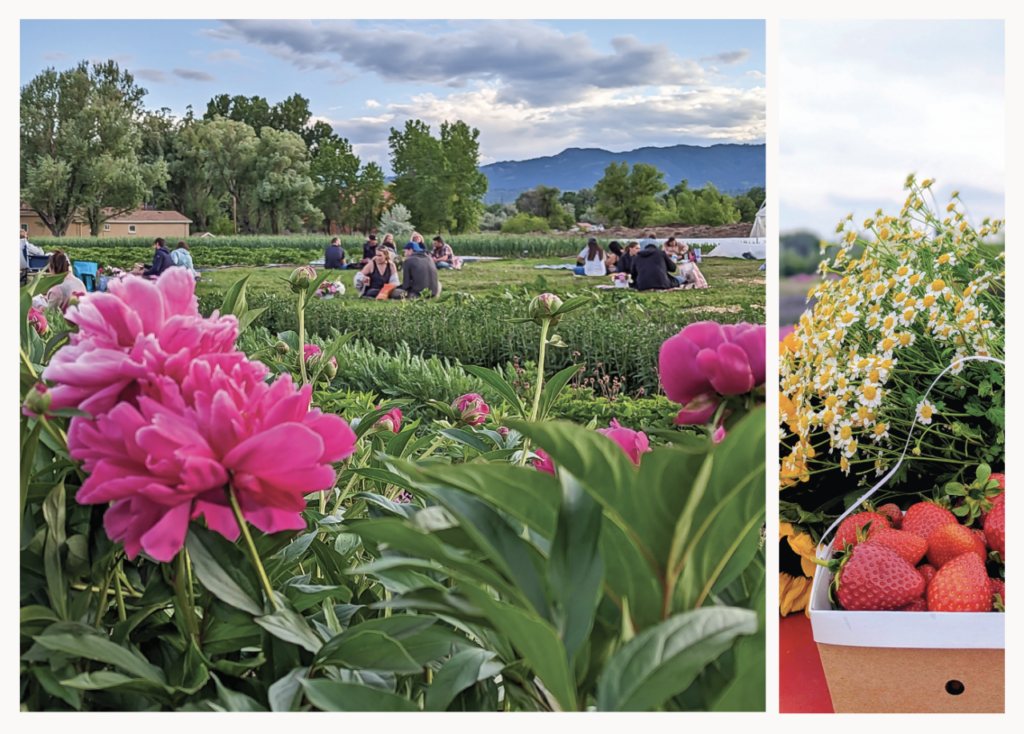
What could be sweeter than a date night among flower fields? At Garden Sweet Farm, just northwest of Old Town Fort Collins, sunset views, fresh air and more than 100 varieties of blossoms create an idyllic setting for a summer picnic. Owner Amy Kafka hosts just five opportunities per season, typically between July and September, to plan one of these special date nights among the flowers. At once unique and romantic, the concept is simple: show up, throw down a blanket and make the evening whatever you want it to be.
Set among fields of dahlias, sunflowers, berries and apples, the evenings have proven popular for marriage proposals, Kafka says.
“There’s usually one or two at each event,” she says.
But they’re also a popular outing for friends, mother-and-daughter pairs and nature lovers. Tickets are $70 per duo. Most events sell out, so Kafka recommends making reservations as early as possible.
“They can get as prepared as they want,” she says. “Some people bring very elaborate, fancy picnics or charcuterie boards. Others show up with a pizza and just want to go sit out there and enjoy something different instead of going out to a restaurant.”
Other guests fill their picnic baskets at the Garden Sweet Farm stand, picking up freshly baked bread, local cheeses, jams, honey and greens. By July, Western Slope peaches join the lineup.
Kafka personally enjoys packing a bag of her favorite snacks and a sweater to keep warm after dark. Beginning around sunset, the date nights make for beautiful golden-hour photos, she adds.
To complement the evening, couples receive a basket for picking berries and a cup and scissors to build a bouquet.
“It’s just a beautiful setting to wander around in the garden at a slow pace,” Kafka says.