
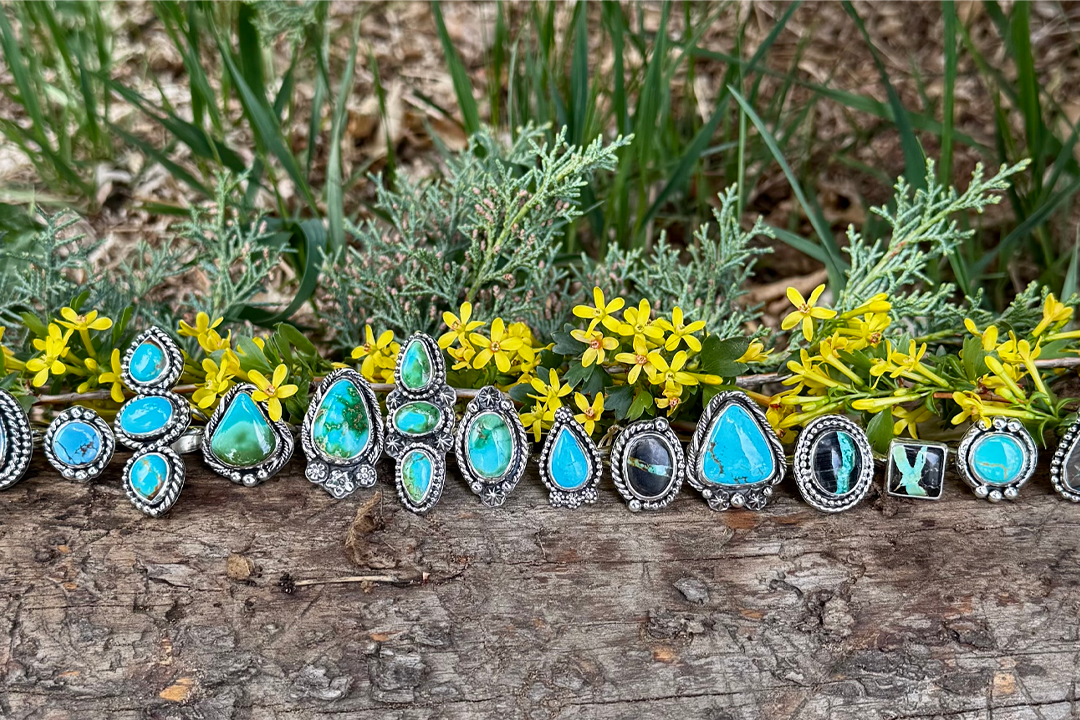
The artisan jewelry market is growing rapidly, driven by a demand for handcrafted and personalized pieces. It’s so hot, the market is growing by 11 percent per year, according to the global market research firm Custom Market Insights.
Northern Colorado has its own market full of creatives who produce jewelry made of silver, leather, beads and other materials to sell locally and through their websites and social platforms. We spoke to a few of them to learn what inspires their work.
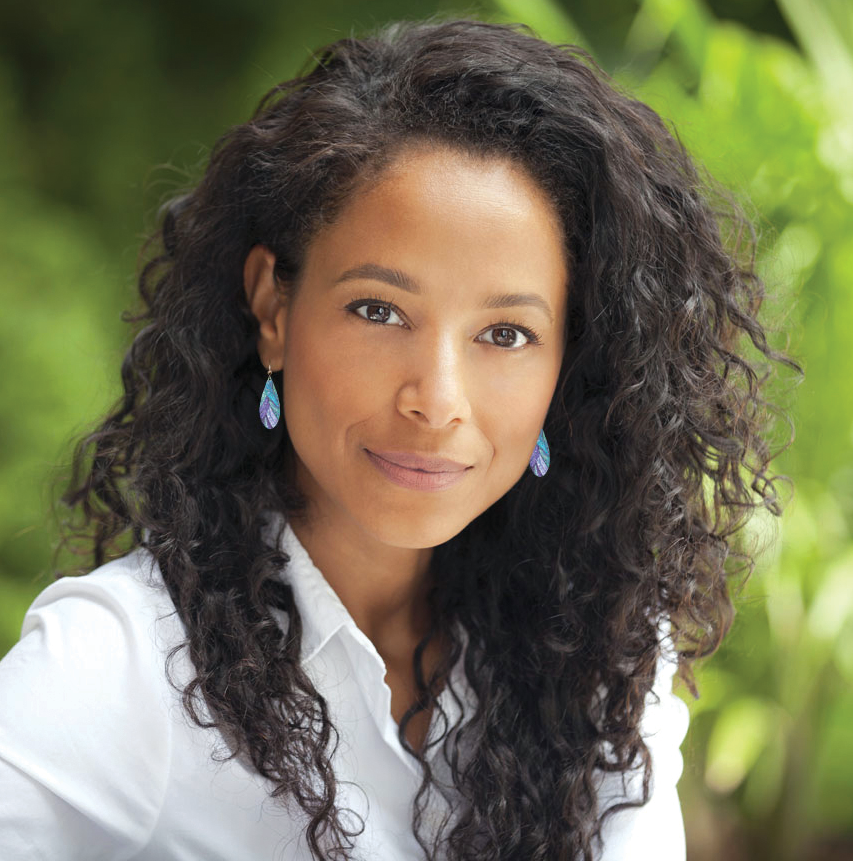
Photo courtesy of Illustrated Light.
Blending photography and jewelry
David Clack never intended to be a jeweler. A photographer by trade, he heard something from a fellow artist more than a decade ago that changed that.
“There was a gallery in Manitou Springs where one of the artists was putting her artwork on little Scrabble tiles and selling them as pendants,” he says.
Clack, a biomedical photographer for Colorado State University who later ran his own studio in Old Town Fort Collins, found the idea intriguing. He printed his photographs of aspen trees and local flowers and hand-pasted them onto pendants that could be used for necklaces.
“That took off,” he says.
His business, Illustrated Light, now produces hundreds of pieces that are sold wholesale to galleries and gift shops across the country. Clack sold the business last year to Karen Wells, a Fort Collins resident who continues the practice with his and other artists’ images.
Illustrated Light has about 400 different designs on earrings today, Wells says. All of the available pieces can be purchased at illustratedlightgifts.com and in shops such as Alpine Arts in Fort Collins and Wild Spirits Art Gallery in Estes Park.

Glass pieces by a pop star
Jeremy Marmor started making fused glass jewelry after he inherited the equipment from his late brother, who died in 2019. Marmor taught himself how to use the equipment, including a glass kiln, as a way to grieve.
“I like to sweep stuff under the rug and not deal with the heavy emotions,” he says. “I just needed something to put my energy into.”
He started selling the pieces and named the business Jemz Glass. His designs are different from his brother’s, who used a technique called implosion to form mushrooms, jellyfish and other shapes inside of glass pieces.
Marmor got a boost from his alternative pop band, Not a Toy. He found that many of his fans—the group has about 250,000 monthly listeners on Spotify—also liked his jewelry.
“I bring these leather folders on tour where I can store jewelry,” he says. “I’ll stock up before I hit the road.”
Marmor works out of a home studio in his Fort Collins garage. He uses dichroic glass, which he describes as “sparkly,” and he likes to experiment with different colors and themes (his most recent was the elements: water, fire, earth and air). He often relies on customer feedback to inform his next design.
To make necklaces, bracelets, rings and more, Marmor starts by hand-cutting and assembling the glass pieces. Then he fires them in a kiln at night, which takes about 12 hours.
“It’s kind of like Christmas morning when I wake up because I get to run to the studio to see how everything turned out,” he says.
In addition to selling his pieces on tour, Marmor’s work can be found in Crystal Joys, a boutique with locations in Fort Collins and Longmont. He also takes orders through his Instagram account, @jemzglass.
“I thought, ‘Man, how proud would my brother be that not only am I carrying on his glass business and his legacy, but I’m also spreading my glass as far around the world as I can,’” he says.
A Loveland silversmith
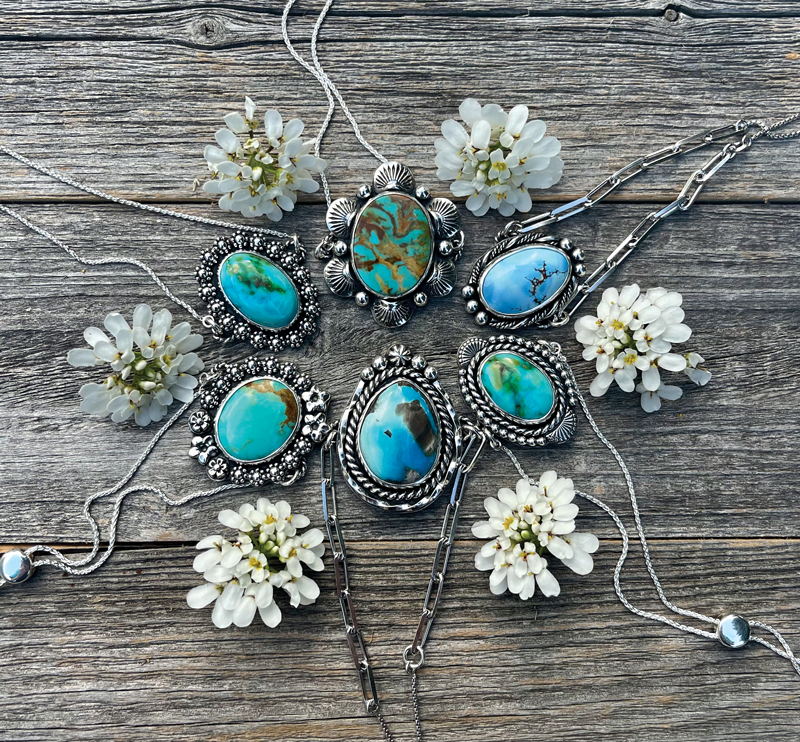
Jen Sprague was a microbiologist until a combination of life factors—semi-retirement, older kids and moving into a new space big enough to have a home studio—paved the way for her to start her business, Rocky Mountain Silver and Stone.
She took silversmith classes in Boulder, Denver and online to perfect her craft.
“It was kind of scary at first, because you have a torch, and that in itself is a little nerve wracking,” she says.
Nearly every piece of Sprague’s jewelry incorporates a stone, often turquoise, her favorite. She starts by wrapping bezel wire around the stone and solders them together.
The first soldering is done at the highest temperature, which she then reduces to avoid melting her previous work. Her pieces are often inspired by the natural beauty of the mountains.
This year, Sprague is planning on having a booth at the Windsor Farmers Market and making an appearance at the Estes Park Farmers Market. She sells some jewelry on her website, rockymtsilverandstone.com, and invites customers to contact her for custom pieces.
“That, I think, is a little different from some other silversmiths,” she says of her custom work. “I’ll let them come over and take a look at all the stones. We can draw up something together.”