
Going for a hike in the mountains or even walking or biking along the Poudre River Trail can be intimidating to someone who doesn’t venture beyond their block. Before you head out, refresh yourself on these dos and don’ts so you feel more prepared to take on your next adventure.
Using the Poudre River Trail
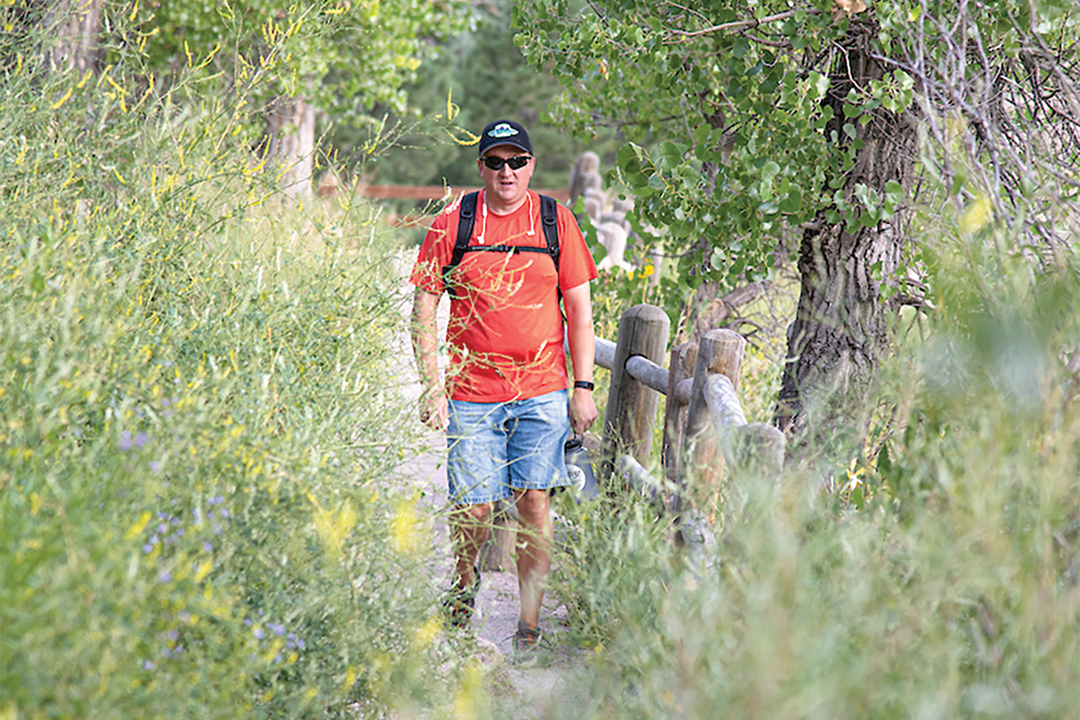
The Poudre River Trail is a good introduction to getting outside and going for a walk or bike ride in Northern Colorado. The trail is paved and located mostly in urban settings from Bellvue to Greeley, with many popular, well-lit places to access it from.
For added safety, local cities and towns have installed lighting along the darker areas, says Dave Kemp, senior trails planner for the City of Fort Collins. Human conflict is rare, he says, and animal attacks happen even less often. Still, these tips will help you ensure your safety on the Poudre River Trail.
Understand the etiquette
When there is conflict on the trail, it’s usually because of clashes between bike riders and walkers or runners.
“The predominant safety concern among users is just around people sharing the trail,” Kemp says.
Bikers can startle pedestrians by whizzing past them, and walkers can strut side by side on the trail, leaving little room for bikers to pass. The City of Fort Collins recently installed nearly a dozen signs along the trail to educate users on what to do to avoid these issues.
“There hasn’t been a lot of clear communication telling people what the rules are and what the etiquette is,” Kemp says. “There needs to be more communication among users.”
The signs focus on specific areas, such as:
1. Saying “on your left.”
Bikers and runners, especially those with dogs, should announce their intention to pass a pedestrian, and they should always pass on the left.
2. Slowing down.
The Poudre River Trail is not a highway. Bikers and runners should understand that they share the trail with lots of users.
3. Being seen.
Be extra careful around blind corners, underpasses and bridges. Wearing brightly colored and reflective clothing can help you be seen by others. At night, runners and walkers should wear a headlamp and lighted gear, and bikers should have front and rear reflectors.
4. Following e-bike rules.
Only Class 1 and 2 e-bikes are allowed on the Poudre River Trail. Class 3 bikes can reach speeds of close to 30 mph and aren’t appropriate for the trail.
Bring a buddy
Having someone with you is not only a comfort; it’s an insurance policy.
Bring your phone
Keeping your phone on you gives you a way to contact someone in case of an emergency. Service is generally available along the whole Poudre River Trail.
Go in the afternoon
You’ll have plenty of daylight (especially in the summer), and you can dodge the bike commuters on weekdays. The afternoons are usually calmer on weekends too.

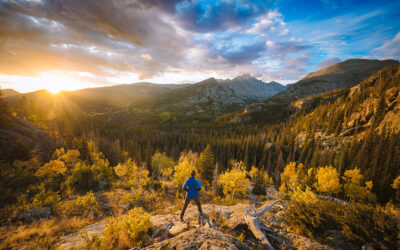
Emerald Lake, Rocky Mountain National Park.
Photo by Laurel Aiello.
Hiking trails in the wilderness
Hikes in the mountains vary in length, terrain and remoteness and can range from a simple stroll to an all-day trek. Here are some safety tips for all difficulty levels.
Do your research
Nearly all trails in Colorado have something written about them, and reliable information is available on official websites such as those run by Rocky Mountain National Park, Colorado Parks and Wildlife (CPW) and cities and counties (usually under titles such as “open spaces” or “natural areas,” where hiking trails abound).
Don’t count on your smartphone, but bring it anyway
While you might lose signal just a mile beyond the trailhead, texts may go through even when phone calls don’t. Bring a map or screenshot directions on a fully charged phone so you know where you’re going. If you get lost, a whistle can alert someone to your location or act as a cry for help. Some hydration vests already have them built in.
Consider bringing a tracking device
Some smartphones have satellite service now, but brands such as Garmin also have tracking devices that allow you to message someone in areas without service.
Watch the weather
If it’s snowy or icy, bring microspikes, Yaktrax or another brand of over-the-shoe traction cleats. Hiking poles can also help you get solid footing. If the forecast calls for extreme cold, strong winds or a bad storm, take it seriously and either shorten your hike or go another day.
Report suspicious activity
“Park rangers exist for a reason,” says Kara Van Hoose, spokeswoman for CPW’s northeast region. You’ll find a ranger in popular natural areas or at a park’s main visitor center if you need to report something unusual.
Ask a park ranger for advice
Park rangers can match hikes with ability. If you describe your skill level and what you want to see (a meadow of wildflowers or a peak with a view, for instance), Van Hoose says rangers likely know a couple hikes that would be a good fit.
Let someone know where you’re going
Tell them the name of the trail, the destination and what time they should expect you back. You should also leave this information in your car and look for a trailhead register where you can jot down your name and where you’re going.
Bring the basics
You can survive for days in the wilderness with a few basics, even if something goes wrong. These include warm clothing, hiking boots, food, a flashlight and plenty of water.
Watch for wildlife
Animals tend to be the biggest fear for inexperienced hikers, Van Hoose says. Ease your anxiety with these precautions:
1. Communicate with others on the trail. Other hikers will usually warn you if there’s an animal ahead. You should as well.
2. Keep dogs on a short leash. They’ll be less likely to disturb or provoke wildlife.
3. Beware of moose. Black bears are timid, and mountain lions prefer isolation, but moose aren’t afraid of humans. Keep your distance from them.
4. Carry bear spray. It works on lots of animals—even humans.
5. If you see an animal, don’t turn and run. That can trigger a prey instinct in animals that may otherwise not want anything to do with you, like a bear or mountain lion.