
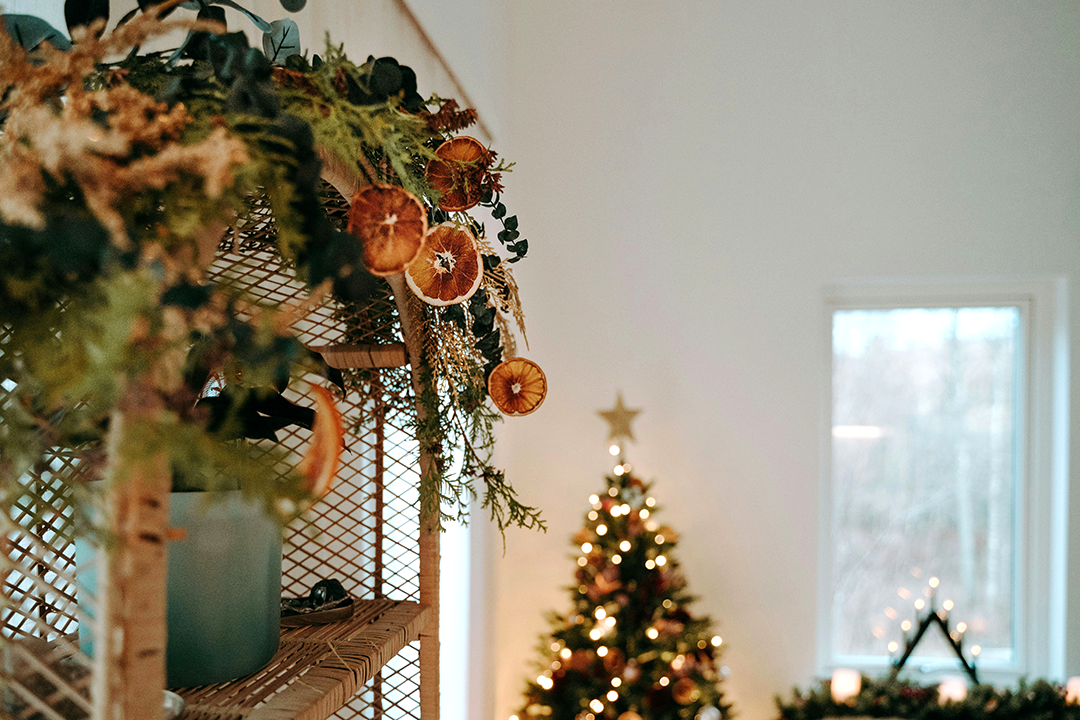
Before the advent of string lights and inflatable snowmen, the holidays were marked with what the season provided: evergreen boughs, pinecones and other foraged finds brought in from the cold. Decorating with natural elements is one of winter’s older traditions, and in Colorado, many of those materials are close at hand.
Bringing nature indoors for the holidays can be a creative endeavor or as simple as hiring an interior decorator. Caitlin Dunnagan, co-owner of CC’s Flowers in Fort Collins, accommodates the hands-on crowd with fresh greenery, a dried flower bar and wreath-making workshops. Debra Bradford of Bradford Weddings & Events does the coordinating for others by offering seasonal porch and home decoration services in Northern Colorado. Here the two share their tips for creating a naturally festive home.
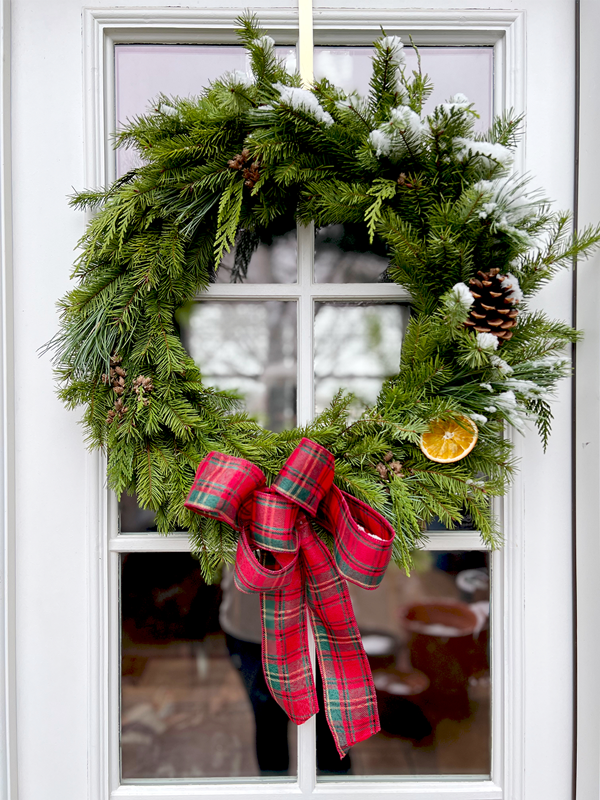
Photo by CC’s Flowers.
Gathering and preserving materials
Whether you take a DIY approach or hire a professional, the materials have to survive the season. That starts with choosing the right ones.
When decorating with evergreen branches, Bradford recommends using the freshest greenery possible and keeping it hydrated. Spritzing evergreens, whether displayed indoors or outdoors, with water will help extend their lifespan, Dunnagan adds, noting that a bit of moisture can keep an evergreen wreath fresh as late as Valentine’s Day.
To maximize longevity, Dunnagan recommends keeping evergreen wreaths outdoors. Pine trees, after all, are built for the cold.
“People think if they bring them indoors, they last longer, and that’s not true,” she says, as the dry air in heated homes will speed up their decline.
Beyond fresh greenery, Dunnagan favors materials that keep well on their own, like wood elements that naturally hold their shape through winter. Pinecones and aspen branches are two sturdy, reliable choices. She also suggests grasses as an option that dries well. One of her favorites is Korean feather reed grass, with its tall stems and soft, wispy plumes, available through local florists.
The Colorado prairie offers an abundance of native grasses, too. In its dormant winter months, the little bluestem variety takes on a coppery tone, according to the Colorado State University Extension. Colorado’s state grass, blue grama, turns golden brown and forms a distinctive, comb-like seedhead, similar to an eyelash.
Dried citrus and apples are other durable choices for holiday decor, Dunnagan says. These items can be dried at home in an oven, air fryer or dehydrator.
Dunnagan warns that drying flowers for fall and winter displays can produce disappointing results, as many varieties lose their color and shape in the process. Two flowers that stand up well to drying, she notes, are Australian banksia and South African protea.
To forage or to buy
While many natural materials are readily available in Colorado, there are a few caveats to consider before venturing out to forage.
Dunnagan cautions those gathering their own materials not to venture into a neighbor’s yard or other private property without permission and to never take items that are prohibited. Foraging is illegal in Colorado’s state and national parks, and the regulations in city and county open spaces vary. Larimer and Boulder counties, for example, prohibit the collection of plants and other natural materials from public lands. Land managers such as the Colorado State Forest Service and Bureau of Land Management Colorado sell permits for certain forest products, like Christmas trees and pine boughs.
In areas where foraging is allowed, the general rule of thumb is to seek permission first and take only the minimum amount needed in order to protect native habitats.
Sourcing natural materials through local shops or interior designers is a safe, stress-free option. When creating her holiday porch decorating packages, for example, Bradford goes through wholesale companies and other suppliers. The dried flower bar at CC’s Flowers carries roses, tropical blooms, palm leaves and greenery for building seasonal bouquets and displays. For a fresh winter option, shop CSU’s annual poinsettia sale in early December at their Horticulture Center in Fort Collins.
Decorating tips
When decorating porches and entryways, Bradford starts by analyzing the space’s scale, height, color and texture. She recommends stepping back from the house to take in the entire entrance, then choosing a scheme of two or three colors to anchor the design.
From there, she aims to create a balanced and cohesive look. That can mean choosing a large, standout piece that draws the eye, such as a straw bale, an oversized planter, a tower of pumpkins or even a full Christmas tree. The idea is to avoid clustering small pieces that may create a cluttered or disjointed look.
“A homeowner might tend to love beautiful things individually, but that doesn’t mean that it all comes together,” she says. “Sometimes less is more.”
For accent items, like pinecones and gourds, Bradford enjoys working in odd numbers and avoids lining up items of the same height, as the variability adds interest and character. To create an attractive, low-effort porch planter, Dunnagan suggests filling the container with fresh greenery and layering aspen branches and pinecones.
Indoors, Bradford suggests continuing with the same color scheme and integrating similar textures from room to room, “repeating elements—without making every area identical—because you want it to all feel connected.” This will help the decor look intentional, she says.
Rather than placing a traditional garland on the mantel, Dunnagan likes to spread out loose greens, like Douglas fir boughs, and tuck in faux candles for fire safety. Then she’ll add pinecones, dried fruits and other adornments.
When decorating a foyer or entry table, Dunnagan suggests filling an oversized vase with fresh holiday greens accented by pops of holly berries or hypericum.
“It looks very classic and understated while still making an impact,” she says.
A bouquet from the shop’s dried flower bar offers a low-maintenance alternative.
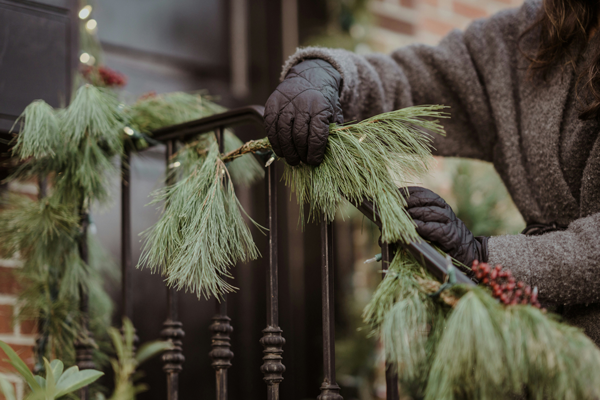
Decorating a banister requires a little more care. The simplest DIY route, Dunnagan says, is using Command hooks to drape garland along the rail. When the CC’s team installs garland, they spiral it up through the balusters and secure it with floral wire. Zip ties, pipe cleaners and ribbon also work.
However the garland is fastened, Bradford stresses the importance of keeping it clear of the handrail so that it doesn’t interfere with people using the stairs.
“It doesn’t have to be perfect,” she adds. “Natural materials are beautiful because they aren’t identical. Every branch has a different shape, and every pinecone is a little different…. The variation is what gives a holiday display warmth and character.”
________________________________________________________________________________________________
How to Make a Wreath
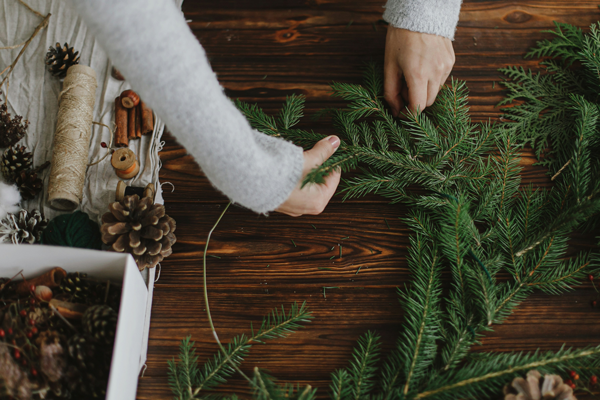
After Thanksgiving, CC’s Flowers offers wreath-making workshops that include supplies and instruction. For a DIY approach, Dunnagan suggests starting with pruners, a base form (like a bare metal, straw or grapevine hoop), floral wire, fresh greens and accent pieces such as dried orange slices, grasses, seed pods and pinecones. From there, follow these steps:
1. Pick a base layer of greens. CC’s workshops often start with Douglas fir and then layer in a mix of pine and cedar to create dimension and texture. The variety, Dunnagan says, will separate the wreath from more uniform, store-bought options.
2. Wire, don’t glue. Anchor the floral wire to the base form, then attach the greenery in one continuous pass rather than creating knots. “You just keep looping and tightening your form the whole way through,” Dunnagan says.
3. Close the loop. Work around the ring in one direction, each bunch overlapping the last to hide the stems, until the loop is closed. Cut the wire and tie it off.
4. Add accents. Whether you’re going for a minimalist or maximalist look, the key is asymmetry. Placing accents off center “can add a nice variety while not being too overwhelming,” Dunnagan says.
5. Mount the wreath. Hang the finished product on an over-the-door wreath hook or a Command hook.
6. Keep it fresh. Hang the wreath outside rather than indoors for increased longevity, and spritz it occasionally with water.