
Dean Hines sometimes sees customers freeze at the counter of his Welsh Rabbit Cheese Shop in downtown Fort Collins. He gets it. He carries more than 100 varieties, and about 150 for the holiday season.
With around 2,000 varieties of cheese worldwide, the decision paralysis could be worse. Still, Hines sees some new customers get overwhelmed when faced with the variety and the even more daunting decision of pairing cheese with a complementary wine or beer.
“I want to have a great pairing—there are just too many options,” Hines says, describing a common lament heard from customers.
The way through, Hines and his staff say, is to stop trying to consider everything all at once. Start with one thing you already love—a cheese, a wine, a beer—and let it lead you. From there, an expert can provide guidance on how to create flavor harmony between the cheese and whatever you want to drink with it. Here are some tips to help you get started.
What grows together, goes together
The Welsh Rabbit’s wine buyer, Tara Hildebrand, says pairings can be as simple as picking both from the same geographic area.
“If you’re getting a cheese from a specific region of France, the wines that come from that specific region are usually going to be great pairing wines,” she says.
That’s because what the animals from that region consume passes through the milk, creating unique flavor nuances in the cheese.
Use bubbles as a palate cleanser
This applies to both champagne and beer, Hildebrand says, and it can complement both soft and hard cheeses. For cheese boards that feature a variety of flavors, a sip of something sparkling between bites resets the palate for the next one, she says.
Easy mode: beer and cheese
For those exploring the world of cheese for the first time, starting with a beer pairing is a good idea, Hines says. Many beers pair effortlessly with a variety of cheeses, but Hines also has some tips for maximizing the pairing.
Wheat beers
Wheat beers have a lighter, more gentle flavor and go well with younger, milder cheeses, like fresh chèvre, feta, triple crèmes and mountain varieties.
Lagers
Choose a cheese that won’t overwhelm a smooth, light-bodied beer like a lager. Consider a Spanish Campo de Montalbán—made from a blend of cow, sheep and goat milks—that creates a mild, buttery and slightly nutty flavor. A French Cantalet cheese, with a smooth, mild and lightly tangy flavor, also pairs well.
Hoppy, bitter beers
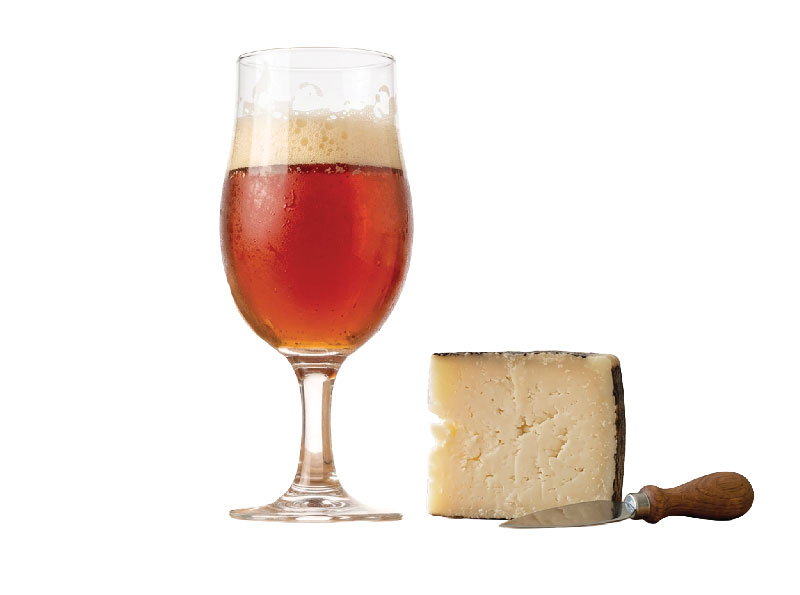
Consider a tart, sharp cheese such as an aged Manchego. The bitterness of the beer will also stand up better to a dense, fatty cheese, like an aged cheddar.
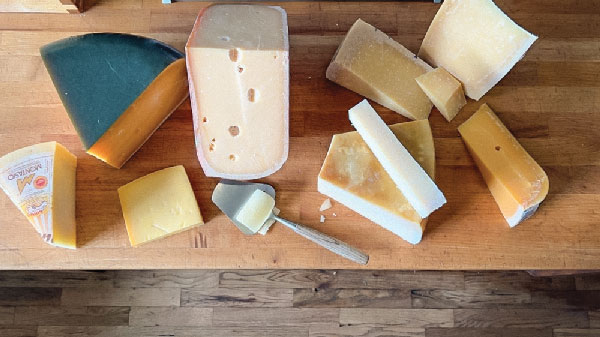
A variety of cheeses from The Welsh Rabbit Cheese Shop.
Sours
Hines recommends a sour beer with notes of cherry, like New Belgium’s Transatlantique Kriek, with a creamy, rich sheep’s milk cheese.
“There’s something about cherries and sheep’s milk cheese that’s really wonderful together,” he says.
Other options to pair with fruity beers include fresh chèvre, mozzarella or burrata, mild bries and triple-crèmes.
Wine and cheese pairings
Wine and cheese combos can be tricky. Where one cheese enhances the experience, another may clash or bring out undesirable notes in the wine. But that challenge can add to the fun.
When you’re pairing with wine, it can be easier to start with the cheese. Try these combinations:
Goat’s milk cheese
Hildebrand suggests white wines, as red wine will clash with the tang of the goat cheese. This can even make red wine taste vinegary as a result. Light, delicate white wines, such as sauvignon blanc, chardonnay, pinot grigio and Prosecco, are good fits.
Blue cheese
This is a case where opposites attract. Blue cheese, with its salty, rich, tangy and assertive qualities, pairs well with sweet dessert wines. Hines is a personal fan of blue cheese, chocolate and port. A sweet Sauternes also works here.
Colby or Monterey Jack
These mild, semi-soft cheeses could be overwhelmed by a choice like a tannic cabernet. Experts at The Welsh Rabbit suggest a softer red, like tempranillo, syrah, grenache or pinot noir.
Aged Gouda or Parmigiano
These aged cheeses offer more density and less moisture, providing nutty and umami notes. They can stand up to full-bodied reds, like cabernet, zinfandel and malbec.
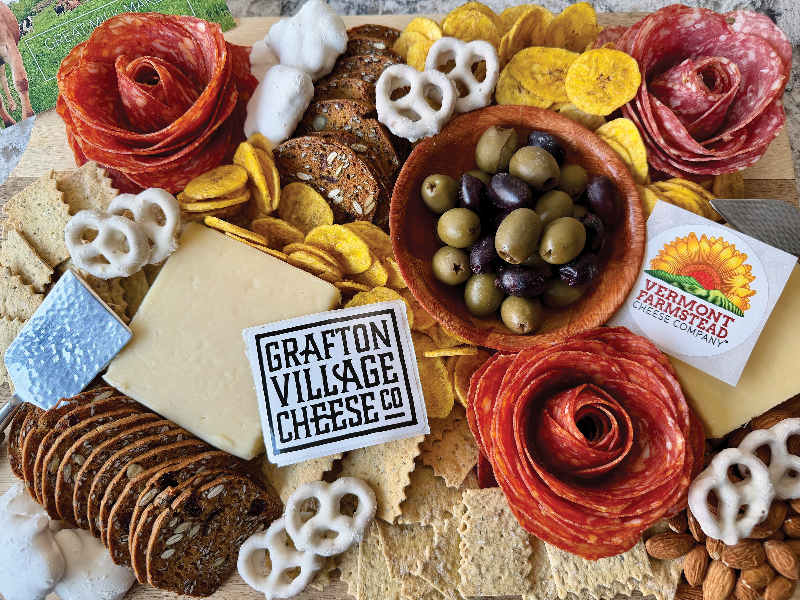
Building a board
Hines has a word for his ideal cheese board.
“For me, it’s a meal,” he says.
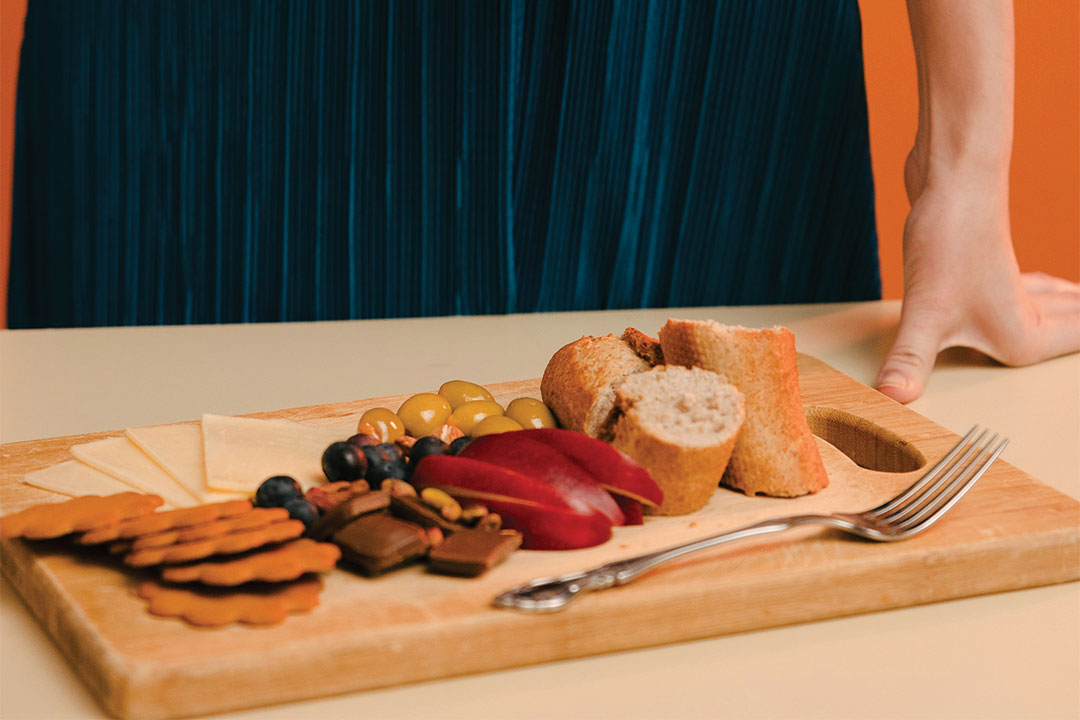
There’s meat, fruit, tinned fish, olives and a baguette. But most importantly, there’s cheese. Hines says three to five cheeses on the board is the sweet spot.
Aim for a balance between soft, semi-hard and hard cheeses. A board that hits all three makes each bite different from the last.
Then build in roughly equal parts: For every wedge of cheese, choose an equal volume of meat, of crackers and bread and of fruits and veggies. The extra touches, like nuts, olives, mustard and honey, can fill in the gaps. For a splash of color, consider Peruvian sweet peppers, a favorite for Hildebrand, or a sweet accompaniment, like figs, dried apricots or blackberries.
While a beautiful board is a visual treat, remember that an overly artistic spread might sit untouched. Don’t be afraid to dig in first and invite guests to do the same.
__________________________________________________________________________________________________________________________________________________
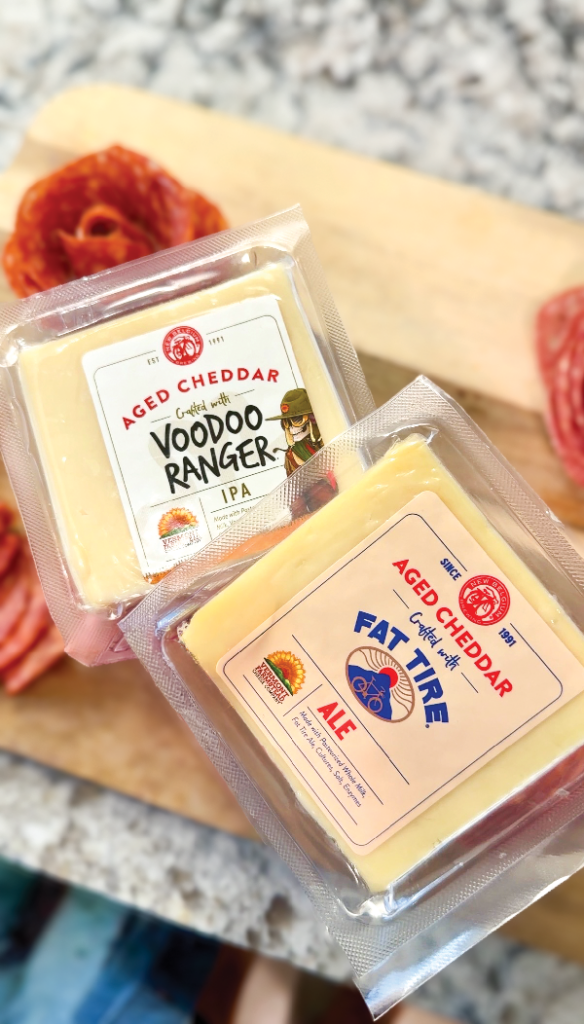
Colorado-inspired Beer & Cheese Pairings
Some pairings come pre-built. That’s the case for Vermont Farmstead Cheese Company’s New Belgium-soaked cheddars, one made with Voodoo Ranger Imperial IPA and the other with Fat Tire Ale. Their Voodoo Ranger cheddar carries the beer’s hoppy, floral side, while the Fat Tire cheddar leans malty and round.
“We joke that we make the different beer collaborations, either Voodoo or Fat Tire, on Fridays because the secret is one [beer] for the cheese, one for the cheesemaker,” says Kent Underwood, Vermont Farmstead’s president.
Using more robust, flavor-forward beers for these cheeses was an intentional choice. A lighter beer couldn’t stand up to the intensity of an aged cheddar, Underwood explains. For an elevated experience, he suggests pairing the cheddars with a New Belgium brew, a crostini or flatbread, a spicy salumi and dried apricots for balance. The cheeses can be found at Lucky’s Market and King Soopers.