
The animals treated by the Northern Colorado Wildlife Center and the Rocky Mountain Raptor Program do not have names.
“We try to keep them as wild as possible,” says Michela Dunbar, executive director of the wildlife center. “We don’t want to get attached.”
The nonprofits are two of the leading wildlife rehabilitators in Northern Colorado, which means treating, housing and caring for injured birds of prey, small mammals and reptiles. It also means educating humans on how to prevent those injuries in the first place, as nearly all of the injuries they treat are human caused, save for the avian flu currently ravaging Colorado’s bird population.
Rehabilitation doesn’t mean snuggling the animals, taking selfies with them or making them social media stars. After all, they are patients, not pets. Caretakers even want their patients to see humans as a threat because, when they return to the wild, being afraid of us is a good survival skill.

Rescued baby American robins at the Northern Colorado Wildlife Center.
Not crossing those boundaries is such a strict rule among wildlife rehab centers that a fierce debate swept through the raptor program a couple of years ago over whether they should name their 18 ambassador birds. Most of those birds are former patients that can’t fly or have other issues that would make it nearly impossible for them to survive in the wild. They allow humans to see, up close, some of the magnificent raptors that call Colorado home.
Handlers care for them and, yes, probably love them. And yet they don’t want anyone to think of the birds as pets, even the ones that have been with them for 30 years, a significant chunk of the raptor program’s history. They’re tolerant, not tame, says Carin Avila, executive director.
Ultimately, they did name their 18 ambassadors because studies show that names help them gain financial support. But that didn’t change their mission.
Raptor rehab
The raptor program started in 1979 as a club at Colorado State University’s world-renowned Veterinary Teaching Hospital. There were no other programs in the area to help injured raptors, so the students would treat and rehab a few birds a year. Nearly 7,000 raptors have had what they call a “second chance at freedom” since then.
In 2005, the organization purchased a 27-acre parcel of land in Fort Collins with the help of donors. There are now three raptor enclosures, where the animals recover from their injuries and practice being birds of prey.
Many raptors get tangled in fishing lines, soccer or volleyball nets or barbed wire fences. Some end up swallowing hooks left in fish. Some are hit by cars or crash into windows. Some are shot, either by mistake or on purpose, and others are poisoned by hunters’ lead pellets. Sometimes babies are abandoned by their parents after too many humans approach their nests hoping for a photo.
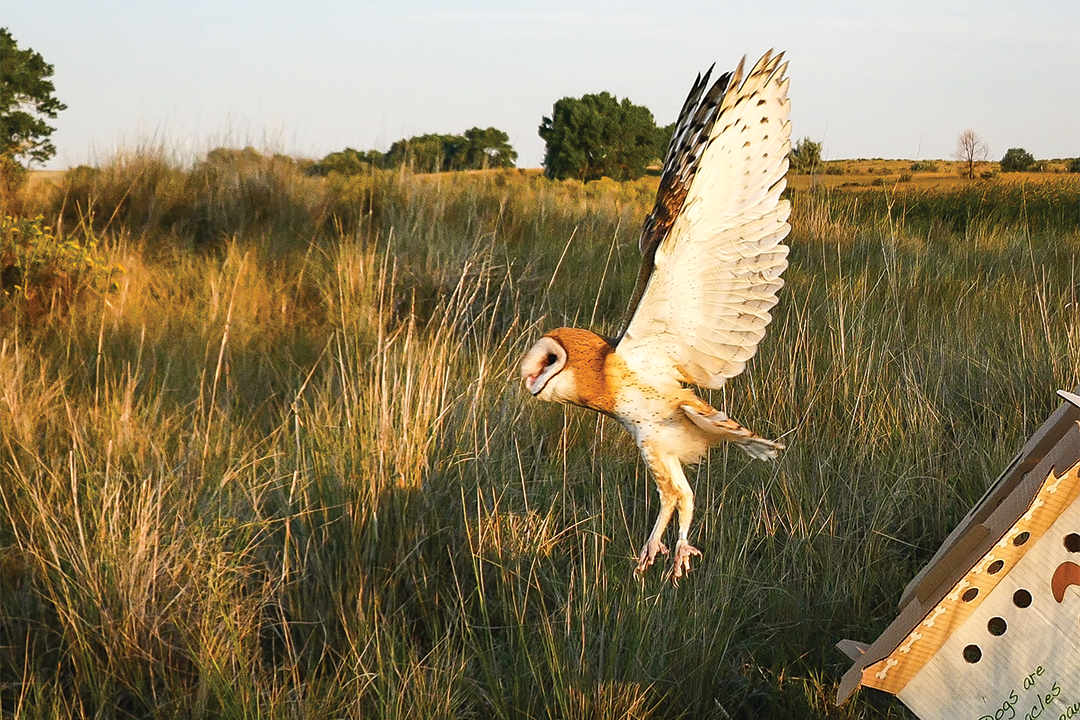
The raptor program’s first step is admitting those animals to an emergency room, where caretakers led by Carrie Laxson, rehabilitation and research director, try to stabilize them. If the birds survive the first 96 hours, more than 75 percent of them are eventually released. The sad exception is the bird flu: Nearly all of those infected die from it.
Once the birds become patients, they’re given an ID number and are cared for until they regain their strength. The last step is the flight cage, where they graduate to hunting live mice—the program calls it “mouse school,” an invaluable experience for young raptors—before they are released back into the wild.
The ambassador birds need to be calm so that they can withstand the stress of being around humans all the time, and their injuries shouldn’t cause them chronic pain. Some who can’t meet those tough standards may go to other facilities or be euthanized.
The organization’s current nest is bursting at the seams, Avila says. But there is hope: Fort Collins residents recently approved ballot measure 2H, which allocates 30 acres of the former Hughes Stadium property for conservation partnerships.
The raptor program plans to partner with the Bird Conservancy of the Rockies to expand its facility and incorporate a nature center with walking trails, a dream the organization has had since 2005, when the land it occupies was purchased. Avila hopes they can start a capital campaign within two years and possibly break ground in five.
It will take a lot of community support, but Avila says the program has had that for many years, allowing it to grow to 14 staff members and more than 100 volunteers. Its $1.2 million budget is maintained by donations from hundreds of people. Support also comes from the many kind souls who call in when a bird is hurt.
“It’s the people who find the birds,” Avila says. “Ultimately, they just want to help.”

A rescued desert cottontail rehabilitated by the Northern Colorado Wildlife Center.
Caring for critters
Many of the animals who end up at the Northern Colorado Wildlife Center are in bad shape. But if they have any fight left, the center will fight with them.
“If we think they have a chance,” Dunbar says, “we will do our best.”
This includes small mammals, reptiles and songbirds, along with other random wild animals. The wildlife center is one of the most biologically diverse in the country, and they get 6,000 calls and 8,000 texts a year from people who are concerned about an injured or sick animal.
The center takes in 2,000 animals per year on average. About 40 percent of them are released back into the wild, which is 10 percent above the national average, Dunbar says. They don’t accept large mammals like deer or carnivores such as bobcats.
Nearly all the patients they treat are there for human-caused problems, Dunbar says, and she feels a responsibility to “turn that needle backward.” They work with veterinarians to provide surgeries and other medical interventions, and the organization itself has four wildlife rehabilitators on staff to provide day-to-day care and perform minor procedures.
“Humans have such an impact on the wild,” Dunbar says. “If I can do something, anything, to make up for that, that’s really my main goal.”
Some of the animals are babies that have been abandoned or got separated from their parents, though the center can help alleviate that by setting up a “reunion box” where babies can reside until the parent comes back for them. They want space for more outdoor cages that help the animals stay wild, but so far they haven’t found a good prospect.
“We have to make sure they are independent and can catch prey and have natural behaviors that are necessary for survival in the wild,” Dunbar says.
When injured animals recover and are released, she says that makes all the hard work worth it.
“When you release them and see them thrive, it’s so rewarding,” she says.
_______________________________________________________________________________________________________________________
What to Do if You See an Injured Wild Animal
If you come across an injured animal, the Northern Colorado Wildlife Center requests that you call or text 970.283.7822.
If it is safe to do so, place the animal in a breathable container and keep it away from people and pets.
If you see an injured raptor, the Rocky Mountain Raptor Program requests that you call the hotline at 970.222.0322.
Do not handle wild birds, as they can cause severe injuries to people even when they are sick or hurt.
Both nonprofits survive on donations. If you would like to support them, visit rmrp.org and nocowildlife.org.