
If your grocery bill has become a pain point in your budget, you’re not alone. You may find yourself wondering if organic food is worth the extra cost.
But can you be healthy if you don’t eat organic? Sometimes it’s hard to know what’s better for you. Digging into the details can help you decide.
What does organic really mean?
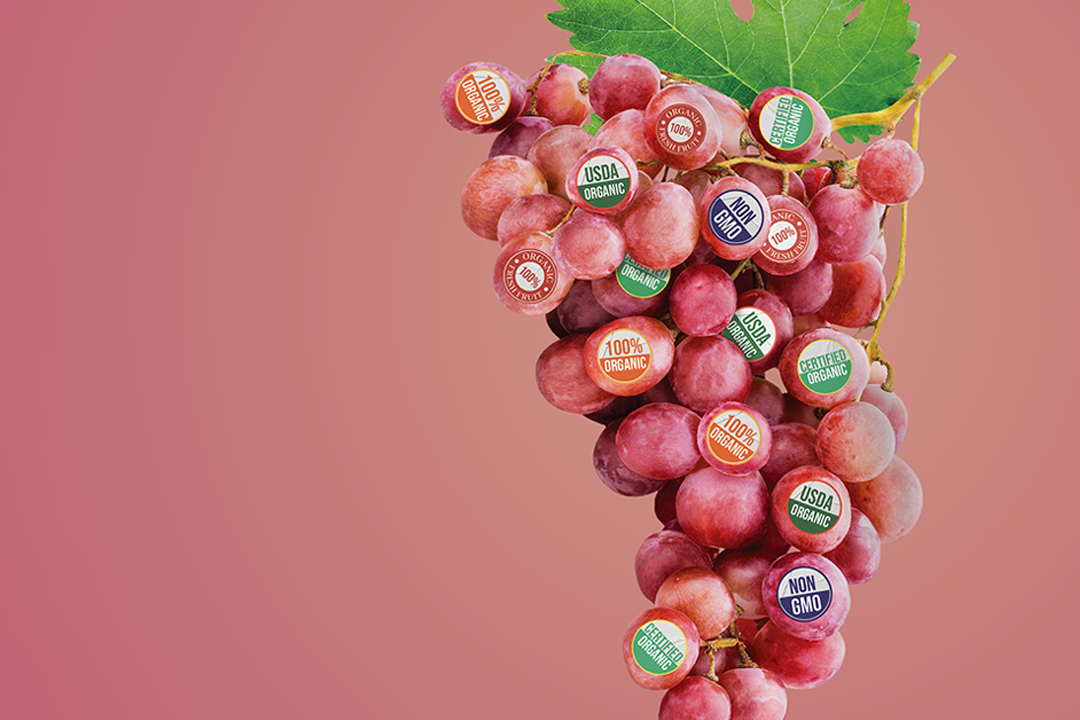
An organic label means the food was grown without synthetic fertilizers or pesticides, says Jordan Kelly, a Fort Collins resident who works for California Certified Organic Farmers. The nonprofit is dedicated to advancing organic agriculture through certification, education and advocacy nationwide.
Organic labels are one of the few federally regulated claims on food labels, Kelly says. Companies can say things like “cage free,” “natural” or “regenerative” without backing it up.
“Unfortunately, there are companies out there that will just slap a label on a product and make a claim,” Kelly says. “Organic regulations are actually being verified by certifiers who are accredited by the USDA National Organic Program to follow the rules.”
To score a USDA certified organic label, food must be grown and processed under guidelines for pest and weed control, animal raising practices and use of additives, according to the USDA website. Produce must also be grown in soil that has not had prohibited substances applied for three years prior to harvest. Prohibited substances include most synthetic fertilizers and pesticides, though there are exceptions explained in the National List of Allowed and Prohibited Substances.
When it comes to organic meat, regulations say animals must be raised in living conditions accommodating their natural behaviors (think grazing in a pasture), fed organic food and not be given antibiotics or hormones.
Processed, multi-ingredient food boasting a USDA organic label shouldn’t contain artificial preservatives, colors or flavors, and the ingredients should be organic, with some limited exceptions for non-agricultural products such as enzymes in yogurt, pectin in fruit jams and baking soda in baked goods, according to the USDA.
Kelly primarily works with processors. There are regulations limiting what can go into processed products such as kombucha, wine, lotion and baby formula, she says.
“For me personally, when I’m buying a processed product, I really like buying organic because I know that it’s not adding a bunch of chemical additives or synthetic flavors or colors,” she says.
Packaged products touting that they are made with specific organic ingredients must contain at least 70 percent organically produced ingredients. The other 30 percent can’t be made with prohibited practices, such as genetic engineering, but there is more wiggle room than something claiming to be 100 percent organic, according to the USDA.
From a nutrition standpoint
Brayden Smith, a registered dietitian with Banner Health in Fort Collins, says there isn’t a big nutritional difference between organic and conventional produce. When patients want the details, this is what he tells them:
“The macronutrients (protein, fat and carbohydrates) are generally similar between organic and conventional foods. Vitamins, minerals and phytonutrients can vary, but there’s no consistent ‘winner.’ The differences depend on the specific food and nutrient being measured. Sometimes organic foods have higher levels, and sometimes conventional foods do.”
The nutrient levels of different foods are influenced by more than just the growing methods, Smith says, including soil conditions, time since harvest and storage and cooking methods. Some studies suggest that organic milk, eggs and beef may have higher omega-3 fatty acid profiles when compared to their conventional counterparts, but we don’t yet know if those differences translate into meaningful health benefits, he says.
“Current research does not show strong evidence that eating organic alone leads to better health outcomes,” he says.
So, what does lead to better health outcomes?
Back to the basics
We often focus so much on finding the healthiest or most optimal choice that healthy eating can feel overwhelming or unachievable, Smith says. But it doesn’t have to be that way.
“From a public health perspective, a major concern is that most Americans do not consume enough fruits, vegetables or whole grains,” he says, organic or otherwise. “When patients ask about organic verses conventional produce, I keep the discussion practical. I emphasize that eating more fruits and vegetables is what matters most, regardless of how they are grown.”
According to a 2019 report from the U.S. Centers for Disease Control and Prevention, only about one in 10 adults eat the recommended amount of fruits and vegetables. Another report found that U.S. adults only get about 15.8 percent of their grains from whole grains.
The 2020-25 Dietary Guidelines for Americans recommend that adults eat about one-and-a-half to two cups of fruit and two to three cups of vegetables each day, with at least 50 percent of daily grains coming from whole grain sources.
“Many of my patients rely heavily on fast food or highly processed package meals when we first meet,” Smith says. “These options are typically high in saturated fat, added sugars and sodium while providing insufficient fiber and essential nutrients.”
His patients often say they don’t have time to cook or that the cost of fresh produce and whole foods are barriers to eating healthier. A central focus of his work is helping them increase their intake of fruits, vegetables and whole grains in a way that realistically fits their tastes, lifestyle and budget.
“This includes exploring fresh, frozen or canned produce as well as accessible whole grain options,” he says.
What about the Dirty Dozen?
You may have heard the term “Dirty Dozen” to describe the 12 fruits and vegetables that often have the most detectable pesticide residue. The term comes from the Environmental Working Group (EWG), a nonprofit that advocates for environmental health by spotlighting harmful agricultural practices, according to its website.
The organization takes a more conservative approach to pesticide risk, meaning it uses lower thresholds than the U.S. Environmental Protection Agency in its evaluations, Smith says. The 2025 Dirty Dozen list includes:
• Spinach
• Strawberries
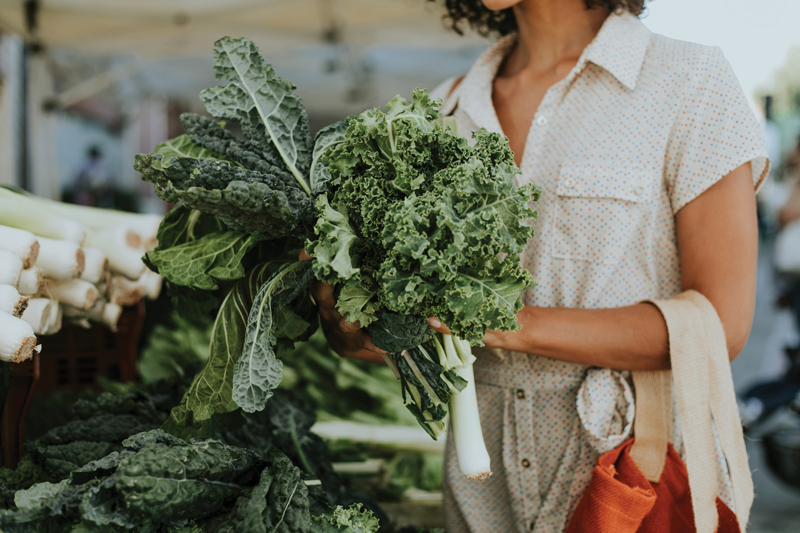
• Kale, collard and mustard greens
• Grapes
• Peaches
• Cherries
• Nectarines
• Pears
• Apples
• Blackberries
• Blueberries
• Potatoes
The USDA routinely tests pesticide residues on a rotating selection of fruits and vegetables, particularly those frequently eaten by children, Smith says. While eating organic versions of the Dirty Dozen may reduce your exposure to pesticide residue, he doesn’t think the list should dictate your food choices.
“If only conventional options are available where you shop, I would still encourage choosing those items to support dietary variety rather than avoiding them altogether,” Smith says.
Alternatively, you can buy produce on the 2025 Clean Fifteen list, which includes nonorganic fruits and vegetables that often have the lowest amount of pesticide residues, according to the EWG. Those foods are:
• Pineapple
• Sweet corn (fresh and frozen)
• Avocados
• Papaya
• Onions
• Sweet peas (frozen)
• Asparagus
• Cabbage
• Watermelon
• Cauliflower
• Bananas
• Mangoes
• Carrots
• Mushrooms
• Kiwi
Smith says you can also take these steps to limit your pesticide exposure:
• Washing produce under cold, running water and using your hands to gently scrub it right before you plan to eat. You can use a brief white vinegar or baking soda soak, though this is generally not necessary and can alter the taste.
• Patting produce with a clean cloth or paper towel to remove additional surface residue.
• Eating a variety of fruits and vegetables.
Environmental considerations
Many consumers choose organic food to reduce their environmental impact. However, whether organic farming is better for the planet isn’t settled science.
According to the Columbia Climate School, organic farming tends to support biodiversity, result in better soil quality and reduce pollution from fertilizer and pesticide runoff. But conventional farming produces higher yields, thus requiring less land to feed people. If everyone were to switch to organic food, we’d need more space to grow food and raise livestock.
So, is eating organic healthier? Maybe, especially if your priority is reducing pesticide exposure. But if organic foods are expensive or hard to get, don’t feel bad for reaching for conventional produce. Get your greens however you can.