
In the annals of fashion history, the “little black dress” has long ranked supreme. Popularized by Coco Chanel and famously donned by Aubrey Hepburn in “Breakfast at Tiffany’s,” the dress came to be known as a wardrobe staple.
But for many wearers, the “little black dress” might not be their best look.
Color analysis—the process of identifying an individual’s most complementary colors—has reemerged in the last few years, thanks largely to the influence of TikTok. Because of that, many people are learning that “neutral” isn’t the same for everyone. Where black pops for one person, a deep brown or navy might better do the trick for another.
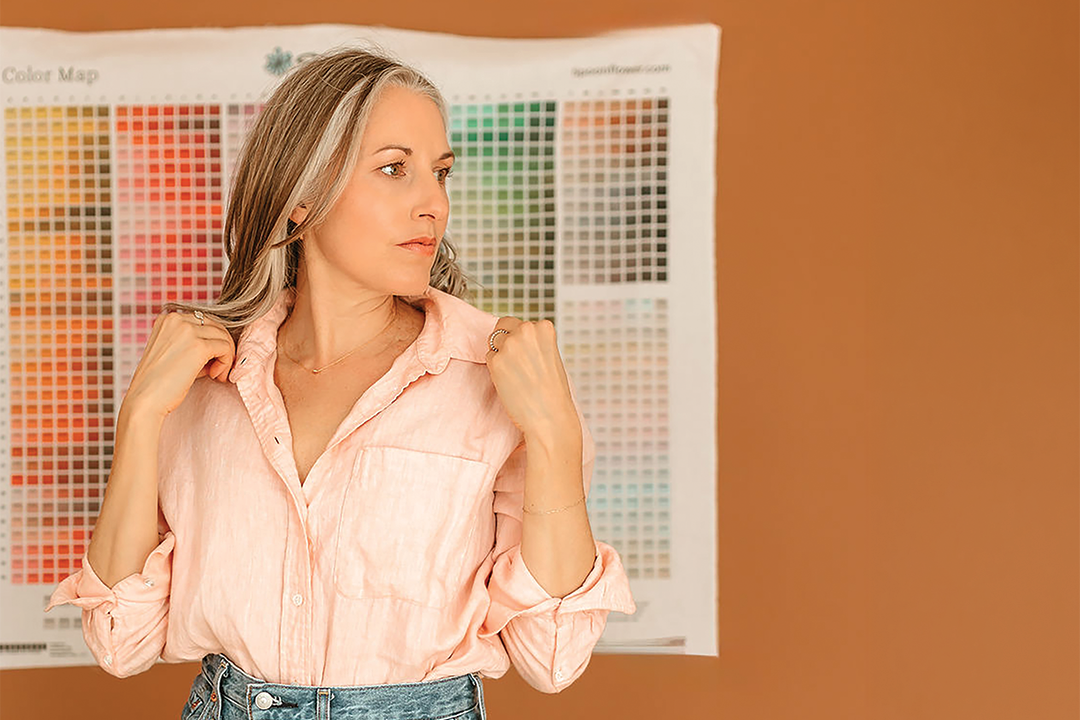
Megan Haynes, Fort Collins-based color analyst and founder of Colorbook, calls these colors the “new better than black.” She uses a client’s skin undertones and eye and hair color to identify their best version of black—and red, yellow, blue and beyond. A person’s skin tone is the surface color of their skin, while the undertone provides the underlying hue: warm, cool or neutral.
“In the right colors, your skin is going to look really even and smooth, your eyes are going to pop and fine lines and wrinkles diminish,” Haynes says. “It’s like the person and the color appear as a unified whole. You snap together.”
Haynes is one of many color analysts trained in the 12-seasons system, dividing clients along the following palettes.
Spring: bright, warm or light. These colors feel cheerful, such as fresh greens, clear blues and sunny corals.
Summer: light, cool or soft. These colors feel muted and generally fall into soft pinks, lavenders and gentle blues.
Autumn: soft, warm or deep. These colors feel earthy, such as olive, rust, camel and deep teal.
Winter: deep, cool or bright. These colors feature high contrasts and fall into icy lights, crisp darks and jewel tones.
With a trained eye and a fabric draping—the process of placing various fabrics under the chin and comparing one color after another—analysts look to understand their clients’ temperature (warm/cool), brightness (light/dark or deep), chroma (bright/soft) and contrast (low/high) to determine their ideal color scheme.
Makeup artist and fellow 12-season color analyst Deanna Boyd, based in Timnath, says the process can provide a boost of confidence after a major life event, like having a baby or getting a divorce.
“When a growth event happens, don’t do anything drastic. Don’t get bangs. Get your colors done,” she says with a laugh. “Honestly, it’s empowering. I want you to feel good in your skin.”
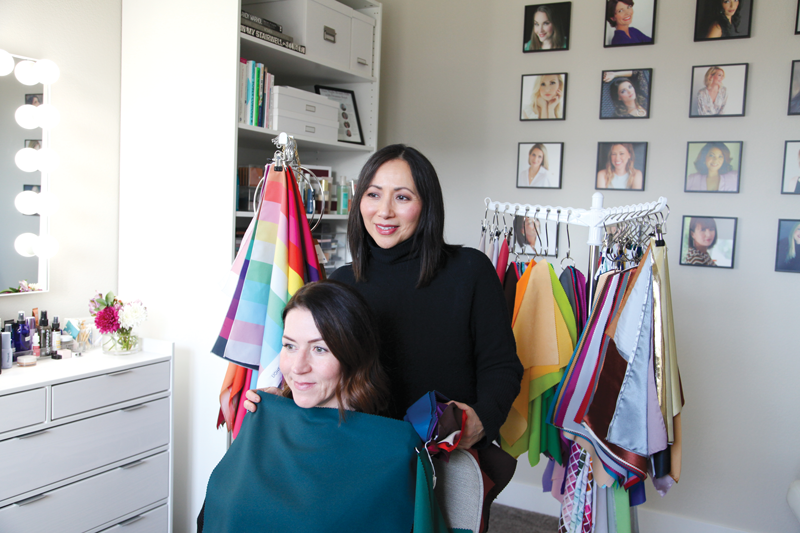
Deanna Boyd (right)
Before analysis
A color analysis session requires a bit of prep, which will vary by analyst. Boyd sends clients a couple of pre-session surveys and instructions on what to wear. She suggests clients refrain from using a tanning bed or tanning lotion at least a week before their appointment and arrive without wearing makeup.
Haynes requests two or three pictures of her clients’ natural hair color and asks them to bring their makeup bag to their session so she can compare the colors they use to the ones she would recommend.
During analysis
An accurate color analysis requires natural lighting, typically near a well-lit window, and involves comparing hundreds of color swatches in different shades and tones.
“When you come for your appointment, I am going to drape fabric [under your chin] and watch how your skin reacts to the color,” Haynes says.
Through a process of elimination and pattern recognition, the analyst will hone in on the most harmonious colors.
Haynes and Boyd also use color analysis to provide makeup tips, identifying the best lipstick, blush, eye shadow and mascara for clients.
After analysis
Once you’ve received your results, you can experiment with clothing and makeup based on your identified color season. The analyst will provide a custom PDF document that breaks down your season, palette and makeup suggestions to achieve your best look.
Haynes recommends organizing your closet after an analysis by dividing clothes by color and identifying which items fall within your season and which ones don’t. This can give clients who may have previously avoided certain colors permission to begin thinking of them in new ways, she says.
However, it’s important to think of color analysis as a foundation, not a ban from exploring the color wheel. Boyd falls back on one rule: “I always say confidence overrides your best colors.”
“In doing color analysis, the whole goal is to discover your best colors that work naturally with your hair color, your eye color and your skin tone,” she says, “whereas wearing a color that’s not in your season is by choice. It’s a preference.”
______________________________________________________________________________________________________
Three Tips to Discover Your Own Colors
If an in-person color analysis isn’t possible due to cost or accessibility, there are few steps that you can take at home to start identifying your best colors.
1. Compare colors from your closet.
Haynes suggests testing colors at home by gathering a variety of tops or fabrics from your closet and standing near a window with soft, natural light.
“Hold each color near your face,” she says. “Take photos so you can compare them side by side.”
Look for colors that consistently make you look more rested and clear, she says, as opposed to colors that dull your skin’s appearance. Observe patterns, like which colors brighten your appearance, and compare warm and cool color tones.
One clue that a color is a good fit is that you’ll feel less inclined to layer on makeup, Boyd says. The right color will help minimize imperfections, while the “wrong” color might bring out an unflattering yellow or red hue.
2. Try a lipstick test.
Boyd also recommends doing a lipstick test so you can observe which tones appear more harmonious. These are colors that naturally complement your features, as opposed to shades that emphasize discoloration or create a sickly appearance.
For people with more pigmented lips, she suggests applying concealer to the lips first and then applying the lipstick colors. The concealer will help neutralize the tone and create a blank canvas.
3. Observe your relationship with color.
When looking at their favorite photos of themselves, some people notice that they’re often wearing their seasonal colors, Haynes says. Many already have an intuitive sense of their color season and gravitate toward certain colors of clothing and even home decorations, Boyd adds. She encourages clients to note what they already wear and what colors they tend to get compliments on. Those colors tend to be complementary.