
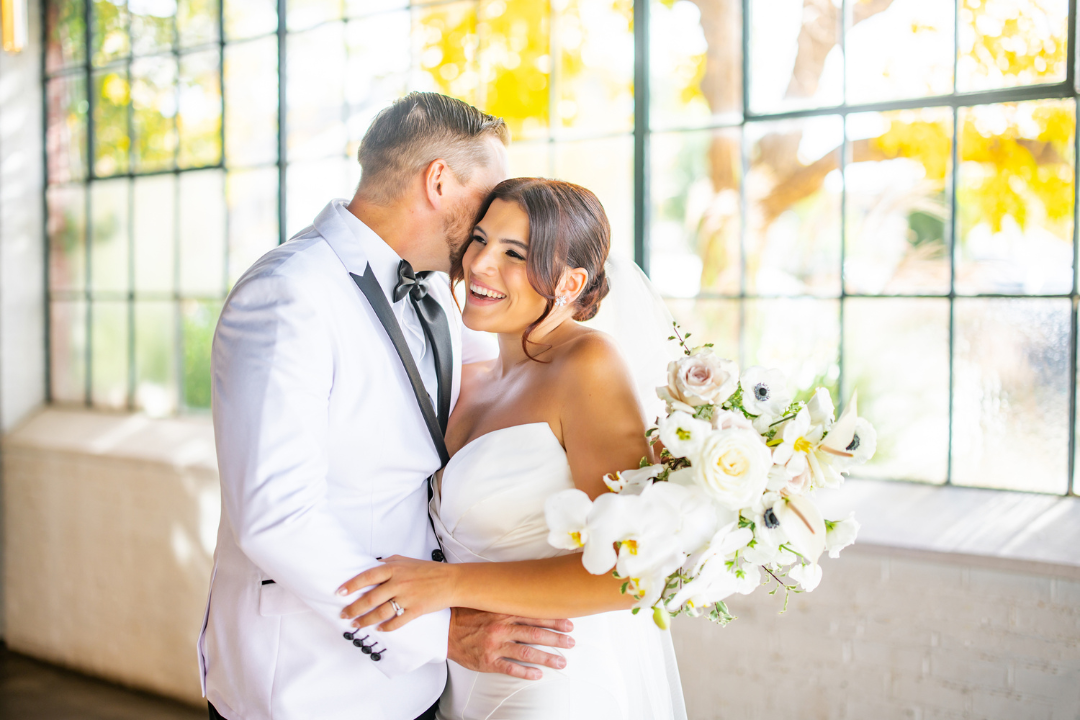
Flowers are one of the main focal points of a wedding. They’re at the altar. They’re on the tables. They’re in all of the photos. But after the big day, they often sit on the counter until they wilt and end up in the trash.
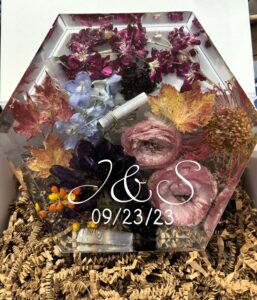
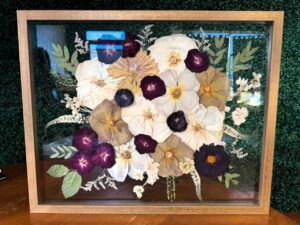
More brides are thinking ahead and finding creative ways to save their bouquet before it’s too late, says Lyndsay Whitlock, wedding florist and owner of The Joyful Poppy in Fort Collins. She preserves wedding flowers in resin so they can be displayed as trays or bookends, or she can arrange them in a wall frame.
“People are looking for ways to get a memento,” she says. “I think [the preserved bouquet] tells its own story. You can look at it, and it’ll trigger those fond memories.”
Flower drying methods
Before wedding florals can be preserved, they need to be dried. Whitlock uses a microwave press for many flowers—especially thicker ones, like roses and dahlias—so they don’t mold in a traditional flower press. Once they’re semi-dry, she finishes them off inside books.
Her microwavable flower press consists of two small plastic boards, fabric liners and a band to hold everything in place. After placing a flower in between the liners, she’ll microwave it for short bursts of 20-30 seconds, letting it cool for a few minutes in between increments.
“Try a couple flowers outside of your bouquet first because if you go too long, they’ll start to burn,” Whitlock says. “The more heat you apply to flowers, the more altered their color will be.”
Placing the semi-dry flowers inside books lined with paper will soak up any moisture for the remaining week or two needed to fully dry. Whitlock recommends holding the books shut with a rubber band and checking on them every couple of days. If the flowers are still wet, she’ll swap out the paper to prevent them from molding. She says flowers and foliage with minimal moisture, like feverfew, ferns and eucalyptus, can skip the microwave and go straight into a book.
Many flowers look better when pressed from a bird’s-eye view, Whitlock says, including those with petals in a rosette pattern. To press roses from top to bottom, for example, she lets them dry in the bouquet for a few days first to soften them, then she plucks some of the petals from the inside of each flower and removes the stems. She then places the flowers face down in the microwave press to start the drying process.
“Every flower has a different way that you’d press it down,” she says. “You wouldn’t press a tulip the same way you do a rose.”
If Whitlock wants to preserve the shape of, say, ranunculus, she won’t press them. Instead, she’ll prop them up in a container and fill the entire thing with silica sand, making sure to get it in between the petals. It can take a few days to over a week for flowers to dry using that method.
Design tips
Using silica sand gives dried flowers dimension so that they can be displayed in 3D resin blocks and thicker frames. The flowers need to be sealed before they can be displayed, Whitlock says, either with a flower preservative spray or a DIY method, like hairspray or Mod Podge, to prevent damage from UV rays.
Whitlock arranges every bouquet a little differently. It’s helpful to start with foliage on the outer edges if you’re using a frame, she says, then you can fill in the remaining space with flowers. She likes to make the flowers touch so they give the appearance of a bouquet from a bird’s-eye view, but she emphasizes that not every bouquet will be able to achieve a certain aesthetic.
“You have to work with what your bouquet is,” she says. “Some people will print out their favorite wedding photo and put that in the middle. That’s a really fun look.”